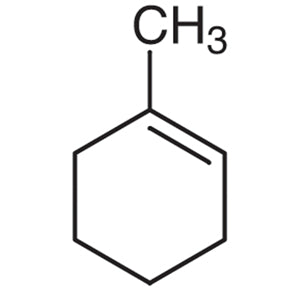
1-Methyl-1-cyclohexene is a versatile organic compound widely used in laboratory settings for constructing complex molecular structures. As a building block in organic synthesis, it serves as a foundational component for various chemical reactions, including substitution, addition, and ring-opening processes. Its presence in the chemical industry highlights its importance in the development of new compounds, particularly in pharmaceutical and materials science research. This compound is essential for chemists aiming to explore reactivity and functional group transformations in synthetic pathways.
The reactivity and stability of 1-Methyl-1-cyclohexene make it a preferred choice for many synthetic applications. Its molecular structure features a cyclohexene ring with a methyl group, enhancing its reactivity compared to unsubstituted cyclic compounds. The compound exhibits a relatively high boiling point and non-polar characteristics, influencing its solubility and utility in different reaction conditions. These properties allow it to be used in a wide range of solvents and reaction environments, making it adaptable for various synthetic strategies.
In Indonesian laboratories, 1-Methyl-1-cyclohexene is commonly used in both fundamental and applied chemical research. It is frequently found in chemistry, pharmaceutical, and materials science laboratories, where it supports the synthesis of new compounds and the study of molecular behavior. Its broad applications make it a valuable resource for researchers working on drug development, polymer synthesis, and other advanced chemical projects.
- Organic synthesis is a key application where 1-Methyl-1-cyclohexene is used to create complex molecules through substitution and addition reactions.
- Pharmaceutical research benefits from this compound as it is used in the development of new drugs and chemical intermediates.
- Materials science laboratories utilize it to synthesize polymers and other functional materials due to its reactivity and structural versatility.
- Analytical chemistry applications often involve using this compound as a standard for chromatographic and spectroscopic analysis.
- Environmental studies may incorporate this compound to investigate chemical degradation processes and reaction kinetics in controlled environments.
| Brand | TCI |
|---|---|
| CAS number | 591-49-1 |
| Molecular formula | — |
| Purity | — |
| Category | Chemistry > Building Blocks > Non-Heterocyclic Building Blocks |
| Pack sizes | Available in various quantities as per supplier specifications |
| Physical form | Liquid |
| Storage | Store in a cool, dark place away from heat and direct sunlight |
1-Methyl-1-cyclohexene should be stored in a cool, dark location to prevent degradation and maintain its chemical integrity. It is recommended to use airtight containers made of glass or high-density polyethylene to minimize exposure to air and moisture. Due to its reactivity, it should be handled in a well-ventilated area, preferably under a fume hood, to avoid inhalation risks. Keep the compound away from incompatible materials such as strong oxidizers and acids. Always wear appropriate personal protective equipment, including gloves, safety goggles, and a lab coat, when handling this compound. Proper storage and handling procedures are essential to ensure safety and maintain the compound's effectiveness in laboratory applications.
—
Produk Terkait
-
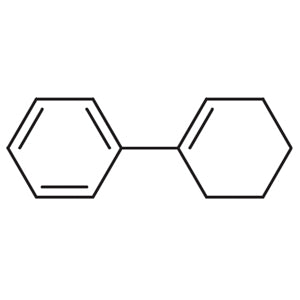
1-Phenyl-1-cyclohexene TCI P1302
Regular price From Rp 1.298.850,00Regular price -
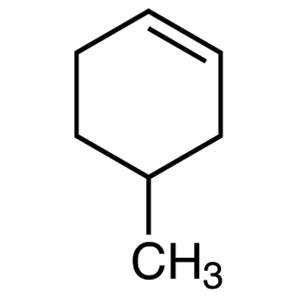
4-Methyl-1-cyclohexene TCI M2201
Regular price From Rp 1.538.250,00Regular price -
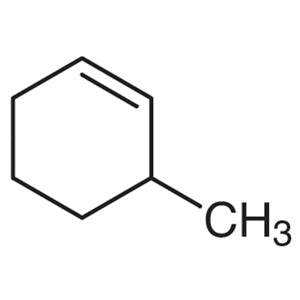
3-Methyl-1-cyclohexene TCI M1034
Regular price From Rp 2.730.000,00Regular price -
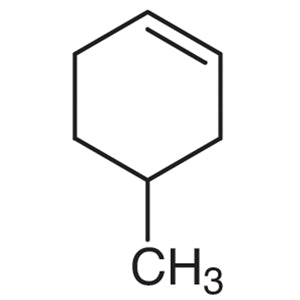
4-Methyl-1-cyclohexene TCI M0201
Regular price From Rp 903.000,00Regular price -
1-Ethynyl-1-cyclohexene TCI E1178
Regular price Rp 1.431.150,00Regular price -
Cyclohexene TCI C0491
Regular price From Rp 505.050,00Regular price -
2-Hydroxy-3,5,5-trimethyl-2-cyclohexen-1-one TCI T2723
Regular price Rp 1.273.650,00Regular price -
3-Amino-2-cyclohexen-1-one TCI A1936
Regular price From Rp 1.510.950,00Regular price