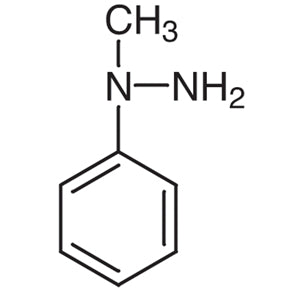
TCI M0399 1-Methyl-1-phenylhydrazine is a substituted hydrazine derivative that carries both a methyl group and a phenyl group on the same nitrogen atom. The compound is a classical reagent and an important building block in organic chemistry, valued above all for its ability to react with carbonyl groups to form hydrazones rapidly and cleanly. In the laboratory, this reagent is widely used for the derivatisation of aldehydes and ketones, for the synthesis of nitrogen-containing heterocyclic compounds, and as a starting material in routes that build indole and pyrazole rings, which form the core scaffold of many pharmacologically active molecules.
The property that makes this reagent such a frequent choice is the high nucleophilicity of its terminal nitrogen, which allows it to attack a carbonyl carbon under relatively mild reaction conditions without forcing temperatures or aggressive activation. The methyl and phenyl substitution on the same nitrogen also directs the regioselectivity of ring formation, so researchers obtain products with a predictable substitution pattern rather than a mixture that has to be separated. As a member of the hydrazine class, the material is sensitive to air and light and tends to darken over time, which is why TCI packages it in bottles that protect the quality of the contents, and its solubility in common organic solvents makes it straightforward to introduce into standard reaction systems.
In Indonesian laboratories, this building block is typically found in university and institutional synthetic organic chemistry groups, in medicinal chemistry research where indole and pyrazole scaffolds are being assembled, and in analytical work where aldehydes and ketones are converted into stable derivatives before characterisation. It also appears in graduate-level teaching laboratories that demonstrate hydrazone formation, and in process development work where a reliable, well-characterised carbonyl reagent is required at small to moderate scale.
Related TCI products
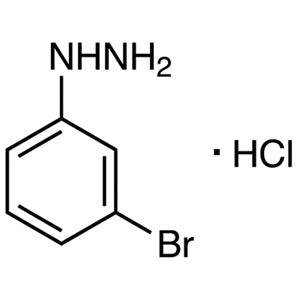
- TCI B3847 27246-81-7 3-Bromophenylhydrazine Hydrochloride
- TCI B2147 50709-33-6 2-Bromophenylhydrazine Hydrochloride
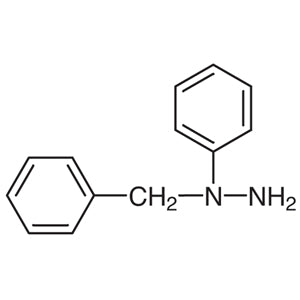
- TCI B1157 614-31-3 1-Benzyl-1-phenylhydrazine
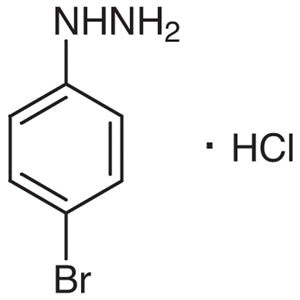
- TCI B0635 622-88-8 4-Bromophenylhydrazine Hydrochloride
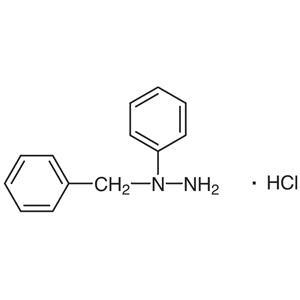
- TCI B0434 5705-15-7 1-Benzyl-1-phenylhydrazine Hydrochloride
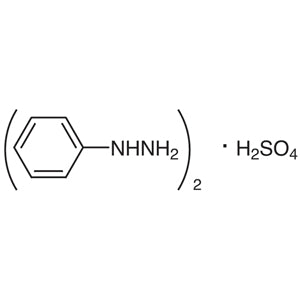
- TCI P0186 52033-74-6 Phenylhydrazine Sulfate
- Hydrazone formation from aldehydes and ketones: the highly nucleophilic terminal nitrogen condenses readily with carbonyl carbons under mild conditions, giving clean products without harsh activation.
- Indole ring synthesis: serves as the nitrogen-donating starting material in classical indole-forming routes, where its defined substitution pattern controls which regioisomer of the resulting heterocycle is obtained.
- Pyrazole ring construction: reacts with suitable dicarbonyl and related partners to close a five-membered nitrogen ring, with the methyl and phenyl groups directing regiochemistry predictably.
- Derivatisation for analytical characterisation: converts volatile or unstable aldehydes and ketones into more tractable hydrazone derivatives that are easier to isolate and characterise in the laboratory.
- Medicinal chemistry building block work: supplies the substituted hydrazine fragment used to assemble nitrogen heterocyclic scaffolds that underpin many pharmacologically active molecules in discovery programmes.
| Brand | TCI |
|---|---|
| CAS number | 618-40-6 |
| Molecular formula | — |
| Purity | — |
| Category | Chemistry > Building Blocks > Non-Heterocyclic Building Blocks |
| Pack sizes | supplied in TCI standard laboratory pack sizes; please confirm the available size when ordering |
| Physical form | liquid hydrazine derivative that tends to darken with age |
| Storage | keep protected from air and light in the supplied TCI bottle |
Store the bottle tightly closed in a cool, dark, well-ventilated place, protected from air and light, and keep it in the original TCI container, which is designed to preserve the quality of the material. Because hydrazine derivatives are sensitive to air and light and darken over time, minimise the time the bottle stays open and reseal it promptly after dispensing. Handle in a fume hood using gloves, safety glasses, and a laboratory coat, keep the material away from ignition sources and strong oxidising agents, and consult the manufacturer's safety data sheet before first use.
—
Produk Terkait
-
3-BromophenylhydrazineHydrochloride TCI B3847
Regular price Rp 2.491.650,00Regular price -
2-BromophenylhydrazineHydrochloride TCI B2147
Regular price From Rp 2.279.550,00Regular price -
1-Benzyl-1-phenylhydrazine TCI B1157
Regular price Rp 2.782.500,00Regular price -
4-BromophenylhydrazineHydrochloride TCI B0635
Regular price From Rp 1.590.750,00Regular price -
1-Benzyl-1-phenylhydrazineHydrochloride TCI B0434
Regular price From Rp 1.565.550,00Regular price -
PhenylhydrazineSulfate TCI P0186
Regular price Rp 1.246.350,00Regular price -
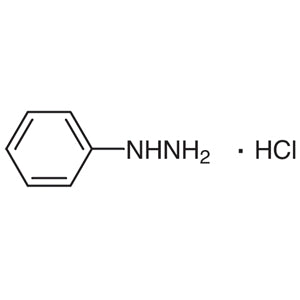
PhenylhydrazineHydrochloride TCI P0184
Regular price From Rp 1.008.000,00Regular price -
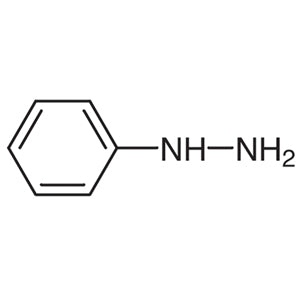
Phenylhydrazine TCI P0183
Regular price From Rp 557.550,00Regular price