Methyl Red Sodium Salt (TCI M0424) is a chemical reagent widely used in analytical chemistry, particularly in titration processes. It functions as a pH indicator, changing color in response to changes in the acidity or basicity of a solution. This property makes it essential for determining the equivalence point during acid-base titrations. Its reliability and sensitivity make it a trusted tool in laboratory settings where precise measurements are required. In Indonesian laboratories, this reagent is commonly found in educational and research institutions, supporting both teaching and experimental work.
The key properties of Methyl Red Sodium Salt include its stable chemical behavior under controlled conditions and its ability to undergo a distinct color change from red to yellow as the pH of the solution shifts. This color transition is highly visible, making it ideal for use in titration experiments where visual indicators are necessary. Additionally, its resistance to moisture and room temperature ensures that it remains effective over extended periods when stored properly. These characteristics contribute to its popularity among laboratory professionals who require consistent and accurate results.
In Indonesian laboratories, Methyl Red Sodium Salt is frequently used in academic and research environments. It is an essential component of standard laboratory equipment, especially in chemistry departments of universities and research centers. Its application is common in both qualitative and quantitative analysis, supporting a wide range of chemical investigations. The reagent’s simplicity and effectiveness make it a preferred choice for both students and experienced researchers alike.
TCI brochures (PDF)
- Titration Reagents and TLC Stains 2026-05-07 · p. 3
- Acid-base titration is a common application where Methyl Red Sodium Salt is used to detect the equivalence point due to its distinct color change.
- Educational laboratories rely on this reagent for teaching students about pH indicators and titration techniques in a practical setting.
- Research laboratories use it for analyzing the concentration of acids and bases in various chemical samples.
- Quality control processes in industrial settings employ this reagent to ensure the accuracy of chemical measurements.
- Environmental analysis laboratories use it to assess the pH levels of water samples, aiding in pollution monitoring efforts.
| Brand | TCI |
|---|---|
| CAS number | 845-10-3 |
| Molecular formula | — |
| Purity | — |
| Category | Analytical Chemistry > Analytical Reagents > Titration Reagents |
| Pack sizes | Available in various quantities as per standard laboratory supply options |
| Physical form | Solid powder |
| Storage | Store in a cool, dry place away from direct sunlight |
Methyl Red Sodium Salt should be stored in a cool, dry environment to maintain its chemical stability and effectiveness. It is recommended to keep the reagent in a tightly sealed container to prevent exposure to moisture and contaminants. Suitable containers include glass or plastic vessels that are resistant to chemical reactions. Laboratory personnel should handle the reagent with care, using appropriate personal protective equipment such as gloves and safety goggles. Avoid direct contact with skin or inhalation of dust. Ensure that storage areas are well-ventilated and free from incompatible substances. Proper storage conditions help preserve the reagent’s integrity and ensure its reliability in analytical procedures.
—
Produk Terkait
-
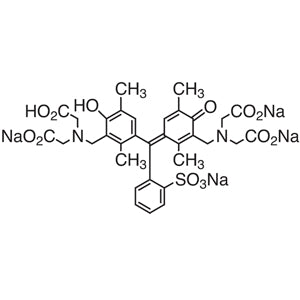
MethylxylenolBlue TCI X0052
Regular price Rp 2.306.850,00Regular price -
p-XylenolBlue TCI X0016
Regular price From Rp 637.350,00Regular price -
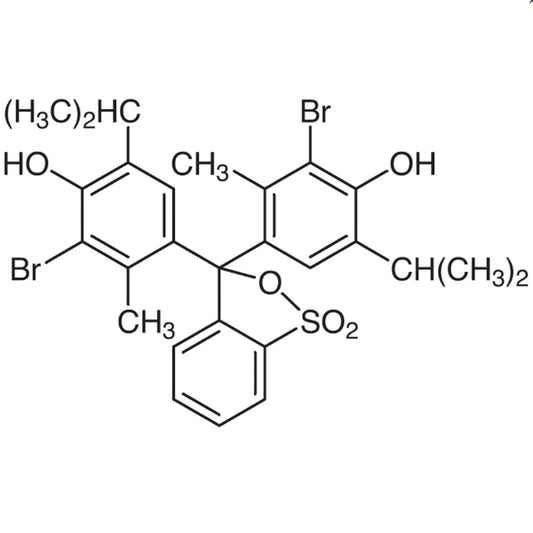
BromoxylenolBlue TCI B0998
Regular price From Rp 2.068.500,00Regular price -
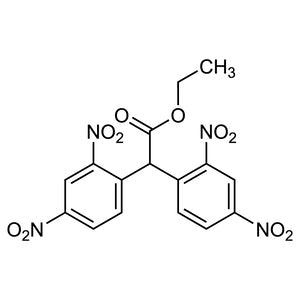
EthylBis(2,4-dinitrophenyl)acetate TCI B0817
Regular price Rp 1.458.450,00Regular price -
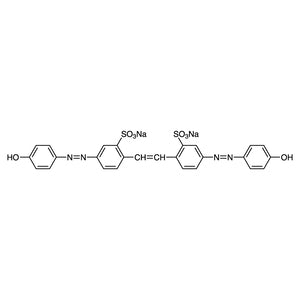
BrilliantYellow TCI B0783
Regular price Rp 4.320.750,00Regular price -
BromothymolBlue TCI B0657
Regular price From Rp 477.750,00Regular price -
BromophenolRed TCI B0632
Regular price From Rp 1.087.800,00Regular price -
BromophenolBlue TCI B0631
Regular price From Rp 848.400,00Regular price