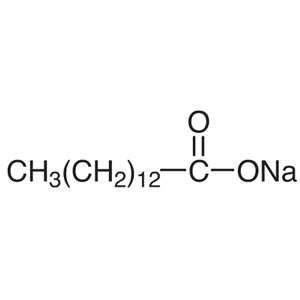
Isobutyl Myristate is a chemical compound widely used in laboratory settings, particularly in organic synthesis applications. As a non-heterocyclic building block, it serves as a versatile reagent in the development of various organic compounds. Its molecular structure, consisting of a long hydrocarbon chain and an ester group, makes it an essential component in chemical reactions requiring ester-based precursors. This compound is commonly utilized in laboratories for its ability to act as a solvent or a helper in the formulation of chemical products.
The compound’s non-polar nature allows it to dissolve in organic solvents such as ethyl acetate and chloroform, making it ideal for reactions that require non-polar solvents or for use in chemical mixture preparation. Its stability under normal conditions and resistance to degradation ensure reliable performance over time, simplifying both usage and storage. These properties make it a preferred choice for researchers seeking a stable and effective chemical reagent.
In Indonesian laboratories, Isobutyl Myristate is frequently employed in chemical research, especially in the fields of organic synthesis, cosmetic formulation, and industrial chemical development. Its availability and reliability make it a popular choice among researchers and laboratories that require a dependable and versatile chemical compound for their experiments.
- Organic Synthesis: Isobutyl Myristate is ideal for organic synthesis due to its ester functionality and non-polar nature, allowing it to participate in esterification and other chemical reactions.
- Cosmetic Formulation: It is commonly used in the development of cosmetic products as a solvent and emollient, providing stability and enhancing the texture of formulations.
- Industrial Chemical Development: Its chemical stability and solubility properties make it suitable for use in the creation of industrial chemical products and intermediates.
- Solvent in Reactions: Its ability to dissolve in organic solvents makes it a preferred choice for use as a solvent in various chemical reactions requiring non-polar environments.
- Chemical Mixture Preparation: It is used as a helper compound in the preparation of chemical mixtures, aiding in the uniformity and stability of the final product.
| Brand | TCI |
|---|---|
| CAS number | 25263-97-2 |
| Molecular formula | — |
| Purity | — |
| Category | Chemistry > Building Blocks > Non-Heterocyclic Building Blocks |
| Pack sizes | As per supplier specifications |
| Physical form | Liquid |
| Storage | Store in a cool, dry place away from direct sunlight |
Isobutyl Myristate should be stored in a cool, dry place, away from direct sunlight and sources of heat. It is recommended to keep it in a tightly sealed container to prevent evaporation and contamination. Due to its non-polar nature, it is best stored in glass or high-density polyethylene containers to ensure chemical stability. In a laboratory setting, it is important to handle the compound with care, using appropriate personal protective equipment such as gloves and safety goggles. Avoid exposure to open flames or sparks, as the compound is flammable. Proper ventilation should be maintained when handling the substance to minimize inhalation of vapors. Regular monitoring of storage conditions ensures the compound remains stable and safe for use in laboratory applications.
—
Produk Terkait
-
2-NaphthylMyristate TCI M0780
Regular price Rp 4.240.950,00Regular price -
SodiumMyristate TCI M0483
Regular price From Rp 1.326.150,00Regular price -
IsopropylMyristate TCI M0481
Regular price From Rp 477.750,00Regular price -
EthylMyristate TCI M0479
Regular price From Rp 664.650,00Regular price -
ButylMyristate TCI M0477
Regular price From Rp 1.590.750,00Regular price -
IsobutylAcetate TCI A0034
Regular price From Rp 477.750,00Regular price -
IsobutylPalmitate TCI P0651
Regular price Rp 1.008.000,00Regular price -
Isobutyln-Octanoate TCI O0032
Regular price From Rp 1.140.300,00Regular price