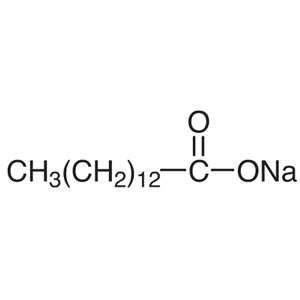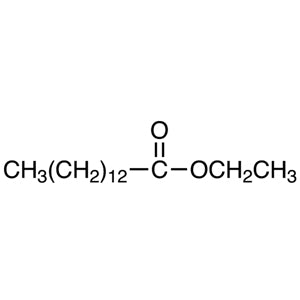
Ethyl Myristate (TCI M0479), with CAS number 124-06-1, is a chemical compound widely used in laboratory settings for its versatility and stability. As an ester derived from myristic acid and ethanol, it plays a crucial role in organic synthesis and the development of specialized chemical compounds. Its molecular structure ensures it remains chemically inert under most conditions, making it a reliable reagent for various experimental processes. Ethyl Myristate is particularly valued for its ability to participate in esterification reactions and its compatibility with a wide range of laboratory equipment and reagents.
The chemical properties of Ethyl Myristate, including its neutral nature and resistance to common chemical interactions, make it a preferred choice for laboratory applications. It exhibits relatively high melting and boiling points, which facilitate controlled heating and cooling processes in experimental setups. These characteristics contribute to its stability and ease of handling, reducing the risk of unwanted side reactions. Additionally, its non-reactive nature ensures that it does not interfere with other compounds during synthesis or analysis, enhancing the accuracy and reliability of laboratory results.
In Indonesian laboratories, Ethyl Myristate is commonly used in chemical research, particularly in academic and research institutions. Its availability and consistent quality make it a go-to reagent for both educational and industrial applications. The compound is often selected for its reliability and compatibility with standard laboratory procedures, supporting a wide range of chemical experiments and formulations. Its use is further supported by strict chemical management policies in Indonesian laboratories, ensuring safe and effective handling.
TCI brochures (PDF)
- Lipids 2025-12-17 · p. 10
- Organic synthesis applications benefit from Ethyl Myristate due to its role in esterification reactions and its stability in chemical environments.
- It is widely used in the formulation of specialty chemicals, where its inert properties ensure compatibility with a variety of compounds.
- Ethyl Myristate supports the development of industrial products, particularly in sectors requiring stable and non-reactive reagents.
- In educational laboratories, it is a standard reagent for teaching organic chemistry and reaction mechanisms.
- It is also employed in the preparation of complex chemical structures, where its predictable behavior enhances the success rate of synthetic processes.
| Brand | TCI |
|---|---|
| CAS number | 124-06-1 |
| Molecular formula | — |
| Purity | — |
| Category | Chemistry > Building Blocks > Non-Heterocyclic Building Blocks |
| Pack sizes | Available in various quantities as per standard laboratory supply options |
| Physical form | Liquid |
| Storage | Store in a cool, dry place away from direct sunlight and incompatible materials |
Ethyl Myristate should be stored in a cool, dry location, away from direct sunlight and sources of heat. It is recommended to use airtight containers made of glass or stainless steel to prevent contamination and evaporation. Due to its stable nature, it does not require refrigeration but should be kept in a well-ventilated area to ensure safe handling. Laboratory personnel should wear appropriate personal protective equipment, such as gloves and safety goggles, when working with this compound. Regular monitoring of storage conditions is essential to maintain its chemical integrity and ensure safe usage in laboratory environments.
—
Produk Terkait
-
2-NaphthylMyristate TCI M0780
Regular price Rp 4.240.950,00Regular price -
IsobutylMyristate TCI M0555
Regular price Rp 2.174.550,00Regular price -
SodiumMyristate TCI M0483
Regular price From Rp 1.326.150,00Regular price -
IsopropylMyristate TCI M0481
Regular price From Rp 477.750,00Regular price -
ButylMyristate TCI M0477
Regular price From Rp 1.590.750,00Regular price -
MethylMyristate TCI M0482
Regular price From Rp 477.750,00Regular price -
3-Isoamyl-6-methyl-2-heptylMyristate TCI I0662
Regular price From Rp 848.400,00Regular price -
CholesterolMyristate TCI C0675
Regular price From Rp 2.094.750,00Regular price