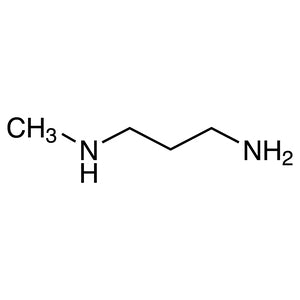
N-Methyl-1,3-diaminopropane is a versatile chemical compound widely used in laboratory settings as a building block for various synthetic reactions. It serves as a key intermediate in the synthesis of complex organic molecules and heterocyclic compounds. Its unique structure, featuring three nitrogen atoms, allows it to participate in multiple types of chemical reactions, making it an essential component in organic chemistry research. This compound is particularly valuable for its ability to form stable bonds with different functional groups, which enhances its utility in diverse chemical processes.
The reactivity of N-Methyl-1,3-diaminopropane stems from its nitrogen atoms, which possess free electrons and are highly susceptible to chemical interactions. This makes the compound ideal for reactions involving acids, bases, and halogenating agents. Its ability to undergo substitution, coupling, and bond-forming reactions contributes to its popularity among chemists. The compound’s chemical versatility and reactivity make it a preferred choice for researchers working on the development of new materials and pharmaceuticals.
In Indonesian laboratories, N-Methyl-1,3-diaminopropane is commonly used in academic and industrial research settings. It is a staple in chemical synthesis processes and is frequently employed in the development of new compounds and products. Its availability and effectiveness make it a favored reagent for both educational and applied research projects in the country.
Related TCI products
- TCI T0947 1822-45-3 N,N,N',N'-Tetramethyl-1,2-diaminopropane
- TCI T0613 10517-44-9 1,3-Diaminopropane Dihydrochloride
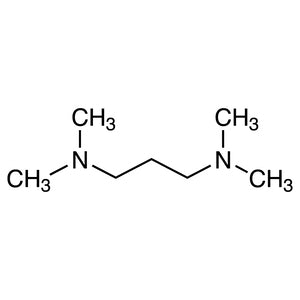
- TCI T0548 110-95-2 N,N,N',N'-Tetramethyl-1,3-diaminopropane
- TCI I0420 3360-16-5 N-Isopropyl-1,3-diaminopropane
- TCI D0473 104-78-9 N,N-Diethyl-1,3-diaminopropane
- TCI D0114 109-76-2 1,3-Diaminopropane
- Organic synthesis is a primary application where N-Methyl-1,3-diaminopropane is used to build complex molecular structures due to its multiple reactive nitrogen atoms.
- Heterocyclic compound formation benefits from the compound’s ability to form stable bonds with various functional groups, making it ideal for ring-opening and ring-closing reactions.
- Pharmaceutical research utilizes this compound as an intermediate in the synthesis of drug molecules, leveraging its reactivity and structural versatility.
- Industrial chemical production relies on N-Methyl-1,3-diaminopropane for the creation of specialty chemicals and polymers, thanks to its chemical stability and reactivity.
- Educational research in chemistry laboratories employs this compound to teach students about synthetic pathways and chemical reactivity in a hands-on setting.
| Brand | TCI |
|---|---|
| CAS number | 6291-84-5 |
| Molecular formula | — |
| Purity | — |
| Category | Chemistry > Building Blocks > Non-Heterocyclic Building Blocks |
| Pack sizes | Available in various quantities as per standard laboratory supply options |
| Physical form | Liquid |
| Storage | Store in a cool, dry place away from direct sunlight and incompatible materials |
N-Methyl-1,3-diaminopropane should be stored in a cool, dry environment to maintain its chemical integrity. It is recommended to keep the compound in a sealed container to prevent exposure to air and moisture. Due to its reactivity, it should be stored away from strong acids, bases, and oxidizing agents. The container should be made of a material that is chemically inert, such as glass or high-density polyethylene. Always ensure proper ventilation when handling the compound to minimize inhalation risks. Laboratory personnel should wear appropriate personal protective equipment, including gloves and safety goggles, to ensure safe handling and reduce potential exposure.
—
Produk Terkait
-
N,N,N',N'-Tetramethyl-1,2-diaminopropane TCI T0947
Regular price From Rp 3.075.450,00Regular price -
1,3-DiaminopropaneDihydrochloride TCI T0613
Regular price From Rp 1.749.300,00Regular price -
N,N,N',N'-Tetramethyl-1,3-diaminopropane TCI T0548
Regular price From Rp 505.050,00Regular price -
N-Isopropyl-1,3-diaminopropane TCI I0420
Regular price Rp 3.790.500,00Regular price -
N,N-Diethyl-1,3-diaminopropane TCI D0473
Regular price From Rp 505.050,00Regular price -
1,3-Diaminopropane TCI D0114
Regular price From Rp 477.750,00Regular price -
1,2-Diaminopropane TCI D0113
Regular price From Rp 477.750,00Regular price -
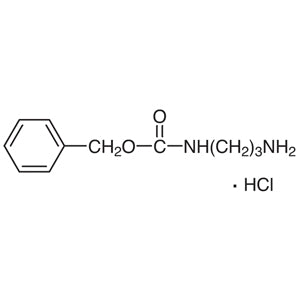
N-Benzyloxycarbonyl-1,3-diaminopropaneHydrochloride TCI C1512
Regular price From Rp 1.961.400,00Regular price