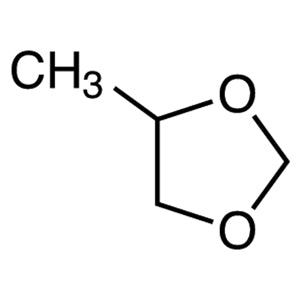
4-Methyl-1,3-dioxolane is a chemical compound widely used in organic synthesis. It serves as a building block in the creation of complex molecules, offering stability and controlled reactivity. This compound is particularly valuable in laboratory settings where precise chemical reactions are required. Its role as a precursor or intermediate makes it a versatile tool for chemists working on diverse synthetic pathways. Due to its non-heterocyclic nature, it is often preferred in applications where reactivity needs to be carefully managed.
The compound is known for its relatively stable chemical properties, which simplify handling and storage. It exhibits good solubility in various organic solvents, such as ethyl acetate and acetone, making it suitable for a wide range of experimental conditions. These characteristics contribute to its popularity among researchers seeking reliable and predictable chemical behavior. Its stability and solubility also support its use in multiple synthetic processes without the need for extensive modification or additional reagents.
In Indonesian laboratories, 4-Methyl-1,3-dioxolane is commonly used in chemical research, especially in the synthesis of organic compounds and the development of new chemical materials. It is also frequently found in pharmaceutical and industrial chemistry research, where controlled reactivity and stability are essential. Its application extends to both academic and industrial settings, making it a valuable resource for researchers in Indonesia.
Related TCI products
- TCI T2575 1193-11-9 2,2,4-Trimethyl-1,3-dioxolane
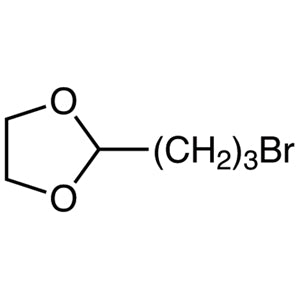
- TCI B3463 62563-07-9 2-(3-Bromopropyl)-1,3-dioxolane
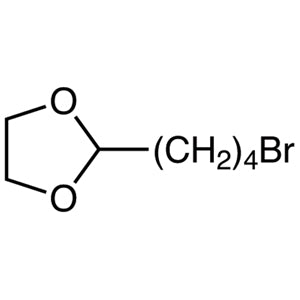
- TCI B2128 87227-41-6 2-(4-Bromobutyl)-1,3-dioxolane
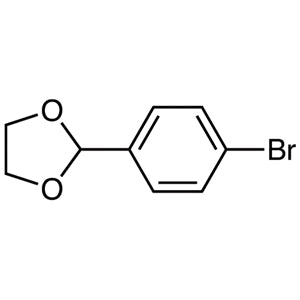
- TCI B2100 10602-01-4 2-(4-Bromophenyl)-1,3-dioxolane
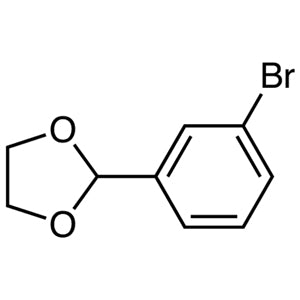
- TCI B2098 17789-14-9 2-(3-Bromophenyl)-1,3-dioxolane
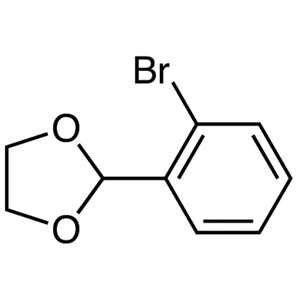
- TCI B2084 34824-58-3 2-(2-Bromophenyl)-1,3-dioxolane
- Organic synthesis applications benefit from 4-Methyl-1,3-dioxolane due to its stable structure and controlled reactivity, allowing for precise chemical transformations.
- Pharmaceutical research utilizes this compound as a building block in the development of new drug molecules, leveraging its chemical stability and solubility.
- Industrial chemistry applications rely on its predictable behavior in chemical reactions, making it suitable for large-scale synthesis processes.
- Chemical education and training programs use it as a standard compound for teaching synthetic techniques and reaction mechanisms.
- Research in material science incorporates it in the creation of new chemical materials, taking advantage of its solubility and reactivity in diverse environments.
| Brand | TCI |
|---|---|
| CAS number | 1072-47-5 |
| Molecular formula | — |
| Purity | — |
| Category | Chemistry > Building Blocks > Non-Heterocyclic Building Blocks |
| Pack sizes | Available in various quantities as per standard laboratory supply |
| Physical form | Liquid |
| Storage | Store in a cool, dry place away from direct sunlight |
4-Methyl-1,3-dioxolane should be stored in a cool, dry place, away from direct sunlight and sources of heat. It is recommended to use airtight containers made of glass or polyethylene to prevent contamination and evaporation. Due to its chemical stability, it does not require refrigeration but should be protected from moisture and air exposure. In laboratory settings, it is important to handle the compound with appropriate personal protective equipment, such as gloves and safety goggles, to ensure safe handling. Proper labeling of containers is essential to prevent accidental use and maintain a safe working environment.
—
Produk Terkait
-
2,2,4-Trimethyl-1,3-dioxolane TCI T2575
Regular price Rp 1.803.900,00Regular price -
2-(3-Bromopropyl)-1,3-dioxolane TCI B3463
Regular price From Rp 1.856.400,00Regular price -
2-(4-Bromobutyl)-1,3-dioxolane TCI B2128
Regular price From Rp 4.373.250,00Regular price -
2-(4-Bromophenyl)-1,3-dioxolane TCI B2100
Regular price From Rp 5.407.500,00Regular price -
2-(3-Bromophenyl)-1,3-dioxolane TCI B2098
Regular price From Rp 1.035.300,00Regular price -
2-(2-Bromophenyl)-1,3-dioxolane TCI B2084
Regular price From Rp 1.087.800,00Regular price -
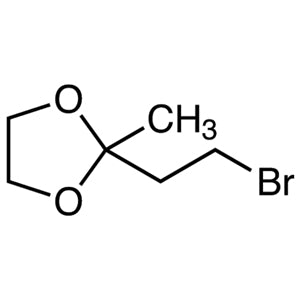
2-(2-Bromoethyl)-2-methyl-1,3-dioxolane TCI B1598
Regular price From Rp 5.407.500,00Regular price -
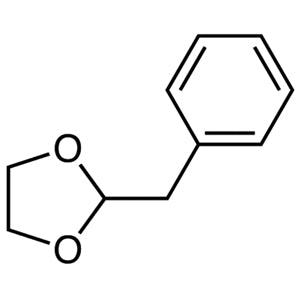
2-Benzyl-1,3-dioxolane TCI B1404
Regular price Rp 1.696.800,00Regular price