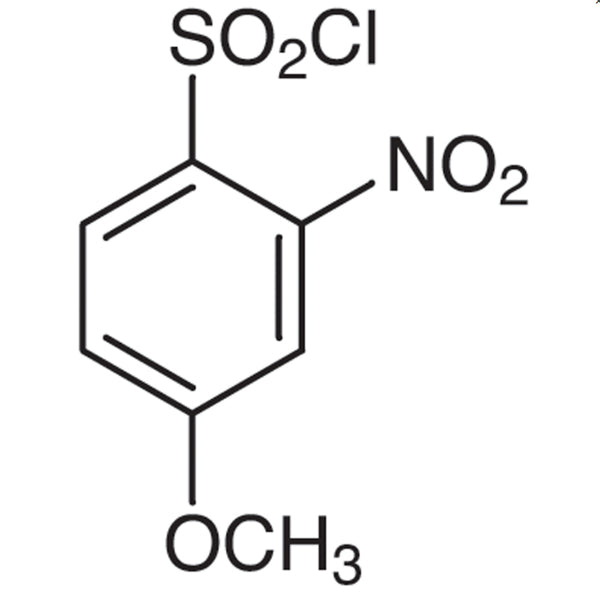
4-Methoxy-2-nitrobenzenesulfonyl Chloride, CAS 18092-54-1, is a sulfonylation reagent supplied by TCI and classified as a non-heterocyclic building block. The molecule carries a highly reactive sulfonyl chloride group on a benzene ring that is additionally substituted with a methoxy group and a nitro group. This particular combination of substituents is designed so that the resulting sulfonyl group is not only easy to install on a nitrogen atom, but can also be removed again under controlled conditions — a characteristic that is highly valued in stepwise synthetic strategies where protecting groups must be introduced and later cleaved without disturbing the rest of the molecule.
The property that makes this reagent a preferred choice is the high electrophilicity of the sulfur atom in the sulfonyl chloride group, which allows it to react rapidly with both primary and secondary amines to form stable sulfonamides. The nitro group in the ortho position exerts an electron-withdrawing effect that increases the acidity of the sulfonamide proton while simultaneously opening a pathway for removal of the protecting group through nucleophilic attack at sulfur. The methoxy group contributes further tuning of the electronic character of the ring. Because of this high reactivity, the compound is also sensitive to moisture and hydrolyses readily, so handling demands dry conditions throughout.
In Indonesian laboratories, this reagent is typically used in organic synthesis groups at universities, research institutes and pharmaceutical development units where multi-step routes require nitrogen protection and selective deprotection. It is supplied as a solid that must be stored appropriately, and is normally weighed out in small portions under dry conditions before being taken into anhydrous solvent for reaction. Its role sits firmly within the building-block and reagent inventory rather than among routine analytical chemicals.
Related TCI products
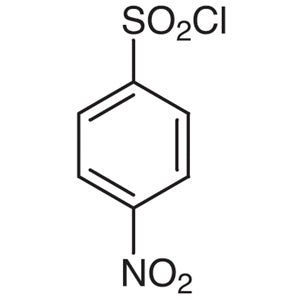
- TCI N0144 98-74-8 4-Nitrobenzenesulfonyl Chloride
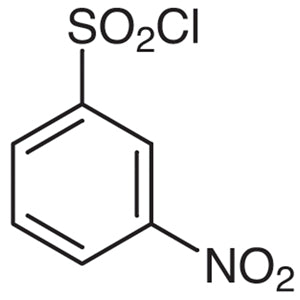
- TCI N0143 121-51-7 3-Nitrobenzenesulfonyl Chloride
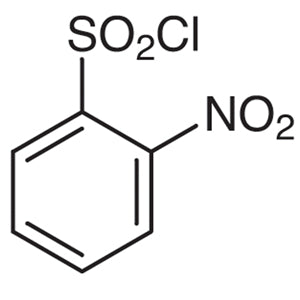
- TCI N0142 1694-92-4 2-Nitrobenzenesulfonyl Chloride
- TCI M2403 21320-91-2 2-Methoxy-4-nitrobenzenesulfonyl Chloride
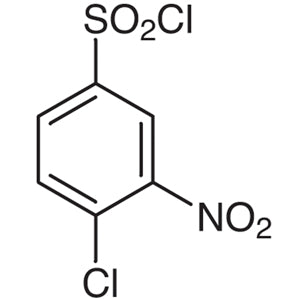
- TCI C1887 97-08-5 4-Chloro-3-nitrobenzenesulfonyl Chloride
- TCI B4723 115929-59-4 2-Bromo-4-methoxy-6-nitrophenol
- Amine protection in multi-step synthesis: the sulfonyl chloride reacts quickly with primary and secondary amines to give stable sulfonamides that survive subsequent transformations, then release the nitrogen under controlled conditions.
- Sulfonamide preparation for research targets: the high electrophilicity of the sulfonyl sulfur allows clean bond formation to nitrogen nucleophiles, making it a dependable reagent for constructing sulfonamide-containing molecules.
- Selective deprotection strategies: the ortho-nitro group opens a removal pathway through nucleophilic attack at sulfur, giving chemists a protecting group that can be cleaved when other groups must remain untouched.
- Nitrogen functionalisation under mild conditions: because the reagent is so reactive, sulfonylation proceeds without forcing conditions, which helps preserve sensitive functionality elsewhere in the substrate molecule.
- Building-block chemistry for structure–activity work: as a non-heterocyclic building block, it lets research groups introduce a substituted aromatic sulfonyl fragment carrying both methoxy and nitro substituents into target scaffolds.
| Brand | TCI |
|---|---|
| CAS number | 18092-54-1 |
| Molecular formula | — |
| Purity | — |
| Category | Chemistry > Building Blocks > Non-Heterocyclic Building Blocks |
| Pack sizes | available in the catalogue pack sizes offered by TCI for this product code (M1006) |
| Physical form | solid |
| Storage | keep under dry conditions; the compound is moisture-sensitive and hydrolyses readily |
Store this reagent in a tightly closed container under dry conditions, since the sulfonyl chloride group is sensitive to moisture and hydrolyses readily on exposure to humid air. Original supplier packaging or a well-sealed glass container kept in a dry cabinet or desiccator is suitable, and bottles should be allowed to reach ambient temperature before opening so that condensation does not form on the solid. Weighing and transfer are best carried out quickly, ideally under an inert atmosphere or in a dry environment, using dry spatulas and dry glassware. Work should be performed in a fume hood with gloves, safety glasses and a laboratory coat, because sulfonyl chlorides are corrosive and irritating. Keep the material away from water, alcohols, amines and other nucleophiles during storage, and follow the supplier safety data sheet together with institutional chemical waste procedures for disposal.
—
Produk Terkait
-
4-NitrobenzenesulfonylChloride TCI N0144
Regular price From Rp 557.550,00Regular price -
3-NitrobenzenesulfonylChloride TCI N0143
Regular price From Rp 2.227.050,00Regular price -
2-NitrobenzenesulfonylChloride TCI N0142
Regular price From Rp 1.273.650,00Regular price -
2-Methoxy-4-nitrobenzenesulfonylChloride TCI M2403
Regular price From Rp 1.008.000,00Regular price -
4-Chloro-3-nitrobenzenesulfonylChloride TCI C1887
Regular price From Rp 717.150,00Regular price -
2-Bromo-4-methoxy-6-nitrophenol TCI B4723
Regular price From Rp 505.050,00Regular price -
4-Bromo-1-methoxy-2-(3-methoxypropoxy)benzene TCI B4539
Regular price From Rp 848.400,00Regular price -
1-Methoxy-4-propylbenzene TCI P3068
Regular price Rp 1.829.100,00Regular price