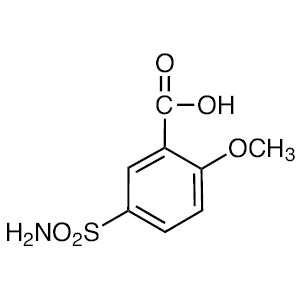
2-Methoxy-4-nitrobenzenesulfonyl Chloride is a versatile organic compound widely used in laboratory settings for its reactivity and utility in synthetic chemistry. As a sulfonyl chloride, it functions as an activating agent in nucleophilic substitution reactions, making it a key reagent in the synthesis of complex molecules. Its ability to react with various nucleophiles such as amines, hydroxyls, and alcohols makes it indispensable in organic synthesis processes. This compound is particularly valuable in the development of pharmaceuticals and industrial chemicals due to its reactivity and functional group versatility.
The compound’s high reactivity is enhanced by the presence of both nitro and methoxy groups, which contribute to its stability while also increasing its chemical reactivity. It is soluble in a range of organic solvents, including ethyl acetate, chloroform, and acetone, which facilitates its use in diverse reaction conditions. These solubility properties make it compatible with a wide array of synthetic protocols. Additionally, its chemical structure allows for the formation of various derivatives, expanding its utility in both academic and industrial research.
In Indonesian laboratories, 2-Methoxy-4-nitrobenzenesulfonyl Chloride is commonly used in organic chemistry research, particularly in the synthesis of pharmaceutical compounds and complex organic structures. Its role in nucleophilic substitution reactions makes it a preferred choice for researchers working on drug development and chemical synthesis. Its availability and reactivity ensure that it remains a valuable tool in the chemical research toolkit of Indonesian scientists.
Related TCI products
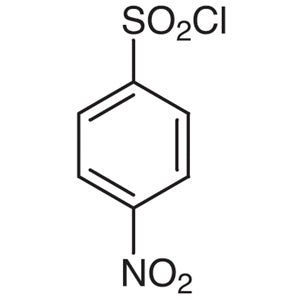
- TCI N0144 98-74-8 4-Nitrobenzenesulfonyl Chloride
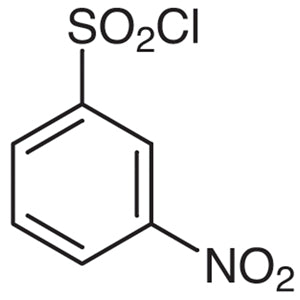
- TCI N0143 121-51-7 3-Nitrobenzenesulfonyl Chloride
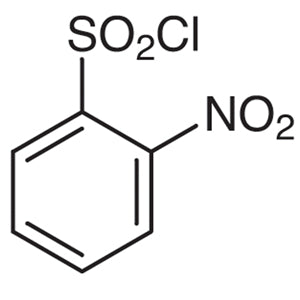
- TCI N0142 1694-92-4 2-Nitrobenzenesulfonyl Chloride
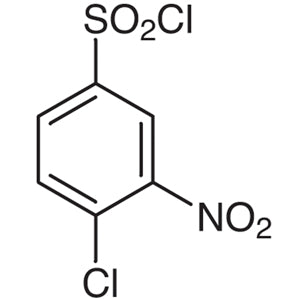
- TCI C1887 97-08-5 4-Chloro-3-nitrobenzenesulfonyl Chloride
- TCI M1006 18092-54-1 4-Methoxy-2-nitrobenzenesulfonyl Chloride
- TCI M2771 22117-85-7 2-Methoxy-5-sulfamoylbenzoic Acid
- Organic synthesis is a primary application where this compound is used to activate substrates for nucleophilic substitution reactions, enabling the formation of new chemical bonds.
- Pharmaceutical research benefits from its ability to participate in reactions that lead to the synthesis of bioactive compounds and drug molecules.
- Industrial chemical production utilizes this reagent for the creation of complex organic structures, supporting the development of specialty chemicals.
- Analytical chemistry applications rely on its reactivity for the preparation of intermediates used in qualitative and quantitative analysis.
- Structural chemistry studies employ this compound to explore reaction mechanisms and the behavior of functional groups in different environments.
| Brand | TCI |
|---|---|
| CAS number | 21320-91-2 |
| Molecular formula | — |
| Purity | — |
| Category | Chemistry > Building Blocks > Non-Heterocyclic Building Blocks |
| Pack sizes | Available in various quantities as per supplier specifications |
| Physical form | Solid, typically in crystalline form |
| Storage | Store in a cool, dry place away from moisture and direct sunlight |
This compound should be stored in a cool, dry environment to maintain its chemical integrity. It is recommended to use airtight containers to prevent exposure to moisture, which can lead to hydrolysis. Due to its reactivity, it should be handled in a well-ventilated area, and appropriate personal protective equipment should be worn. Avoid contact with incompatible materials such as strong bases or reducing agents. Keep the compound away from heat sources and ensure that storage conditions are consistent to preserve its effectiveness in laboratory applications.
—
Produk Terkait
-
4-NitrobenzenesulfonylChloride TCI N0144
Regular price From Rp 557.550,00Regular price -
3-NitrobenzenesulfonylChloride TCI N0143
Regular price From Rp 2.227.050,00Regular price -
2-NitrobenzenesulfonylChloride TCI N0142
Regular price From Rp 1.273.650,00Regular price -
4-Chloro-3-nitrobenzenesulfonylChloride TCI C1887
Regular price From Rp 717.150,00Regular price -
4-Methoxy-2-nitrobenzenesulfonylChloride TCI M1006
Regular price From Rp 1.115.100,00Regular price -
2-Methoxy-5-sulfamoylbenzoicAcid TCI M2771
Regular price From Rp 743.400,00Regular price -
N-Methoxy-N-methylcarbamoylChloride TCI M2117
Regular price From Rp 1.538.250,00Regular price -
4-IsopropoxybenzenesulfonylChloride TCI I0802
Regular price From Rp 2.597.700,00Regular price