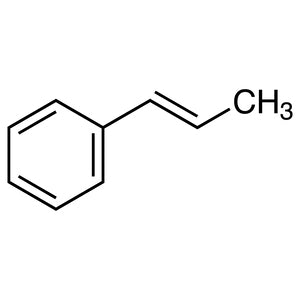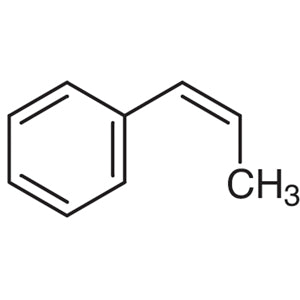
TCI M1174 766-90-5 cis-beta-Methylstyrene (stabilized with TBC) is a chemical compound widely used as a building block in laboratory settings. It serves as a versatile reagent in various organic reactions, including substitution, addition, and polymerization processes. This compound is particularly valuable in synthetic chemistry due to its ability to participate in multiple reaction pathways. Its presence in laboratory workflows supports the development of complex molecules and industrial chemical products. As a key component in chemical synthesis, it plays a crucial role in advancing research and innovation in the field of organic chemistry.
One of the key attributes that make cis-beta-Methylstyrene a preferred choice is its stability, enhanced by the inclusion of TBC (tert-butylcatechol) as a stabilizer. This additive significantly reduces the risk of degradation during storage and use, ensuring consistent performance over time. Additionally, the compound exhibits moderate reactivity, making it suitable for a wide range of chemical transformations. Its chemical properties allow it to be used in both academic and industrial research, contributing to the synthesis of aromatic compounds and other functional materials. The combination of stability and reactivity makes it a reliable choice for laboratory applications.
In Indonesian laboratories, cis-beta-Methylstyrene is commonly utilized in organic chemistry research, especially in the synthesis of aromatic compounds and industrial chemicals. Its availability and high quality make it a preferred material for researchers and chemists working in academic and research institutions. The compound is frequently used in projects aimed at developing new materials and pharmaceutical intermediates, supporting the growth of scientific innovation in the region.
Related TCI products
- TCI P0495 637-50-3 beta-Methylstyrene (cis- and trans- mixture) (stabilized with TBC)
- TCI M1175 873-66-5 trans-beta-Methylstyrene (stabilized with TBC)
- TCI M0428 622-97-9 4-Methylstyrene (stabilized with TBC)
- TCI M0259 611-15-4 2-Methylstyrene (stabilized with TBC)
- TCI B1550 76439-00-4 1,4-Bis(4-methylstyryl)benzene
- TCI V0130 2444-68-0 9-Vinylanthracene
- Synthesis of aromatic compounds: This compound is ideal for creating complex aromatic structures due to its reactivity and compatibility with various synthetic methods.
- Organic reaction intermediates: Its ability to participate in substitution and addition reactions makes it a valuable intermediate in multi-step organic synthesis.
- Polymerization processes: The compound can be used in polymer synthesis, contributing to the development of new materials with specific properties.
- Industrial chemical production: Its application in industrial settings supports the manufacture of a wide range of chemical products.
- Research and development in pharmaceuticals: It is frequently used in the development of pharmaceutical intermediates and new drug compounds.
| Brand | TCI |
|---|---|
| CAS number | 766-90-5 |
| Molecular formula | — |
| Purity | — |
| Category | Chemistry > Building Blocks > Non-Heterocyclic Building Blocks |
| Pack sizes | Available in standard laboratory quantities |
| Physical form | Liquid |
| Storage | Store in a cool, dark place away from heat and direct sunlight |
This compound should be stored in a cool, dark place, away from heat and direct sunlight to maintain its stability. It is recommended to use suitable containers that are resistant to chemical reactions, such as glass or high-density polyethylene. Proper ventilation is essential when handling the material to minimize exposure. Due to its chemical nature, it should be kept away from incompatible substances like strong oxidizers. Always follow standard laboratory safety procedures, including the use of personal protective equipment, to ensure safe handling and storage.
—
Produk Terkait
-
beta-Methylstyrene(cis-andtrans-mixture)(stabilizedwithTBC) TCI P0495
Regular price Rp 4.771.200,00Regular price -
trans-beta-Methylstyrene(stabilizedwithTBC) TCI M1175
Regular price Rp 6.333.600,00Regular price -
4-Methylstyrene(stabilizedwithTBC) TCI M0428
Regular price From Rp 955.500,00Regular price -
2-Methylstyrene(stabilizedwithTBC) TCI M0259
Regular price Rp 5.009.550,00Regular price -
1,4-Bis(4-methylstyryl)benzene TCI B1550
Regular price Rp 5.194.350,00Regular price -
9-Vinylanthracene TCI V0130
Regular price From Rp 2.545.200,00Regular price -
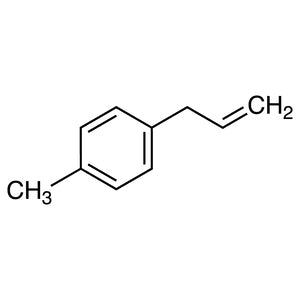
4-Allyltoluene TCI A3685
Regular price Rp 1.644.300,00Regular price -
Allylbenzene TCI P0609
Regular price From Rp 1.565.550,00Regular price