Allylbenzene is a chemical compound widely used as a foundational material in various laboratory reactions. It serves as a key building block in organic chemistry, particularly in the synthesis of complex organic molecules. Its molecular structure consists of an allyl group (CH₂=CHCH₂-) attached to a benzene ring, making it a versatile reagent in chemical synthesis. This compound is commonly found in research settings where the creation of new compounds is essential. Its role extends across multiple scientific disciplines, including pharmaceutical development, materials science, and industrial chemistry.
Allylbenzene is prized for its reactivity and chemical stability under controlled conditions. The presence of a double bond in its structure allows it to participate in a variety of reactions, such as addition, substitution, and polymerization. This makes it a preferred choice for chemists seeking to manipulate molecular structures. Additionally, its ability to undergo electrophilic and radical reactions enhances its utility in synthetic pathways. The compound’s high boiling point also facilitates processes like distillation and heating, which are common in laboratory procedures.
In Indonesian laboratories, Allylbenzene is extensively used in organic chemistry research, particularly in academic and research institutions. It is a staple in laboratories conducting studies on drug development, polymer synthesis, and advanced material creation. Its availability and chemical properties make it a go-to reagent for researchers aiming to explore new chemical reactions and synthesize complex compounds. Its importance in both educational and industrial research contexts underscores its value in the scientific community.
Related TCI products
- Organic synthesis is a primary application where Allylbenzene is used to create complex organic molecules due to its reactive double bond and allyl group.
- Pharmaceutical research benefits from Allylbenzene as it is used in the synthesis of various drug compounds and intermediates.
- Polymer science utilizes Allylbenzene in the development of new materials and polymers due to its ability to undergo polymerization reactions.
- Analytical chemistry laboratories use Allylbenzene as a standard reference material for calibration and testing procedures.
- Industrial chemical processes incorporate Allylbenzene in the production of specialty chemicals and solvents due to its chemical versatility.
| Brand | TCI |
|---|---|
| CAS number | 300-57-2 |
| Molecular formula | — |
| Purity | — |
| Category | Chemistry > Building Blocks > Non-Heterocyclic Building Blocks |
| Pack sizes | Available in various quantities as per supplier specifications |
| Physical form | Liquid |
| Storage | Store in a cool, dark place away from heat and direct sunlight |
Allylbenzene should be stored in a cool, dark environment to maintain its chemical stability. It is recommended to keep it in a sealed container to prevent exposure to air and moisture. The compound is flammable, so it should be stored away from heat sources and ignition points. Appropriate personal protective equipment, such as gloves and goggles, should be worn during handling. Due to its reactivity, it should be handled in a well-ventilated area to avoid inhalation of vapors. Regular monitoring of storage conditions ensures the compound remains safe and effective for use in laboratory settings.
—
Produk Terkait
-
9-Vinylanthracene TCI V0130
Regular price From Rp 2.545.200,00Regular price -
1-Allylnaphthalene TCI A2465
Regular price Rp 4.028.850,00Regular price -
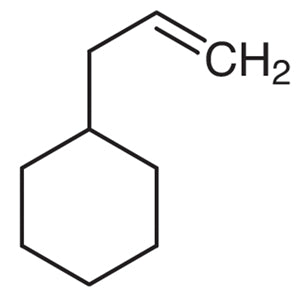
Allylcyclohexane TCI A1201
Regular price From Rp 1.140.300,00Regular price -
4-Methylstyrene(stabilizedwithTBC) TCI M0428
Regular price From Rp 955.500,00Regular price -
2-Methylstyrene(stabilizedwithTBC) TCI M0259
Regular price Rp 5.009.550,00Regular price -
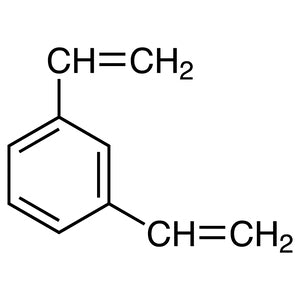
1,3-Divinylbenzene(stabilizedwithTBC) TCI D6174
Regular price From Rp 2.809.800,00Regular price -
1,4-Bis(4-methylstyryl)benzene TCI B1550
Regular price Rp 5.194.350,00Regular price -
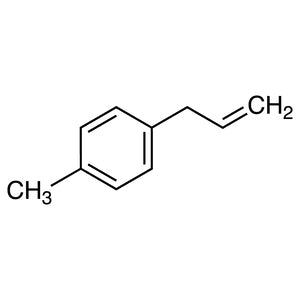
4-Allyltoluene TCI A3685
Regular price Rp 1.644.300,00Regular price