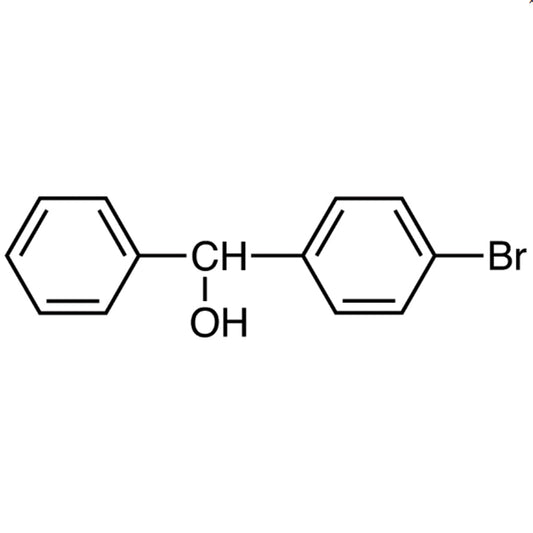
4-Methylbenzhydrol is a chemical compound widely used as a building block in the synthesis of complex organic molecules. It plays a crucial role in laboratory settings where the creation of new molecular structures is required. This compound is particularly valuable in substitution reactions and bond-forming processes, making it an essential tool for chemists working on advanced synthetic pathways. Its simplicity in molecular structure belies its importance in various chemical applications, from pharmaceutical development to industrial chemical production.
The compound’s stable chemical structure and controlled reactivity make it a preferred choice for researchers. Its non-polar nature facilitates solubility in organic solvents, which enhances the efficiency of chemical reactions. This property is especially beneficial in reactions that require precise control over solubility and reactivity. Additionally, its availability in solid form ensures ease of handling and storage, making it a practical option for laboratory use. These characteristics contribute to its widespread adoption in both academic and industrial research environments.
In Indonesian laboratories, 4-Methylbenzhydrol is commonly used in chemical research across universities and research institutions. It is an integral part of chemistry education programs and the development of local chemical products. Its reliability and versatility make it a go-to compound for researchers aiming to explore new synthetic routes and chemical transformations.
- Organic synthesis is a key application where 4-Methylbenzhydrol is used to build complex molecular structures through substitution and bond-forming reactions.
- Pharmaceutical research benefits from its role in the development of new drugs, as it contributes to the synthesis of bioactive compounds.
- Industrial chemical production utilizes this compound to create a variety of organic materials and intermediates for commercial use.
- Educational institutions incorporate it into their curriculum to teach fundamental concepts of chemical synthesis and molecular construction.
- Research laboratories use it for advanced chemical transformations, enabling the exploration of new chemical pathways and reaction mechanisms.
| Brand | TCI |
|---|---|
| CAS number | 1517-63-1 |
| Molecular formula | — |
| Purity | — |
| Category | Chemistry > Building Blocks > Non-Heterocyclic Building Blocks |
| Pack sizes | Available in standard laboratory quantities |
| Physical form | Solid |
| Storage | Store in a cool, dry place away from moisture and light |
4-Methylbenzhydrol should be stored in a cool, dry place, away from moisture and direct light to maintain its chemical stability. It is recommended to use airtight containers to prevent exposure to air and humidity. Due to its non-polar nature, it is typically handled in a well-ventilated area to ensure safe working conditions. General laboratory precautions include wearing appropriate personal protective equipment, such as gloves and safety goggles, when handling the compound. Proper labeling of containers is essential for safe storage and easy identification. This compound is not classified as hazardous under standard laboratory conditions, but standard safety protocols should still be followed to ensure safe handling and use.
—
Produk Terkait
-
2-Methylbenzhydrol TCI M1309
Regular price Rp 848.400,00Regular price -
4,4'-Dichloro-alpha-methylbenzhydrol TCI D2692
Regular price Rp 1.644.300,00Regular price -
4,4'-Dimethylbenzhydrol TCI D5460
Regular price From Rp 2.016.000,00Regular price -
Benzhydrol TCI D0898
Regular price From Rp 584.850,00Regular price -
4-Bromobenzhydrol TCI B4680
Regular price From Rp 955.500,00Regular price -
4-Methoxybenzhydrol TCI M1278
Regular price From Rp 2.147.250,00Regular price -
4,4'-Dimethoxybenzhydrol TCI D2141
Regular price From Rp 1.431.150,00Regular price -
4,4'-Dichlorobenzhydrol TCI D1915
Regular price From Rp 1.829.100,00Regular price