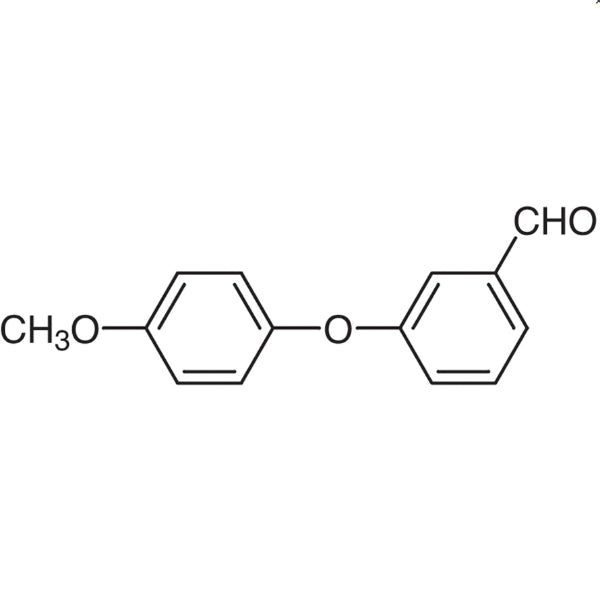
3-(4-Methoxyphenoxy)benzaldehyde is a chemical compound widely used in organic synthesis reactions. It serves as a fundamental building block in the creation of complex molecules, particularly in chemical laboratories where researchers aim to develop new compounds with specific structural characteristics. This compound is commonly utilized in the synthesis of aromatic compounds that incorporate both phenyl and methoxyphenyl groups, making it a versatile reagent in various synthetic pathways. Its presence in Indonesian laboratories underscores its importance in both academic and industrial research settings.
The compound is valued for its stable chemical properties and controlled reactivity, which make it a preferred choice for synthetic chemists. Its molecular structure, consisting of an aldehyde group and a phenyl group connected via an oxygen-containing chain, allows it to participate in a variety of chemical reactions, including substitution and condensation. This reactivity enables it to interact effectively with reagents such as amines, acids, and oxidizing agents, making it suitable for a wide range of experimental applications. These characteristics contribute to its reliability and effectiveness in laboratory settings.
In Indonesian laboratories, 3-(4-Methoxyphenoxy)benzaldehyde is frequently used in organic chemistry research, especially in the fields of pharmaceuticals and materials science. Local researchers often rely on this compound as a foundational material for developing new substances with biological activity. Its role in synthesizing complex molecules highlights its significance in both academic and applied research contexts.
Related TCI products
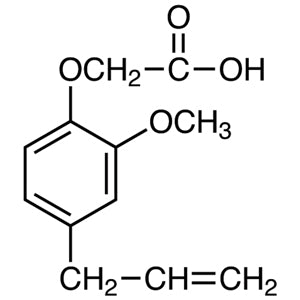
- TCI A3037 6331-61-9 (4-Allyl-2-methoxyphenoxy)acetic Acid
- TCI M3883 13794-15-5 2-(4-Methoxyphenoxy)propanoic Acid
- TCI M3547 1877-75-4 2-(4-Methoxyphenoxy)acetic Acid
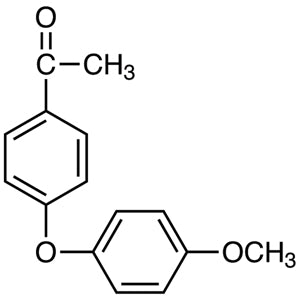
- TCI M2740 54916-28-8 4'-(4-Methoxyphenoxy)acetophenone
- TCI M1692 49855-03-0 3-(3-Methoxyphenoxy)propionic Acid
- TCI M0692 1878-85-9 2-Methoxyphenoxyacetic Acid
- Organic synthesis applications benefit from this compound's ability to participate in substitution and condensation reactions, enabling the creation of complex aromatic structures.
- Pharmaceutical research utilizes it as a building block for developing compounds with potential therapeutic properties, particularly in drug design and development.
- Material science studies employ it to synthesize polymers and functional materials, leveraging its reactivity and structural versatility.
- Analytical chemistry laboratories use it as a standard reference for spectroscopic and chromatographic analyses due to its well-defined molecular structure.
- Environmental research incorporates it in the study of chemical degradation pathways and the behavior of aromatic compounds in different environmental matrices.
| Brand | TCI |
|---|---|
| CAS number | 62373-80-2 |
| Molecular formula | — |
| Purity | — |
| Category | Chemistry > Building Blocks > Non-Heterocyclic Building Blocks |
| Pack sizes | Available in various quantities as per supplier specifications |
| Physical form | Solid or liquid, depending on the specific product formulation |
| Storage | Store in a cool, dry place away from direct sunlight and moisture |
This compound should be stored in a cool, dry environment, away from direct sunlight and moisture to maintain its chemical stability. It is recommended to use airtight containers made of glass or high-density polyethylene to prevent contamination and degradation. In laboratory settings, it should be handled with appropriate personal protective equipment, including gloves and safety goggles, to ensure safety during use. Due to its reactivity, it should be stored separately from strong oxidizing agents and incompatible substances. Regular monitoring of storage conditions is advised to ensure the compound remains in optimal condition for use in research applications.
—
Produk Terkait
-
(4-Allyl-2-methoxyphenoxy)aceticAcid TCI A3037
Regular price From Rp 2.041.200,00Regular price -
2-(4-Methoxyphenoxy)propanoicAcid TCI M3883
Regular price From Rp 1.035.300,00Regular price -
2-(4-Methoxyphenoxy)aceticAcid TCI M3547
Regular price From Rp 1.193.850,00Regular price -
4'-(4-Methoxyphenoxy)acetophenone TCI M2740
Regular price Rp 1.087.800,00Regular price -
3-(3-Methoxyphenoxy)propionicAcid TCI M1692
Regular price Rp 2.704.800,00Regular price -
2-MethoxyphenoxyaceticAcid TCI M0692
Regular price Rp 2.306.850,00Regular price -
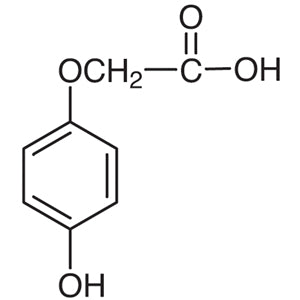
(4-Hydroxyphenoxy)aceticAcid TCI H0992
Regular price From Rp 1.565.550,00Regular price -
4-(3-Hydroxyphenoxy)benzoicAcid TCI H0641
Regular price From Rp 2.889.600,00Regular price