

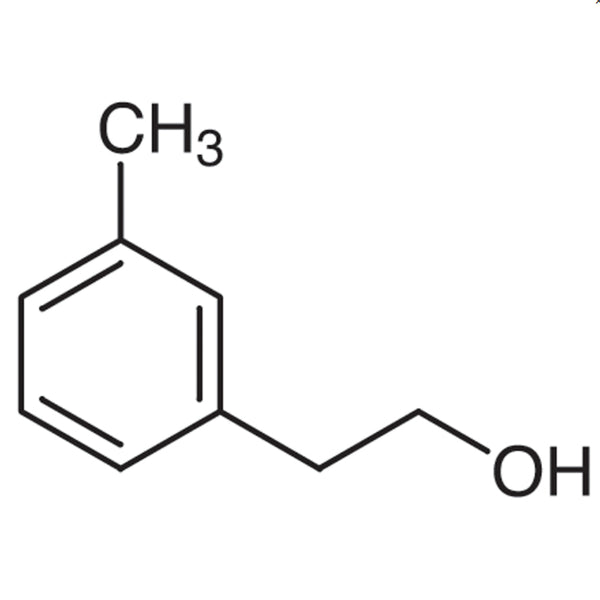
2-(m-Tolyl)ethanol is a chemical compound widely used as a foundational building block in the synthesis of complex organic molecules. Its role in the laboratory is critical, as it serves as a versatile intermediate that can be modified through various chemical reactions to produce a wide range of compounds. This compound is particularly valuable in synthetic chemistry due to its ability to participate in substitution and other reaction mechanisms, making it an essential tool for researchers. Its presence in laboratory workflows is vital for the development of new materials, pharmaceuticals, and analytical reagents.
The chemical properties of 2-(m-Tolyl)ethanol make it a preferred choice for many applications. It exhibits stability under normal laboratory conditions and reacts readily with a variety of reagents, allowing for efficient synthesis processes. The presence of both an alcohol group and an aryl group in its structure enhances its reactivity and functional versatility. These characteristics enable chemists to tailor its properties for specific applications, making it a go-to compound in synthetic chemistry. Its compatibility with different reaction conditions further supports its use in diverse experimental setups.
In Indonesian laboratories, 2-(m-Tolyl)ethanol is commonly utilized by chemists and researchers working in pharmaceutical, material science, and analytical chemistry fields. Its availability in the local market ensures that it is easily accessible for experimental purposes. The compound's role in building complex molecules supports ongoing research and innovation in various scientific disciplines, contributing to the advancement of chemical knowledge and applications.
- Synthetic Organic Chemistry: 2-(m-Tolyl)ethanol is widely used in the synthesis of complex organic compounds due to its reactivity and structural versatility, making it ideal for creating new molecules with specific functional groups.
- Pharmaceutical Research: This compound is frequently employed in drug development as a building block for synthesizing pharmaceutical intermediates that can be further modified into active pharmaceutical ingredients.
- Material Science: Its ability to participate in various chemical reactions makes it suitable for the development of new materials, including polymers and functional coatings, where structural modifications are required.
- Analytical Chemistry: The compound is used in analytical procedures to test the reactivity and stability of different reagents, aiding in the development of more accurate and reliable analytical methods.
- Chemical Education: It is commonly used in teaching laboratories to demonstrate fundamental concepts in organic chemistry, such as substitution reactions and functional group transformations.
| Brand | TCI |
|---|---|
| CAS number | 1875-89-4 |
| Molecular formula | — |
| Purity | — |
| Category | Chemistry > Building Blocks > Non-Heterocyclic Building Blocks |
| Pack sizes | Available in various quantities as per standard laboratory supply options |
| Physical form | Liquid |
| Storage | Store in a cool, dry place away from direct sunlight and incompatible materials |
2-(m-Tolyl)ethanol should be stored in a cool, dry environment, away from direct sunlight and sources of heat. It is recommended to use airtight containers made of glass or inert plastic to prevent contamination and maintain its chemical integrity. Due to its reactivity, it should be kept separate from strong oxidizing agents and strong bases to avoid unintended chemical interactions. In laboratory settings, it is important to handle the compound with appropriate personal protective equipment, such as gloves and safety goggles, to ensure safe handling. Regular monitoring of storage conditions is advised to maintain the compound's stability and effectiveness for use in chemical synthesis and research applications.
—
Produk Terkait
-
2-(p-Tolyl)ethanol TCI M2298
Regular price From Rp 2.121.000,00Regular price -
2-(o-Tolyl)ethanol TCI M1375
Regular price From Rp 2.677.500,00Regular price -
1-(p-Tolyl)ethanol TCI M0448
Regular price Rp 1.829.100,00Regular price -
2-(Benzyloxy)ethanol TCI B0426
Regular price From Rp 557.550,00Regular price -
1-(2-Naphthyl)ethanol TCI N0788
Regular price From Rp 1.936.200,00Regular price -
2-(1-Naphthyl)ethanol TCI N0575
Regular price From Rp 1.326.150,00Regular price -
2-(4-Nitrophenyl)ethanol TCI N0569
Regular price From Rp 1.353.450,00Regular price -
1-(1-Naphthyl)ethanol TCI N0395
Regular price From Rp 2.016.000,00Regular price


