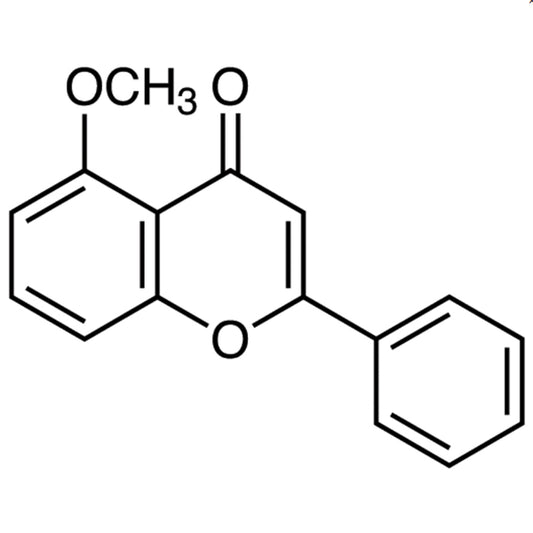
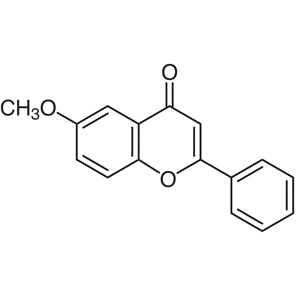
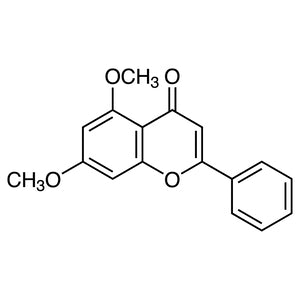
6-Methoxyflavanone is an organic compound widely used in life science research, particularly in the fields of cell biology and nutrition. This compound plays a crucial role in laboratory studies aimed at understanding biological mechanisms such as antioxidant activity, anti-inflammatory effects, and cellular metabolism. Its unique chemical structure allows it to participate in various biochemical reactions and biological processes, making it a valuable tool for scientific investigation. Researchers rely on 6-Methoxyflavanone to explore the molecular interactions that underpin health and disease, contributing to advancements in both human and environmental health studies.
The compound is valued for its chemical stability and ability to interact with a wide range of biological molecules. It is colorless, solid in form, and dissolves easily in organic solvents like ethyl acetate or ethanol. These properties make it a preferred choice for laboratory applications where consistent performance and reliability are essential. Its solubility and stability ensure that it remains effective in various experimental conditions, supporting accurate and reproducible results.
In Indonesian laboratories, 6-Methoxyflavanone is commonly used in research focused on natural compounds and their biological effects. It is frequently employed in studies related to nutrition, biochemistry, and pharmacology. Scientists in Indonesia use this compound to investigate the potential health benefits of plant-derived substances, contributing to the development of new therapeutic approaches and nutritional strategies.
TCI brochures (PDF)
- Polyphenols 2024-12-05 · p. 1
- Phytochemicals 2025-12-17 · p. 11
- Nutritional Research: 6-Methoxyflavanone is ideal for studying the bioavailability and metabolic effects of natural compounds in food and dietary supplements.
- Anti-Inflammatory Studies: Its ability to modulate inflammatory pathways makes it suitable for experiments investigating the role of flavanones in reducing inflammation.
- Antioxidant Activity Testing: The compound is used to assess its potential as an antioxidant in cellular and biochemical assays.
- Cellular Metabolism Analysis: Researchers use it to examine its impact on metabolic processes within cells, aiding in the understanding of metabolic disorders.
- Biochemical Reactions: Its chemical stability and reactivity make it a useful substrate or modulator in various biochemical experiments.
| Brand | TCI |
|---|---|
| CAS number | 3034-04-6 |
| Molecular formula | — |
| Purity | — |
| Category | Life Science > Cell Biology > Nutrition Research |
| Pack sizes | Available in various quantities as per supplier specifications |
| Physical form | Solid |
| Storage | Store in a cool, dry place away from light |
6-Methoxyflavanone should be stored in a cool, dry place away from direct light to maintain its chemical stability. It is recommended to use airtight containers to prevent exposure to moisture and air, which could affect its integrity. Due to its solubility in organic solvents, it should be handled in a well-ventilated area to avoid inhalation of vapors. Laboratory personnel should wear appropriate personal protective equipment, such as gloves and safety goggles, when handling the compound. Proper labeling and storage conditions are essential to ensure safe and effective use in research settings.
—
Product Categories
Produk Terkait
-
5-Methoxyflavone TCI M2365
Regular price From Rp 2.227.050,00Regular priceRp 1.572.900,00Sale price From Rp 2.227.050,00 -
3-Methoxyflavone TCI M2364
Regular price From Rp 3.392.550,00Regular priceRp 2.387.700,00Sale price From Rp 3.392.550,00 -
7-Methoxyflavone TCI M1423
Regular price From Rp 1.483.650,00Regular priceRp 1.053.150,00Sale price From Rp 1.483.650,00 -
6-Methoxyflavone TCI M1346
Regular price From Rp 1.272.600,00Regular priceRp 905.100,00Sale price From Rp 1.272.600,00 -
3-Hydroxy-4'-methoxyflavone TCI H1405
Regular price Rp 2.147.250,00Regular priceRp 1.517.250,00Sale price Rp 2.147.250,00 -
5,7-Dimethoxyflavone TCI D6232
Regular price Rp 5.724.600,00Regular priceRp 4.018.350,00Sale price Rp 5.724.600,00 -
6-Hydroxyflavanone TCI H1027
Regular price From Rp 1.351.350,00Regular priceRp 960.750,00Sale price From Rp 1.351.350,00 -
4'-Hydroxyflavanone TCI H1026
Regular price Rp 3.630.900,00Regular priceRp 2.554.650,00Sale price Rp 3.630.900,00