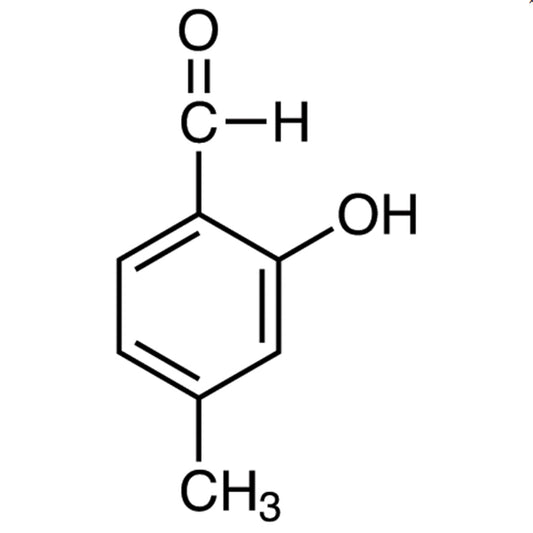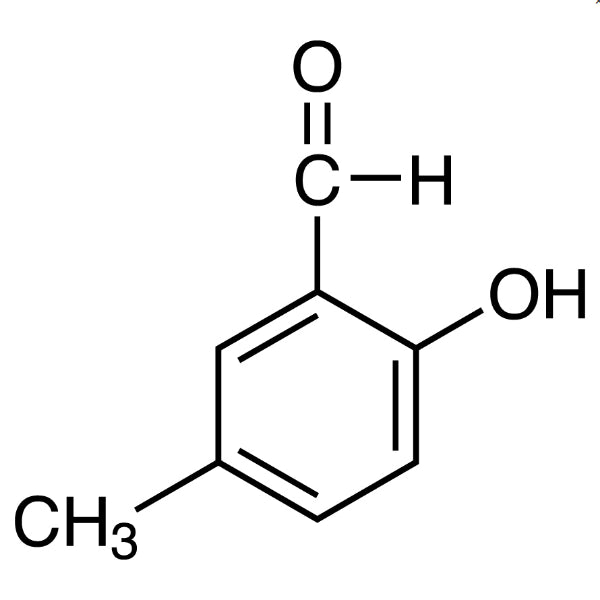
5-Methylsalicylaldehyde is a chemical compound widely used as a building block in the synthesis of complex molecules. It is a versatile intermediate in organic chemistry, known for its ability to participate in various reaction mechanisms. This compound contains an aldehyde group and a methyl group at the 5-position of the salicylaldehyde ring, making it a valuable reagent in the development of aromatic and heterocyclic compounds. Its structural simplicity and reactivity make it a popular choice among chemists for its adaptability in synthetic pathways.
The chemical properties of 5-Methylsalicylaldehyde make it a preferred choice in laboratory settings. It exhibits stability under specific conditions and readily reacts with a variety of reagents, including acids, bases, and organic reagents. These characteristics enable it to be used in substitution, condensation, and catalytic reactions. Its solubility in organic solvents further enhances its utility, facilitating purification and application in diverse experimental setups. This combination of reactivity and solubility makes it an essential component in many synthetic processes.
In Indonesian laboratories, 5-Methylsalicylaldehyde is commonly used in organic chemistry and pharmacology research. It plays a crucial role in the synthesis of bioactive compounds, drug development, and pharmaceutical studies. Its presence in research projects related to medicinal chemistry and chemical synthesis highlights its significance in both academic and industrial applications. The compound is an integral part of the chemical toolkit used by researchers in Indonesia.
- Organic synthesis is a primary application where 5-Methylsalicylaldehyde serves as a key intermediate due to its reactivity and structural versatility.
- Pharmaceutical research benefits from this compound as it is used in the development of bioactive molecules and drug candidates.
- Heterocyclic compound synthesis relies on 5-Methylsalicylaldehyde for its ability to participate in condensation and cyclization reactions.
- Analytical chemistry applications include its use as a standard for spectroscopic and chromatographic analysis due to its well-defined chemical structure.
- Industrial chemical production utilizes this compound as a building block for the creation of various aromatic derivatives and functionalized compounds.
| Brand | TCI |
|---|---|
| CAS number | 613-84-3 |
| Molecular formula | — |
| Purity | — |
| Category | Chemistry > Building Blocks > Non-Heterocyclic Building Blocks |
| Pack sizes | Available in various quantities as per standard laboratory supply |
| Physical form | Solid or liquid, depending on the specific formulation |
| Storage | Store in a cool, dry place away from direct sunlight and moisture |
5-Methylsalicylaldehyde should be stored in a cool, dry environment to maintain its chemical stability. It is recommended to keep the compound in a tightly sealed container to prevent exposure to moisture and air. Due to its reactivity, it should be handled with care, using appropriate personal protective equipment such as gloves and safety goggles. It is advisable to store it in a well-ventilated area to minimize the risk of inhalation. Avoid contact with incompatible materials such as strong oxidizing agents. Proper labeling and storage conditions ensure the safety of laboratory personnel and the integrity of the compound.
—
Produk Terkait
-
4-Methylsalicylaldehyde TCI M2431
Regular price From Rp 2.439.150,00Regular price -
3-Methylsalicylaldehyde TCI M2270
Regular price From Rp 2.995.650,00Regular price -
Salicylaldehyde TCI S0275
Regular price From Rp 584.850,00Regular price -
Salicylaldehyde TCI S0004
Regular price From Rp 689.850,00Regular price -
3,6-Dimethylsalicylaldehyde TCI D4507
Regular price From Rp 3.551.100,00Regular price -
Methyl4-Methylsalicylate TCI M1584
Regular price From Rp 1.193.850,00Regular price -
Methyl5-Methylsalicylate TCI M1353
Regular price Rp 1.776.600,00Regular price -
Ethyl6-Methylsalicylate TCI M1283
Regular price From Rp 5.672.100,00Regular price