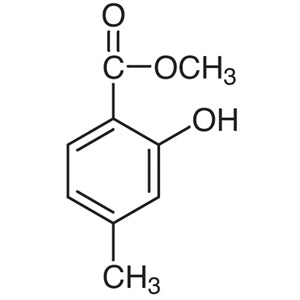
Methyl 4-Methylsalicylate is a chemical compound widely used in laboratory settings for its versatility in organic synthesis. It serves as a key building block in the creation of complex molecules, particularly in the field of organic chemistry. This compound is frequently utilized in pharmaceutical and chemical industries due to its ability to participate in substitution and esterification reactions. Its role in the laboratory extends beyond mere reactivity, as it is also valued for its aromatic properties, making it useful in the development of fragrances and flavoring agents.
The compound is known for its stable molecular structure and moderate reactivity, which make it a preferred choice for various synthetic processes. Its chemical and physical properties ensure consistency and reliability in laboratory experiments, supporting high-quality research outcomes. The compound’s stability under controlled conditions allows for prolonged use without significant degradation, enhancing its utility in both academic and industrial applications. Its availability in a pure form further ensures that it meets the stringent requirements of modern laboratory practices.
In Indonesian laboratories, Methyl 4-Methylsalicylate is commonly used in organic chemistry research, drug development, and the production of aromatic compounds. Its presence in local supply chains facilitates access for researchers and industries, supporting innovation and quality control in chemical synthesis. The compound’s role in the creation of bioactive substances underscores its importance in both academic and applied research contexts within the region.
- Organic synthesis applications benefit from Methyl 4-Methylsalicylate due to its reactivity in esterification and substitution reactions, enabling the creation of complex organic molecules.
- Pharmaceutical research utilizes this compound as a building block for the development of bioactive compounds, supporting drug discovery and formulation processes.
- Aroma and flavor development relies on its aromatic properties, making it a valuable component in the creation of natural and synthetic fragrances.
- Chemical research applications benefit from its stable molecular structure, ensuring consistent results in synthetic and analytical experiments.
- Industrial chemical production uses this compound for the synthesis of aromatic compounds, contributing to the manufacturing of various chemical products.
| Brand | TCI |
|---|---|
| CAS number | 4670-56-8 |
| Molecular formula | — |
| Purity | — |
| Category | Chemistry > Building Blocks > Non-Heterocyclic Building Blocks |
| Pack sizes | Available in standard laboratory quantities |
| Physical form | Solid or liquid, depending on the specific product variant |
| Storage | Store in a cool, dry place away from direct sunlight |
Methyl 4-Methylsalicylate should be stored in a cool, dry environment to maintain its chemical stability and prevent degradation. It is recommended to keep the compound in a tightly sealed container to minimize exposure to moisture and air, which could affect its purity. Suitable storage containers include glass or high-density polyethylene bottles, which offer resistance to chemical interactions. In laboratory settings, it is important to handle the compound with care, using appropriate personal protective equipment such as gloves and safety goggles. Proper labeling of storage containers ensures safe handling and easy identification. Regular monitoring of storage conditions helps maintain the integrity of the compound, ensuring it remains suitable for use in chemical synthesis and research applications.
—
Produk Terkait
-
Methyl5-Methylsalicylate TCI M1353
Regular price Rp 1.776.600,00Regular price -
Ethyl6-Methylsalicylate TCI M1283
Regular price From Rp 5.672.100,00Regular price -
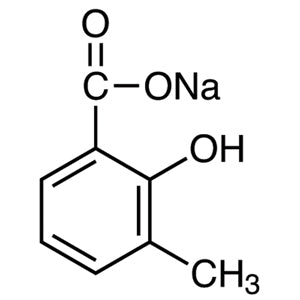
Sodium3-Methylsalicylate TCI C0411
Regular price Rp 4.718.700,00Regular price -
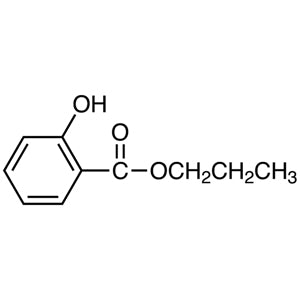
PropylSalicylate TCI S0441
Regular price Rp 2.094.750,00Regular price -
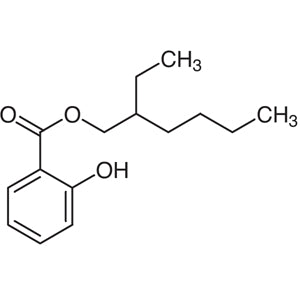
2-EthylhexylSalicylate TCI S0387
Regular price From Rp 903.000,00Regular price -
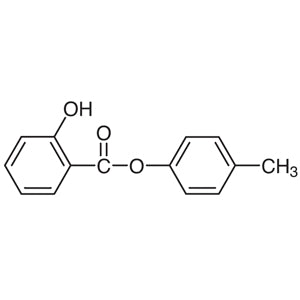
p-TolylSalicylate TCI S0018
Regular price Rp 1.803.900,00Regular price -
PhenylSalicylate TCI S0017
Regular price From Rp 505.050,00Regular price -
MethylSalicylate TCI S0015
Regular price From Rp 452.550,00Regular price