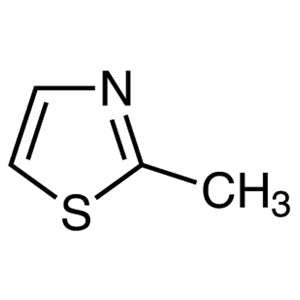
TCI M1755 2-Methylthiazole is a five-membered heterocyclic compound containing both nitrogen and sulfur atoms in the ring, with a methyl group at the 2-position. It ranks among the simplest members of the substituted thiazole family and serves as a common entry point for research built on the thiazole scaffold. In the laboratory its role is twofold: it acts as a building block for assembling more elaborate molecules, and it serves as a reference compound for spectroscopic studies and aroma analysis, since many thiazole derivatives are known for the distinctive odour character that makes them relevant in food science.
The property that recommends this compound is its balance between reactivity and ease of handling. The methyl group at the 2-position can be deprotonated to form a carbanion stabilised by the influence of the ring, which opens pathways for alkylation and aldol condensation at that methyl group. The 5-position of the thiazole ring, meanwhile, is comparatively reactive toward electrophilic substitution, and both the 2- and 5-positions can be directly metalated using strong bases. The ring nitrogen is also able to coordinate with transition metals, making the compound useful in ligand and catalysis research.
In Indonesian laboratory settings, 2-Methylthiazole is used as a starting material and reference standard across academic and industrial research groups working with heterocyclic chemistry. It supports synthetic work where a simple thiazole core is needed before further functionalisation, and it provides a well-defined comparison compound for analytical and spectroscopic method development. Supplied under the TCI brand within the heterocyclic building blocks category, it fits routine synthesis and characterisation workflows.
Related TCI products
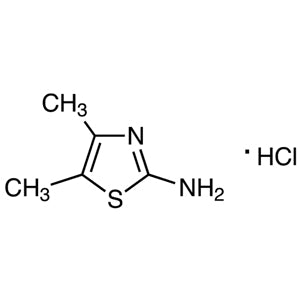
- TCI A0292 71574-33-9 2-Amino-4,5-dimethylthiazole Hydrochloride
- TCI A0336 6142-15-0 2-Amino-4-methylthiazole Hydrochloride
- TCI B1940 4209-18-1 3-Benzyl-4-methylthiazolium Chloride
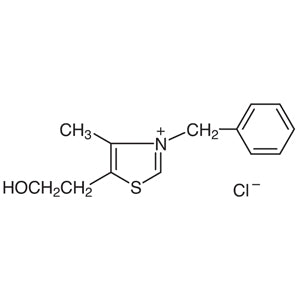
- TCI B1224 4568-71-2 3-Benzyl-5-(2-hydroxyethyl)-4-methylthiazolium Chloride
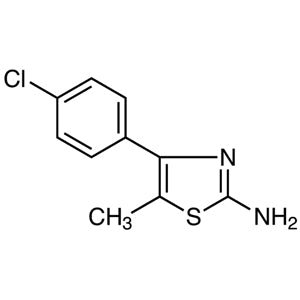
- TCI A3066 82632-77-7 2-Amino-4-(4-chlorophenyl)-5-methylthiazole
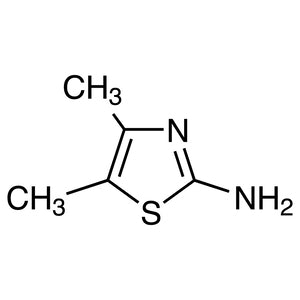
- TCI A2916 2289-75-0 4,5-Dimethylthiazol-2-amine
- Heterocyclic synthesis — provides a ready-made thiazole core so researchers can begin functionalisation directly rather than constructing the ring system from acyclic precursors themselves.
- Alkylation and aldol condensation chemistry — the 2-methyl group deprotonates to a ring-stabilised carbanion, giving a reliable and predictable handle for carbon–carbon bond formation.
- Directed metalation studies — the 2- and 5-positions respond to strong bases, allowing regioselective introduction of substituents onto the thiazole ring for structure–activity work.
- Ligand and catalysis research — the ring nitrogen coordinates to transition metals, so this compound serves as a simple model ligand for studying metal-complex behaviour.
- Spectroscopic and aroma reference work — as one of the simplest substituted thiazoles, it gives a clean comparison signal for analytical method development and flavour-related characterisation.
| Brand | TCI |
|---|---|
| CAS number | 3581-87-1 |
| Molecular formula | — |
| Purity | — |
| Category | Chemistry > Building Blocks > Heterocyclic Building Blocks |
| Pack sizes | available in standard TCI research pack sizes; please confirm the size required when ordering |
| Physical form | — |
| Storage | keep in a tightly closed original container, stored cool and away from light |
- Product code: M1755
Store the material in its original tightly sealed container, kept in a cool, dry and well-ventilated area away from direct sunlight, heat sources and ignition sources. Chemically resistant glass containers with secure closures are appropriate, and the container should be reclosed promptly after each use to limit exposure to air and moisture. Handle the compound inside a functioning fume hood, since thiazole derivatives carry a pronounced odour, and wear standard personal protective equipment including safety goggles, a laboratory coat and chemically resistant gloves. Keep the compound separated from strong oxidising agents and strong acids, and follow your institution's standard procedures for labelling, spill response and chemical waste disposal.
—
Produk Terkait
-
2-Amino-4,5-dimethylthiazoleHydrochloride TCI A0292
Regular price From Rp 505.050,00Regular price -
2-Amino-4-methylthiazoleHydrochloride TCI A0336
Regular price From Rp 1.326.150,00Regular price -
3-Benzyl-4-methylthiazoliumChloride TCI B1940
Regular price Rp 2.995.650,00Regular price -
3-Benzyl-5-(2-hydroxyethyl)-4-methylthiazoliumChloride TCI B1224
Regular price Rp 2.227.050,00Regular price -
2-Amino-4-(4-chlorophenyl)-5-methylthiazole TCI A3066
Regular price From Rp 1.035.300,00Regular price -
4,5-Dimethylthiazol-2-amine TCI A2916
Regular price From Rp 1.220.100,00Regular price -
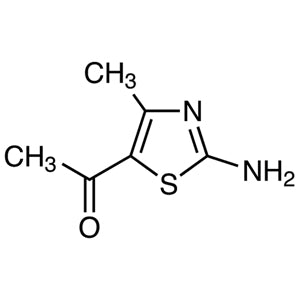
5-Acetyl-2-amino-4-methylthiazole TCI A2887
Regular price From Rp 769.650,00Regular price -
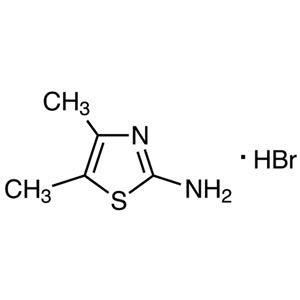
2-Amino-4,5-dimethylthiazoleHydrobromide TCI A2062
Regular price From Rp 1.273.650,00Regular price