Methyl 4-Chloro-3-nitrobenzoate (TCI M1779) is a benzoate ester carrying a chlorine atom and a nitro group at neighbouring positions on the aromatic ring. This arrangement is no accident: the strongly electron-withdrawing nitro group activates the adjacent chlorine atom, leaving it highly susceptible to displacement by nucleophiles. For this reason the compound is known in the laboratory as a dependable substrate for nucleophilic aromatic substitution, a transformation that forms the backbone of many synthetic routes toward heterocyclic compounds and drug candidates.
The property that makes it so useful is its ability to perform two roles in sequence. First, the chlorine is replaced by an amine, a thiol, or an alkoxide under relatively simple conditions, often requiring no more than heating in a polar aprotic solvent with a base. Second, the remaining nitro group can then be reduced to an aromatic amine, producing a pair of neighbouring functional groups ready to be cyclised into benzimidazole, quinoxaline, or other fused ring systems. The methyl ester survives both stages intact and can be processed later into the corresponding acid or amide. As a stable solid, the material is easy to weigh out and to store.
In Indonesian laboratories, this building block is typically handled in university and institutional research groups working on medicinal chemistry and heterocyclic synthesis, as well as in industrial R&D settings that prepare intermediates on a small scale. Because it is a stable solid rather than a volatile or moisture-sensitive reagent, it suits local working conditions, where warm and humid ambient air makes storage stability an important practical consideration for any reagent kept on the shelf between experiments.
Related TCI products
- TCI M1996 51282-49-6 Methyl 5-Chloro-2-nitrobenzoate
- TCI M1724 13324-11-3 Methyl 2-Chloro-4-nitrobenzoate
- TCI C1732 6307-82-0 Methyl 2-Chloro-5-nitrobenzoate
- TCI C0939 42087-80-9 Methyl 4-Chloro-2-nitrobenzoate
- TCI B2255 76008-73-6 Ethyl 5-Bromo-2-chlorobenzoate
- TCI B1916 6942-36-5 Methyl 2-Bromo-5-nitrobenzoate
- Nucleophilic aromatic substitution studies — the nitro group activates the adjacent chlorine so strongly that displacement by amines, thiols, or alkoxides proceeds under mild, reproducible conditions suitable for teaching and method development.
- Benzimidazole and quinoxaline synthesis — sequential substitution followed by nitro reduction delivers the neighbouring amine pair required to close these fused heterocyclic rings in a controlled, stepwise manner.
- Medicinal chemistry intermediate preparation — the compound serves as an early-stage scaffold in routes toward drug candidates, since three distinct handles can be elaborated independently without protecting group manipulation.
- Aromatic amine generation by nitro reduction — after the chlorine has been displaced, the remaining nitro group is reduced to an aniline derivative that anchors subsequent cyclisation or coupling steps.
- Ester interconversion chemistry — the methyl ester remains intact through substitution and reduction, then can be hydrolysed to the carboxylic acid or converted to an amide at the end of a sequence.
| Brand | TCI (Tokyo Chemical Industry) |
|---|---|
| CAS number | 14719-83-6 |
| Molecular formula | — |
| Purity | — |
| Category | Chemistry > Building Blocks > Non-Heterocyclic Building Blocks |
| Pack sizes | — |
| Physical form | stable solid |
| Storage | keep in a closed container in a cool, dry place; refer to the manufacturer's label and safety data sheet for the specific storage condition |
- Catalogue number: M1779
Store the container tightly closed in a cool, dry, well-ventilated area, away from heat sources, direct sunlight, and incompatible materials such as strong reducing agents and strong bases. The original manufacturer's bottle is the most suitable container; if the material is transferred, use a clean, chemically resistant, tightly sealed vessel that is clearly labelled with the compound name and CAS number. Weigh and transfer the solid in a fume hood to avoid inhaling dust, and wear safety glasses, gloves, and a laboratory coat. Nitroaromatic compounds warrant careful handling, so avoid skin and eye contact and wash thoroughly after use. Consult the safety data sheet supplied with the product before opening the container, and follow institutional procedures for the disposal of chemical waste and contaminated consumables.
—
Produk Terkait
-
Methyl5-Chloro-2-nitrobenzoate TCI M1996
Regular price From Rp 717.150,00Regular priceRp 516.600,00Sale price From Rp 717.150,00 -
Methyl2-Chloro-4-nitrobenzoate TCI M1724
Regular price From Rp 1.060.500,00Regular priceRp 757.050,00Sale price From Rp 1.060.500,00 -
Methyl2-Chloro-5-nitrobenzoate TCI C1732
Regular price From Rp 769.650,00Regular priceRp 553.350,00Sale price From Rp 769.650,00 -
Methyl4-Chloro-2-nitrobenzoate TCI C0939
Regular price Rp 2.544.150,00Regular priceRp 1.794.450,00Sale price Rp 2.544.150,00 -
Ethyl5-Bromo-2-chlorobenzoate TCI B2255
Regular price From Rp 980.700,00Regular priceRp 701.400,00Sale price From Rp 980.700,00 -
Methyl2-Bromo-5-nitrobenzoate TCI B1916
Regular price From Rp 662.550,00Regular priceRp 478.800,00Sale price From Rp 662.550,00 -
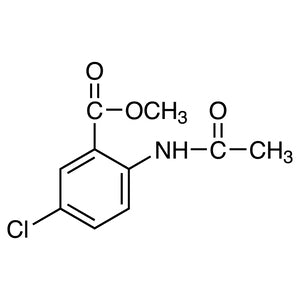
Methyl2-Acetamido-5-chlorobenzoate TCI A1609
Regular price Rp 822.150,00Regular priceRp 590.100,00Sale price Rp 822.150,00 -
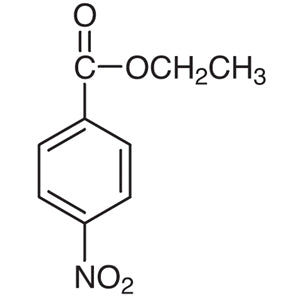
Ethyl4-Nitrobenzoate TCI N0485
Regular price Rp 795.900,00Regular priceRp 572.250,00Sale price Rp 795.900,00