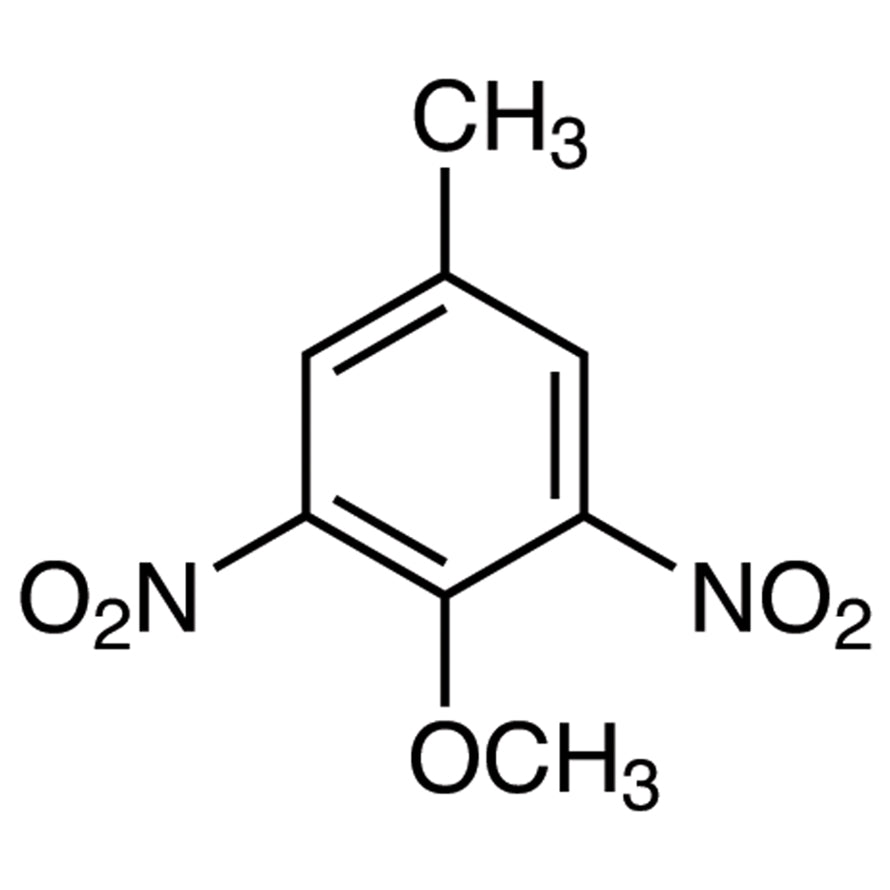
TCI M1842 4-Methoxy-3,5-dinitrotoluene is a nitroaromatic compound built on a benzene ring that carries a methyl group, a methoxy group, and two nitro groups flanking the methoxy substituent. This ordered substitution pattern makes it a valuable building block for organic synthesis laboratories, particularly where a strongly electron-poor aromatic ring is required. The nitro groups do more than set the direction of ring reactivity: they also serve as latent functionality that can later be converted into amines, so that a single starting molecule can be elaborated into a wide range of derivative scaffolds.
The feature that makes this compound a preferred choice is its strong activation toward nucleophilic aromatic substitution. The two nitro groups sit exactly ortho to the methoxy group and withdraw electron density very effectively, turning the methoxy group into a leaving group that is readily displaced by amines, alkoxides, or thiolates under conditions far milder than those demanded by ordinary aromatic systems. The methyl group on the opposite side of the ring can also be exploited: it can be oxidized to a carboxylic acid or an aldehyde, or deprotonated to a carbanion that is stabilized by the neighbouring nitro groups, opening further routes for chain extension.
In Indonesian laboratories, this building block is typically encountered in university and institutional research groups working on organic synthesis, in medicinal and materials chemistry programmes that need densely functionalized aromatic intermediates, and in method-development work where a reliable, reactive substrate is needed to test new substitution or reduction conditions. It is normally handled at bench scale in fume-hood-equipped synthesis laboratories where reagents are weighed out in small portions and reaction progress is followed by routine analytical techniques.
Related TCI products
- TCI B1379 83-66-9 4-tert-Butyl-3-methoxy-2,6-dinitrotoluene
- TCI B4723 115929-59-4 2-Bromo-4-methoxy-6-nitrophenol
- TCI B4539 173336-76-0 4-Bromo-1-methoxy-2-(3-methoxypropoxy)benzene
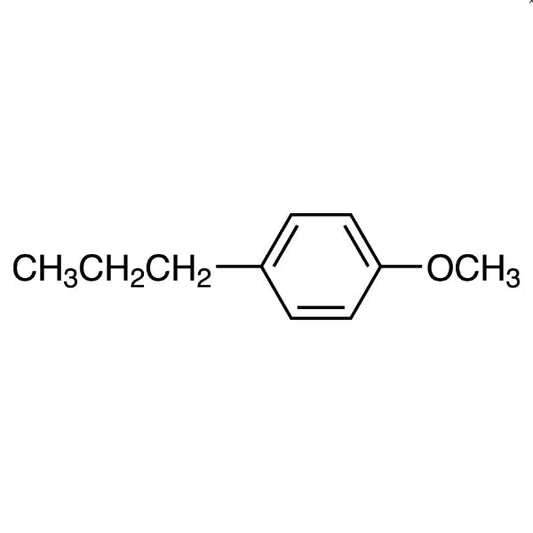
- TCI P3068 104-45-0 1-Methoxy-4-propylbenzene
- TCI M3747 15969-08-1 2-Methoxy-6-nitrophenol
- TCI M3600 7786-61-0 2-Methoxy-4-vinylphenol (stabilized with TBC)
- Nucleophilic aromatic substitution studies: the twin nitro groups ortho to the methoxy group activate the ring so strongly that displacement proceeds under mild, easily controlled laboratory conditions.
- Synthesis of aromatic amine intermediates: the nitro groups act as latent amine functionality, allowing reduction steps that convert one substrate into several different derivative scaffolds.
- Preparation of substituted anisole and aryl ether analogues: amines, alkoxides, or thiolates cleanly replace the methoxy group to give structurally varied aryl products.
- Side-chain functionalization chemistry: the ring methyl group can be oxidized to an aldehyde or carboxylic acid, extending the molecule toward more elaborate synthetic targets.
- Carbanion and chain-extension work: deprotonation of the methyl group gives a nitro-stabilized carbanion useful for building larger carbon frameworks in multistep sequences.
| Brand | TCI |
|---|---|
| CAS number | 29455-11-6 |
| Molecular formula | — |
| Purity | — |
| Category | Chemistry > Building Blocks > Non-Heterocyclic Building Blocks |
| Pack sizes | available in standard TCI research-scale packaging; please confirm the pack size when ordering |
| Physical form | — |
| Storage | keep in the closed original container under the storage conditions stated on the manufacturer's label and safety data sheet |
- Chemical class: nitroaromatic building block bearing methyl, methoxy, and two nitro substituents
Store the material in its tightly closed original container, in a cool, dry, well-ventilated place away from heat, open flame, direct sunlight, and incompatible substances such as strong reducing agents and strong bases. Keep the container clearly labelled and protected from mechanical shock. As with all nitroaromatic compounds, handle only in a functioning fume hood, wearing safety glasses, chemically resistant gloves, and a laboratory coat, and avoid raising dust, skin contact, or inhalation of vapour. Weigh out only the quantity required, close the container promptly afterwards, and collect all residues and contaminated consumables as chemical waste. Always consult the manufacturer's safety data sheet before first use and follow your institution's chemical handling procedures.
—
Produk Terkait
-
4-tert-Butyl-3-methoxy-2,6-dinitrotoluene TCI B1379
Regular price From Rp 875.700,00Regular price -
2-Bromo-4-methoxy-6-nitrophenol TCI B4723
Regular price From Rp 505.050,00Regular price -
4-Bromo-1-methoxy-2-(3-methoxypropoxy)benzene TCI B4539
Regular price From Rp 848.400,00Regular price -
1-Methoxy-4-propylbenzene TCI P3068
Regular price Rp 1.829.100,00Regular price -
2-Methoxy-6-nitrophenol TCI M3747
Regular price From Rp 2.889.600,00Regular price -
2-Methoxy-4-vinylphenol(stabilizedwithTBC) TCI M3600
Regular price From Rp 2.862.300,00Regular price -
1-Methoxy-4-phenoxybenzene TCI M3535
Regular price From Rp 2.279.550,00Regular price -
2-Methoxy-6-methylphenol TCI M3471
Regular price From Rp 903.000,00Regular price