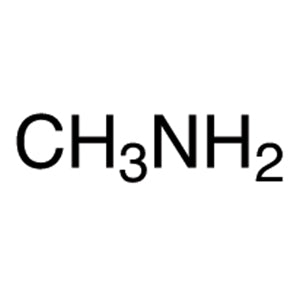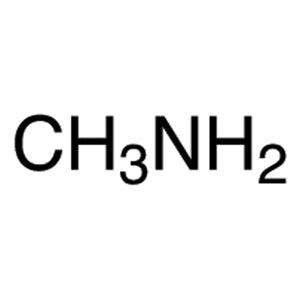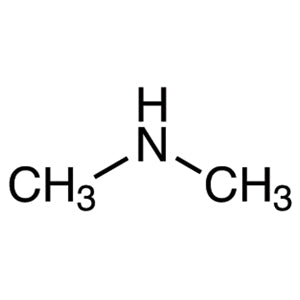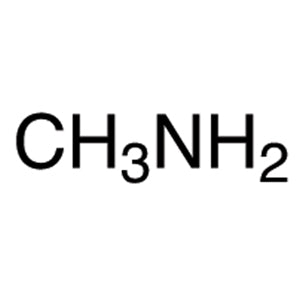
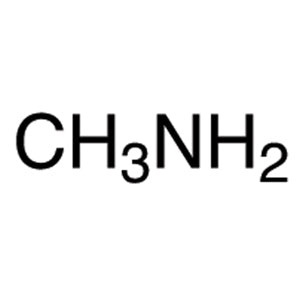
Methylamine (74-89-5) is a versatile chemical compound widely used in laboratory settings for various synthetic reactions. As a basic compound, it plays a crucial role in organic chemistry by acting as a nucleophile and a base in numerous reactions. Its ability to form salts and participate in condensation reactions makes it indispensable for the synthesis of amines, amides, and other organic compounds. This reagent is particularly valuable in the development of aromatic compounds and functionalized molecules, where its reactivity and solubility properties are highly beneficial.
The TCI M2108 product is formulated as a diluted solution containing approximately 2 mol/L of methylamine in tetrahydrofuran (THF). This formulation enhances its usability and stability, making it ideal for routine laboratory applications. The controlled concentration of about 7% ensures safer handling while maintaining the reagent's effectiveness. Additionally, the use of THF as a solvent provides excellent solubility and stability, simplifying both storage and application processes. These properties make it a preferred choice for chemists requiring reliable and consistent performance in their experiments.
In Indonesian laboratories, methylamine is commonly used in organic chemistry research conducted by universities and research institutions. Its availability and reliability make it a go-to reagent for synthetic processes. It is frequently employed in the preparation of complex organic molecules and in the study of reaction mechanisms. The ease of handling and the controlled concentration further support its widespread use in both academic and industrial research settings.
TCI brochures (PDF)
- Safely Handleable Volatile Solutions 2024-05-02 · p. 1
- DualSeal ― Airtight-Double-Cap Bottled Reagents 2024-08-13 · p. 4
Related TCI products
- TCI M2324 74-89-5 Methylamine (ca. 9% in Isopropyl Alcohol, ca. 2mol/L)
- TCI M2323 74-89-5 Methylamine (ca. 9% in Ethanol, ca. 2mol/L)
- TCI M1016 74-89-5 Methylamine (40% in Methanol, ca. 9.8mol/L)
- TCI M0137 74-89-5 Methylamine (ca 40% in Water, ca 12mol/L)
- TCI D4198 124-40-3 Dimethylamine (ca. 11% in Isopropyl Alcohol, ca. 2mol/L)
- TCI T3614 75-50-3 Trimethylamine (ca. 8% in Toluene, ca. 1mol/L)
- Organic synthesis is a key application where methylamine is used to form amines and amides, providing a reliable base for various reaction mechanisms.
- Aromatic compound synthesis benefits from methylamine's ability to participate in nucleophilic reactions, aiding in the formation of complex aromatic structures.
- Amide synthesis relies on methylamine's reactivity, allowing for the efficient creation of amide bonds in synthetic pathways.
- Functional group modification is enhanced by methylamine's versatility, enabling the introduction of amine functionalities into organic molecules.
- Analytical chemistry applications utilize methylamine as a reagent for pH adjustment and in the preparation of buffer solutions for various analytical procedures.
| Brand | TCI |
|---|---|
| CAS number | 74-89-5 |
| Molecular formula | — |
| Purity | — |
| Category | Chemistry > Synthetic Reagents > Acids, Bases [Synthetic Reagents] |
| Pack sizes | — |
| Physical form | Liquid solution in tetrahydrofuran |
| Storage | Store in a cool, dark place away from incompatible materials |
Methylamine should be stored in a cool, dark location, away from direct sunlight and sources of heat. It is recommended to keep the solution in a tightly sealed container made of materials compatible with organic solvents, such as glass or high-density polyethylene. Due to its basic nature, it should be stored separately from strong acids and oxidizing agents to prevent unwanted reactions. In laboratory settings, personal protective equipment such as gloves, goggles, and a lab coat should be worn when handling the reagent. Proper ventilation is essential to minimize exposure to vapors, and the container should be labeled clearly to ensure safe handling and storage practices.
—
Product Categories
Produk Terkait
-
Methylamine(ca.9%inIsopropylAlcohol,ca.2mol/L) TCI M2324
Regular price From Rp 769.650,00Regular price -
Methylamine(ca.9%inEthanol,ca.2mol/L) TCI M2323
Regular price Rp 795.900,00Regular price -
Methylamine(40%inMethanol,ca.9.8mol/L) TCI M1016
Regular price From Rp 637.350,00Regular price -
Methylamine(ca40%inWater,ca12mol/L) TCI M0137
Regular price From Rp 477.750,00Regular price -
Dimethylamine(ca.11%inIsopropylAlcohol,ca.2mol/L) TCI D4198
Regular price From Rp 717.150,00Regular price -
Trimethylamine(ca.8%inToluene,ca.1mol/L) TCI T3614
Regular price Rp 1.087.800,00Regular price -
Trimethylamine(ca.25%inIsopropylAlcohol,ca.3mol/L) TCI T2893
Regular price From Rp 717.150,00Regular price -
TetrabutylammoniumHydroxide(37%inMethanol) TCI T1948
Regular price Rp 610.050,00Regular price