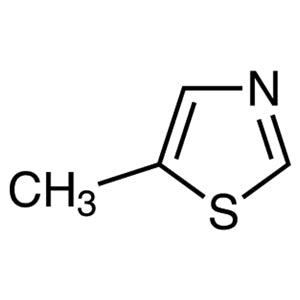
5-Methylthiazole is a chemical compound classified under the heterocyclic category, featuring a thiazole ring with a methyl group attached at the fifth position. This compound plays a crucial role in laboratory settings, particularly in organic and pharmaceutical research, where it serves as a versatile building block for the synthesis of complex molecules. Its structural simplicity and functional versatility make it an essential tool for chemists aiming to develop new drugs or functional materials. In the laboratory, 5-Methylthiazole is often used to create derivatives with specific biological activities, supporting a wide range of chemical transformations and molecular design strategies.
The chemical properties of 5-Methylthiazole make it a preferred choice for synthetic chemists. It exhibits good solubility in organic solvents, enabling it to participate in various reaction types such as substitution, reduction, and coupling reactions. Its controlled reactivity and chemical stability allow for precise manipulation in synthetic pathways, ensuring predictable outcomes in complex chemical processes. Additionally, its thermal stability ensures that it remains viable under a range of laboratory conditions, making it a reliable reagent for both routine and advanced chemical experiments.
In Indonesian laboratories, 5-Methylthiazole is commonly used in research and development activities within the pharmaceutical and chemical industries. It supports the synthesis of bioactive compounds and is integral to the development of new therapeutic agents. Its availability and chemical properties make it a standard component in many laboratory workflows, particularly in academic and industrial research settings.
Related TCI products
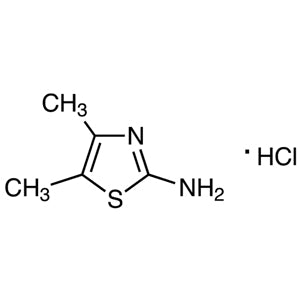
- TCI A0292 71574-33-9 2-Amino-4,5-dimethylthiazole Hydrochloride
- TCI A0336 6142-15-0 2-Amino-4-methylthiazole Hydrochloride
- TCI B1940 4209-18-1 3-Benzyl-4-methylthiazolium Chloride
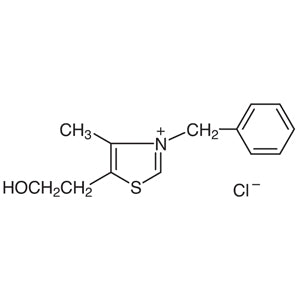
- TCI B1224 4568-71-2 3-Benzyl-5-(2-hydroxyethyl)-4-methylthiazolium Chloride
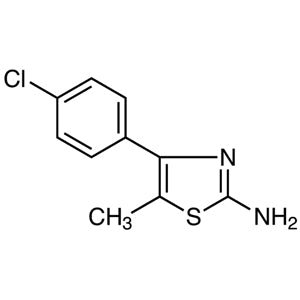
- TCI A3066 82632-77-7 2-Amino-4-(4-chlorophenyl)-5-methylthiazole
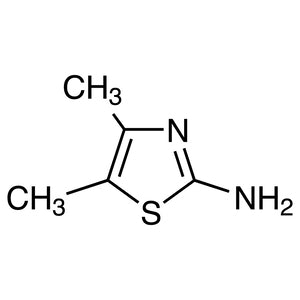
- TCI A2916 2289-75-0 4,5-Dimethylthiazol-2-amine
- Organic synthesis: 5-Methylthiazole is widely used in organic synthesis due to its reactivity and ability to form complex molecular structures.
- Pharmaceutical research: It serves as a key building block in the development of new drugs and bioactive compounds.
- Heterocyclic compound synthesis: Its thiazole ring structure makes it ideal for creating a variety of heterocyclic derivatives.
- Industrial chemical production: It is utilized in the production of various chemical intermediates and specialty chemicals.
- Analytical chemistry: It is used as a reference standard in analytical procedures and quality control processes.
| Brand | TCI |
|---|---|
| CAS number | 3581-89-3 |
| Molecular formula | — |
| Purity | — |
| Category | Chemistry > Building Blocks > Heterocyclic Building Blocks |
| Pack sizes | Available in various quantities as per supplier specifications |
| Physical form | Liquid |
| Storage | Store in a cool, dry place away from light |
5-Methylthiazole should be stored in a cool, dry place away from direct light to maintain its chemical stability. It is recommended to use airtight containers made of glass or polyethylene to prevent contamination and evaporation. Due to its chemical nature, it should be handled with appropriate personal protective equipment, including gloves and safety goggles. It is important to ensure proper ventilation in the laboratory when working with this compound. Avoid contact with incompatible materials such as strong oxidizing agents. Always follow standard laboratory safety protocols to ensure safe handling and storage.
—
Produk Terkait
-
2-Amino-4,5-dimethylthiazoleHydrochloride TCI A0292
Regular price From Rp 505.050,00Regular price -
2-Amino-4-methylthiazoleHydrochloride TCI A0336
Regular price From Rp 1.326.150,00Regular price -
3-Benzyl-4-methylthiazoliumChloride TCI B1940
Regular price Rp 2.995.650,00Regular price -
3-Benzyl-5-(2-hydroxyethyl)-4-methylthiazoliumChloride TCI B1224
Regular price Rp 2.227.050,00Regular price -
2-Amino-4-(4-chlorophenyl)-5-methylthiazole TCI A3066
Regular price From Rp 1.035.300,00Regular price -
4,5-Dimethylthiazol-2-amine TCI A2916
Regular price From Rp 1.220.100,00Regular price -
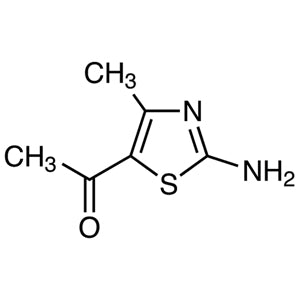
5-Acetyl-2-amino-4-methylthiazole TCI A2887
Regular price From Rp 769.650,00Regular price -
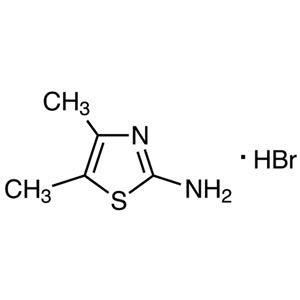
2-Amino-4,5-dimethylthiazoleHydrobromide TCI A2062
Regular price From Rp 1.273.650,00Regular price