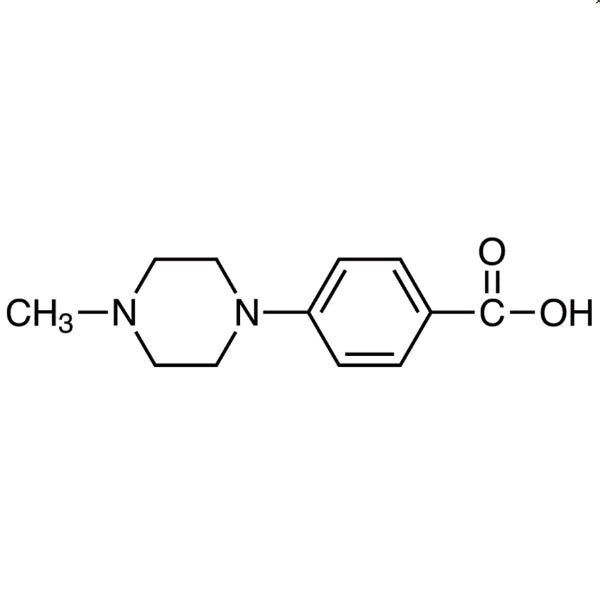
4-(4-Methylpiperazinyl)benzoic Acid is a chemical compound widely used in laboratory settings as a building block for the synthesis of heterocyclic compounds. This material plays a crucial role in organic chemistry by enabling the creation of complex molecular structures with potential biological activity. Its unique molecular framework combines a benzoic acid group with a modified piperazine ring, making it highly versatile for chemical modifications. In research environments, it is a key component in the development of pharmaceuticals and other advanced chemical products.
The compound is valued for its chemical stability and reactivity, which make it a preferred choice in various synthetic reactions. Its ability to undergo substitution and coupling reactions allows chemists to tailor its structure for specific applications. Additionally, its solubility in organic solvents simplifies the process of synthesis and purification. These properties contribute to its widespread use in both academic and industrial research. The predictable chemical behavior of this compound ensures reliable results in experimental processes.
In Indonesian laboratories, 4-(4-Methylpiperazinyl)benzoic Acid is commonly used in organic chemistry and pharmacological research. It supports the development of new drugs and bioactive compounds by serving as a foundational element in molecular design. Its availability and performance make it a popular choice among researchers working on complex chemical syntheses. The compound is integral to advancing scientific knowledge in the field of medicinal chemistry.
Related TCI products
- TCI M1624 27913-99-1 4-(4-Methylpiperazinyl)benzaldehyde
- TCI A3772 4572-03-6 3-(4-Methylpiperazin-1-yl)propan-1-amine
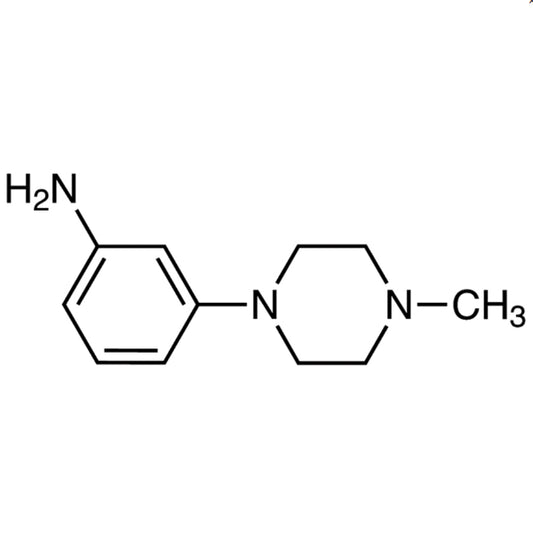
- TCI A2714 148546-99-0 3-(4-Methyl-1-piperazinyl)aniline
- TCI A1192 6928-85-4 1-Amino-4-methylpiperazine
- TCI P2449 68104-63-2 4-(1-Piperazinyl)benzonitrile
- TCI P2448 111373-03-6 2-(1-Piperazinyl)benzonitrile
- Organic synthesis applications benefit from this compound’s structural versatility and reactivity, enabling the creation of diverse heterocyclic derivatives.
- Pharmaceutical research utilizes it as a core building block for the development of bioactive molecules with therapeutic potential.
- Medicinal chemistry projects rely on its ability to undergo substitution and coupling reactions, facilitating the design of novel drug candidates.
- Analytical chemistry experiments use it as a standard reference material for testing reaction conditions and purification techniques.
- Biochemical studies incorporate it to investigate the interaction of heterocyclic compounds with biological systems and cellular processes.
| Brand | TCI |
|---|---|
| CAS number | 86620-62-4 |
| Molecular formula | — |
| Purity | — |
| Category | Chemistry > Building Blocks > Heterocyclic Building Blocks |
| Pack sizes | Available in various quantities as per standard laboratory supply options |
| Physical form | Solid |
| Storage | Store in a cool, dry place away from direct sunlight and moisture |
This compound should be stored in a cool, dry environment to maintain its chemical integrity and prevent degradation. It is recommended to use airtight containers to protect it from moisture and air exposure. Due to its chemical reactivity, it should be handled with appropriate personal protective equipment, including gloves and safety goggles. Storage should be in a well-ventilated area to minimize any potential fumes. The compound is not flammable but should be kept away from incompatible substances to ensure safety in the laboratory. Proper labeling of containers is essential to avoid confusion and ensure safe handling procedures are followed.
—
Produk Terkait
-
4-(4-Methylpiperazinyl)benzaldehyde TCI M1624
Regular price From Rp 2.518.950,00Regular price -
3-(4-Methylpiperazin-1-yl)propan-1-amine TCI A3772
Regular price From Rp 2.359.350,00Regular price -
3-(4-Methyl-1-piperazinyl)aniline TCI A2714
Regular price From Rp 1.008.000,00Regular price -
1-Amino-4-methylpiperazine TCI A1192
Regular price From Rp 1.908.900,00Regular price -
4-(1-Piperazinyl)benzonitrile TCI P2449
Regular price From Rp 2.597.700,00Regular price -
2-(1-Piperazinyl)benzonitrile TCI P2448
Regular price Rp 2.068.500,00Regular price -
1-Methylpiperazin-2-one TCI M3684
Regular price From Rp 1.485.750,00Regular price -
2-(4-Methylpiperazin-1-yl)ethan-1-amine TCI M3597
Regular price Rp 1.485.750,00Regular price