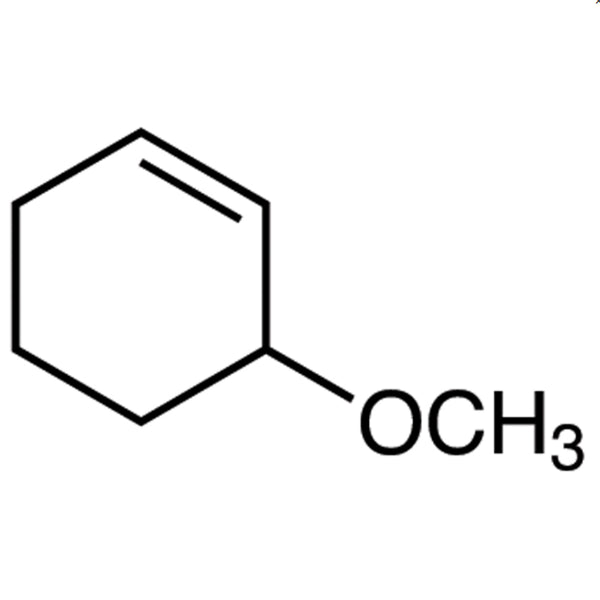
3-Methoxycyclohexene is a chemical compound widely used in organic synthesis reactions within laboratory settings. It belongs to the category of non-heterocyclic building blocks and serves as a fundamental component in the development of more complex chemical structures. This compound features a cyclohexene ring with a methoxy group attached to one carbon atom, making it a versatile intermediate in various synthetic pathways. Its role in the laboratory is critical for researchers aiming to create new compounds or modify existing molecular frameworks through chemical transformations.
The properties of 3-Methoxycyclohexene make it a preferred choice for chemical synthesis. Its stable molecular structure allows for controlled reactivity, enabling it to participate in substitution and addition reactions effectively. The compound is also volatile, which facilitates rapid evaporation and simplifies the preparation of reactive mixtures. These characteristics make it suitable for applications requiring precision and efficiency in synthetic processes, particularly in environments where speed and accuracy are essential.
In Indonesian laboratories, 3-Methoxycyclohexene is commonly used in organic chemistry research. It plays a key role in the synthesis of new compounds and the modification of molecular structures. Its availability and chemical properties make it a valuable resource for researchers working on advanced chemical projects. The compound is also frequently used in educational and industrial research contexts, supporting both academic and applied scientific investigations.
- Organic synthesis research - 3-Methoxycyclohexene is ideal for creating complex organic compounds due to its reactive nature and structural versatility.
- Molecular modification studies - The compound's ability to undergo substitution and addition reactions makes it suitable for altering molecular structures in targeted ways.
- Intermediate production in chemical manufacturing - It serves as a key building block in the development of various chemical products and pharmaceutical precursors.
- Teaching and training in chemical laboratories - Its use in educational settings helps students understand the principles of organic synthesis and reaction mechanisms.
- Research in pharmaceutical development - The compound's reactivity and stability make it a useful tool in the synthesis of drug-related compounds and bioactive molecules.
| Brand | TCI |
|---|---|
| CAS number | 2699-13-0 |
| Molecular formula | — |
| Purity | — |
| Category | Chemistry > Building Blocks > Non-Heterocyclic Building Blocks |
| Pack sizes | Available in various quantities as per supplier specifications |
| Physical form | Liquid |
| Storage | Store in a cool, dark place away from heat and direct sunlight |
3-Methoxycyclohexene should be stored in a cool, dark environment to maintain its chemical stability. It is recommended to keep the compound in a tightly sealed container to prevent evaporation and contamination. Due to its volatility, it is important to handle the substance in a well-ventilated area to minimize exposure. The container should be made of materials compatible with organic solvents, such as glass or high-density polyethylene. Always follow standard laboratory safety protocols, including the use of personal protective equipment, to ensure safe handling and storage.
—
Produk Terkait
-
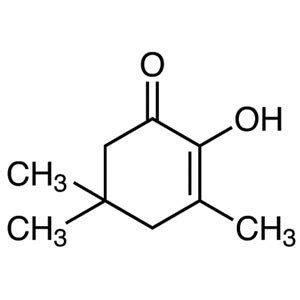
2-Hydroxy-3,5,5-trimethyl-2-cyclohexen-1-one TCI T2723
Regular price Rp 1.273.650,00Regular price -
Methoxycyclohexane TCI M2374
Regular price From Rp 4.081.350,00Regular price -
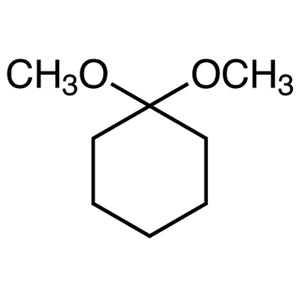
1,1-Dimethoxycyclohexane TCI D1372
Regular price Rp 505.050,00Regular price -
3-Cyclohexene-1-methanol TCI C2435
Regular price From Rp 3.100.650,00Regular price -
2-Cyclohexen-1-ol TCI C0816
Regular price Rp 4.320.750,00Regular price -
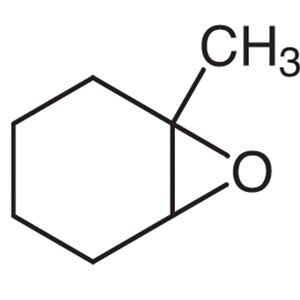
1-Methyl-1,2-epoxycyclohexane TCI M1983
Regular price From Rp 1.696.800,00Regular price -
(3,4-Epoxycyclohexyl)methylAcrylate(stabilizedwithHQ) TCI E1384
Regular price From Rp 928.200,00Regular price -
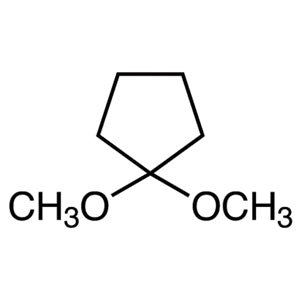
1,1-Dimethoxycyclopentane TCI D1886
Regular price From Rp 1.326.150,00Regular price