Methoxycyclohexane, with CAS number 931-56-6, also known as cyclohexyl methyl ether, is a cyclic aliphatic ether consisting of a cyclohexane ring bonded to a methoxy group. The compound is classified as a non-heterocyclic building block and also serves as an organic solvent as well as a model compound in chemical research. In the laboratory, it is used to study the behaviour of ethers, as a reaction medium ranging from nonpolar to low polarity, and as a reference material in instrumental analysis.
The properties that make this compound valuable are the relatively high stability of its ether bond towards bases, nucleophiles, and reducing reagents, together with its low polarity and aprotic character. The cyclohexane ring provides the classic chair conformational framework, so this compound is frequently used as an example in studies of conformational analysis and of the influence of axial and equatorial positions on molecular properties. Under strongly acidic conditions its ether bond can be cleaved, and this characteristic is exploited in research on the mechanism of ether cleavage reactions. Its liquid form makes measurement and mixing straightforward.
In Indonesia, materials of this kind are used in chemistry laboratories where a stable, low-polarity ether is required as a reaction medium or as a reference compound. Supplied under the TCI brand within the Chemistry > Building Blocks > Non-Heterocyclic Building Blocks category, it supports both routine bench work and structured teaching or research activities that call for a well-characterised ether of consistent quality.
Related TCI products
- Ether behaviour studies: the stable ether linkage of methoxycyclohexane makes it a dependable subject for investigating how ether bonds respond to bases, nucleophiles, and reducing reagents.
- Reaction medium: its nonpolar to low-polarity, aprotic character allows it to serve as a solvent for reactions that must avoid protic or strongly polar conditions.
- Conformational analysis teaching and research: the cyclohexane ring offers a classic chair framework for examining how axial and equatorial positions influence the properties of a molecule.
- Ether cleavage mechanism research: because the ether bond can be cleaved under strongly acidic conditions, the compound is well suited to mechanistic studies of that cleavage process.
- Instrumental analysis reference: as a liquid of defined identity it functions as a reference material, and its liquid form makes accurate measurement and mixing convenient during analysis.
| Brand | TCI |
|---|---|
| CAS number | 931-56-6 |
| Molecular formula | — |
| Purity | — |
| Category | Chemistry > Building Blocks > Non-Heterocyclic Building Blocks |
| Pack sizes | available in the packaging options listed by the manufacturer for this product code |
| Physical form | liquid |
| Storage | keep tightly closed in a cool, well-ventilated place away from ignition sources and strong acids |
- Product code: M2374
Store methoxycyclohexane in its original tightly closed container, kept in a cool, dry, and well-ventilated area away from ignition sources, oxidising agents, and strong acids, since strongly acidic conditions can cleave the ether bond. Use containers and closures compatible with organic ethers, and keep them properly labelled. As with any volatile organic liquid, handle it inside a fume hood, wear suitable gloves, safety goggles, and a laboratory coat, avoid inhaling vapour or direct skin contact, and follow the safety data sheet supplied with the product for detailed handling, spill response, and disposal guidance.
—
Produk Terkait
-
3-Methoxycyclohexene TCI M2455
Regular price Rp 4.133.850,00Regular price -
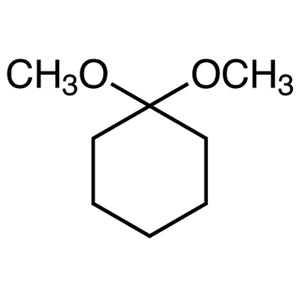
1,1-Dimethoxycyclohexane TCI D1372
Regular price Rp 505.050,00Regular price -
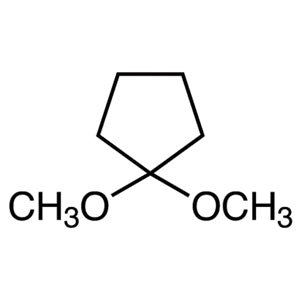
1,1-Dimethoxycyclopentane TCI D1886
Regular price From Rp 1.326.150,00Regular price -
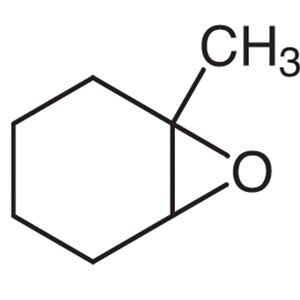
1-Methyl-1,2-epoxycyclohexane TCI M1983
Regular price From Rp 1.696.800,00Regular price -
(3,4-Epoxycyclohexyl)methylAcrylate(stabilizedwithHQ) TCI E1384
Regular price From Rp 928.200,00Regular price -
2-Methoxycyclohexanone TCI M1171
Regular price From Rp 3.075.450,00Regular price -
2,2-Bis(4-hydroxycyclohexyl)propane(mixtureofisomers) TCI B0928
Regular price From Rp 505.050,00Regular price -
Methyltrans-4-Hydroxycyclohexanecarboxylate TCI M1991
Regular price From Rp 717.150,00Regular price