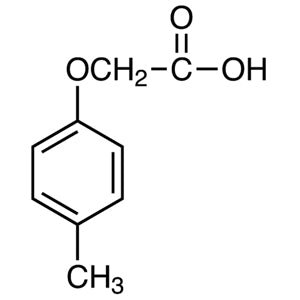
4-Methylphenoxyacetic Acid (4-MPAA) is a chemical compound widely used in laboratory settings for the synthesis of complex molecules. As a building block in organic chemistry, it serves as a versatile starting material for various chemical reactions, including substitution, esterification, and other synthetic transformations. Its role in the laboratory is crucial for researchers aiming to develop new compounds with specific functional groups or structural features. This compound is particularly valuable in the creation of aromatic and heterocyclic compounds, which are essential in pharmaceutical and industrial applications.
The reactivity and simplicity of 4-MPAA’s molecular structure make it a preferred choice for synthetic chemists. It dissolves well in organic solvents such as ethyl acetate and acetone, facilitating efficient purification and reaction processes. Its solubility and chemical stability allow for easy handling and integration into diverse synthetic protocols. These properties make it an ideal candidate for laboratories requiring adaptable and reliable chemical intermediates.
In Indonesian laboratories, 4-MPAA is commonly used in research focused on organic chemistry, pharmaceutical development, and environmental studies. It plays a key role in the synthesis of industrial chemicals and drug compounds, supporting both academic and industrial research initiatives. Its availability and chemical versatility make it a staple in laboratories conducting synthetic and analytical work.
- Synthesis of aromatic compounds for the development of industrial chemicals due to its reactivity and solubility in organic solvents.
- Pharmaceutical research for the creation of drug molecules as it provides a flexible starting point for functional group modifications.
- Environmental studies for the analysis of organic pollutants as it is a common intermediate in synthetic pathways.
- Organic chemistry education for teaching fundamental synthetic techniques and reaction mechanisms.
- Industrial chemical production for the manufacture of specialty chemicals requiring controlled molecular structures.
| Brand | TCI |
|---|---|
| CAS number | 940-64-7 |
| Molecular formula | — |
| Purity | — |
| Category | Chemistry > Building Blocks > Non-Heterocyclic Building Blocks |
| Pack sizes | Available in various quantities as per supplier specifications |
| Physical form | Solid or liquid depending on the batch |
| Storage | Store in a cool, dry place away from direct sunlight and moisture |
4-Methylphenoxyacetic Acid should be stored in a cool, dry environment to maintain its chemical integrity. It is recommended to keep it in a sealed container to prevent moisture absorption and contamination. The compound is generally stable under normal laboratory conditions but should be protected from prolonged exposure to light. For safe handling, use appropriate personal protective equipment such as gloves and safety goggles. It is important to ensure proper ventilation when working with this compound to avoid inhalation of vapors. Always follow standard laboratory safety protocols to minimize risks associated with its use.
—
Produk Terkait
-
4-(4-Methylphenoxy)benzoicAcid TCI T3391
Regular price From Rp 2.889.600,00Regular price -
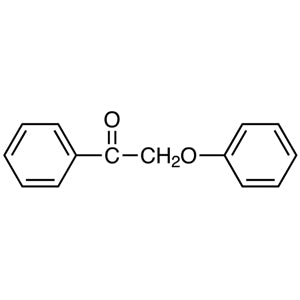
2-Phenoxyacetophenone TCI P2121
Regular price Rp 1.298.850,00Regular price -
4'-Phenoxyacetophenone TCI P1355
Regular price Rp 1.298.850,00Regular price -
PhenoxyaceticAnhydride TCI P0111
Regular price From Rp 4.399.500,00Regular price -
PhenoxyaceticAcid TCI P0107
Regular price From Rp 637.350,00Regular price -
(2-Isopropyl-5-methylphenoxy)aceticAcid TCI I1014
Regular price From Rp 1.035.300,00Regular price -
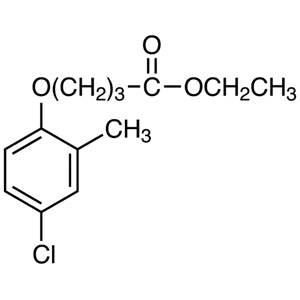
Ethyl4-(4-Chloro-2-methylphenoxy)butyrate TCI E1149
Regular price From Rp 2.359.350,00Regular price -
1-(2,6-Dimethylphenoxy)-2-propanone TCI D5121
Regular price From Rp 769.650,00Regular price