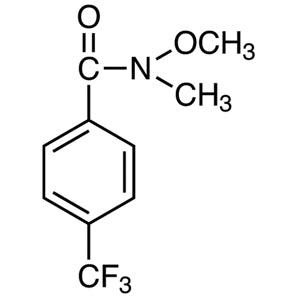
N-Methoxy-N-methyl-4-(trifluoromethyl)benzamide is a chemical compound widely used in organic reactions, particularly in the synthesis of fluorinated compounds. This material serves as a crucial building block in the development of complex molecular structures, enabling researchers to create compounds with specific functional groups and properties. In laboratory settings, it is essential for advancing research in pharmaceutical and chemical industries, where precise control over molecular architecture is required. Its versatility makes it a valuable tool for chemists working on a wide range of synthetic pathways.
The compound’s unique properties, including its fluorinated group and polar nature, make it a preferred choice in synthetic chemistry. The presence of the trifluoromethyl group contributes to its chemical stability and reactivity, allowing it to participate in various substitution and functionalization reactions. Its polarity also influences solubility in organic solvents, facilitating efficient purification and isolation processes in the lab. These characteristics enable researchers to achieve high yields and purity in their synthetic endeavors, making it an indispensable component in modern chemical research.
In Indonesian laboratories, this compound is commonly used by researchers and chemical institutions for the development of new pharmaceuticals and specialty chemicals. It plays a key role in the synthesis of drug candidates and other advanced materials. Its application is widespread across academic and industrial research settings, supporting innovation in the chemical and pharmaceutical sectors. The compound is a fundamental resource for scientists aiming to explore new chemical transformations and functional group modifications.
- Organic synthesis applications benefit from this compound's ability to participate in substitution and functionalization reactions, making it ideal for creating fluorinated compounds.
- Pharmaceutical research utilizes this material for the development of drug candidates, leveraging its fluorinated group for enhanced biological activity and stability.
- Fluorinated building blocks are essential in the design of complex molecules, and this compound serves as a reliable starting point for such synthetic strategies.
- Chemical research institutions use it for advanced molecular modifications, supporting the exploration of new chemical transformations and reactivity patterns.
- Industrial chemical production relies on this compound for the synthesis of specialty chemicals, where controlled reactivity and stability are critical factors.
| Brand | TCI |
|---|---|
| CAS number | 116332-61-7 |
| Molecular formula | — |
| Purity | — |
| Category | Chemistry > Building Blocks > Fluorinated Building Blocks |
| Pack sizes | Available in various quantities as per supplier specifications |
| Physical form | Solid or liquid, depending on the specific product variant |
| Storage | Store in a cool, dry place away from moisture and direct sunlight |
This compound should be stored in a cool, dry environment, away from moisture and direct sunlight to maintain its chemical integrity. It is recommended to use airtight containers to prevent exposure to air and potential degradation. Due to its polar nature, it may be sensitive to humidity, so maintaining a controlled storage environment is essential. Laboratory personnel should handle the compound with appropriate personal protective equipment, such as gloves and safety goggles, to ensure safety during handling. Proper labeling and storage conditions are crucial for maintaining the compound's effectiveness and ensuring safe laboratory practices.
—
Produk Terkait
-
TCI B5774 5,10-Bis(4,4,5,5-tetramethyl-1,3,2-dioxaborolan-2-yl)naphtho[1,2-c:5,6-c']bis([1,2,5]oxadiazole)
Regular price Rp 10.255.350,00Regular price -
Dihydroiodide TCI B6569
Regular price From Rp 1.936.200,00Regular price -
Trifluoromethanesulfonate TCI B7003
Regular price From Rp 1.936.200,00Regular price
![5,10-Bis(4,4,5,5-tetramethyl-1,3,2-dioxaborolan-2-yl)naphtho[1,2-c:5,6-c']bis([1,2,5]oxadiazole) - TCI B5774 - AMI Scientific](http://amiscientific.com/cdn/shop/files/TCI2510B5774.jpg?v=1769180228&width=533)