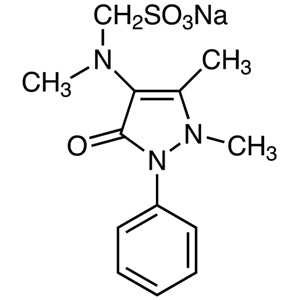
TCI M3060 is Metamizole Sodium Salt with CAS number 68-89-3, a pyrazolone-derived compound also widely known under the name dipyrone. In the laboratory setting this material serves as a reference compound and research reagent rather than a finished pharmaceutical preparation. Metamizole is one of the most extensively studied analgesic-antipyretic compounds from both a pharmacological and an analytical standpoint, so its presence on a laboratory shelf is usually tied to analytical method development, metabolism investigations, stability studies, or research into drug mechanisms of action at the molecular and cellular level.
The characteristic that makes this sodium salt practical to work with is its good solubility in water, far exceeding that of the analogous free-acid form. This property simplifies the preparation of aqueous standard solutions for high-performance liquid chromatography, capillary electrophoresis, and spectrophotometric assays, without the need for additional organic solvents that could interfere with the detection system. Because metamizole is also known to be sensitive to moisture and oxidation, it frequently serves as a model compound in stability and forced-degradation studies, where researchers deliberately expose the substance to extreme conditions in order to map the resulting degradation products.
In Indonesian laboratories, this grade of material is typically found in university pharmacy and chemistry departments, quality-control laboratories, and research institutions that carry out analytical work on pharmaceutical compounds. It is commonly used to build calibration curves, verify analytical instrument performance, and support method validation activities. Users should treat the item strictly as a laboratory chemical intended for research and analytical purposes, not for clinical, therapeutic, or human-consumption use.
- HPLC method development and validation: the compound's good aqueous solubility allows accurate standard solutions to be prepared directly in water for calibration curves and system suitability checks.
- Forced degradation and stability studies: its known sensitivity to moisture and oxidation makes it a useful model substance for mapping degradation pathways under deliberately harsh experimental conditions.
- Capillary electrophoresis analysis: the ionic sodium salt form dissolves readily in aqueous buffer systems, supporting reproducible separations without organic solvent additions that could disturb the running buffer.
- Spectrophotometric assay work: clear aqueous solutions can be prepared at defined concentrations, making the material suitable as a reference standard in UV-visible absorbance measurements and comparison testing.
- Pharmacological and metabolism research: as a well-characterised analgesic-antipyretic reference compound, it supports studies of drug mechanisms of action at molecular and cellular levels.
| Brand | TCI (Tokyo Chemical Industry) |
|---|---|
| CAS number | 68-89-3 |
| Molecular formula | — |
| Purity | — |
| Category | Life Science > Biochemicals and Reagents > Enzymes, Enzyme Inhibitors, Enzyme Substrates |
| Pack sizes | available in standard TCI catalogue pack sizes; please confirm the currently available size when ordering |
| Physical form | — |
| Storage | store in a tightly closed container, protected from moisture and light |
- Chemical name: Metamizole Sodium Salt (dipyrone)
Store the container tightly closed in a cool, dry, and well-ventilated area, protected from direct sunlight and from sources of humidity, since this compound is known to be sensitive to moisture and oxidation. Keep the material in its original supplier container or transfer it to a clean, chemically compatible, well-sealed vessel that is clearly labelled with the compound name and CAS number. Handle the powder in a fume hood or a well-ventilated workspace, and wear standard personal protective equipment including gloves, safety goggles, and a laboratory coat. Avoid generating dust, minimise the time the container stays open to reduce moisture uptake, and follow the manufacturer's safety data sheet together with your institution's chemical waste-disposal procedures.
—
Produk Terkait
-
TCI B5774 5,10-Bis(4,4,5,5-tetramethyl-1,3,2-dioxaborolan-2-yl)naphtho[1,2-c:5,6-c']bis([1,2,5]oxadiazole)
Regular price Rp 10.255.350,00Regular price -
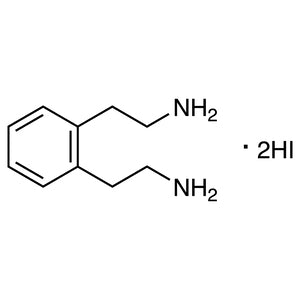
Dihydroiodide TCI B6569
Regular price From Rp 1.936.200,00Regular price -
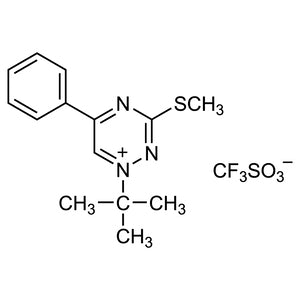
Trifluoromethanesulfonate TCI B7003
Regular price From Rp 1.936.200,00Regular price
![5,10-Bis(4,4,5,5-tetramethyl-1,3,2-dioxaborolan-2-yl)naphtho[1,2-c:5,6-c']bis([1,2,5]oxadiazole) - TCI B5774 - AMI Scientific](http://amiscientific.com/cdn/shop/files/TCI2510B5774.jpg?v=1769180228&width=533)