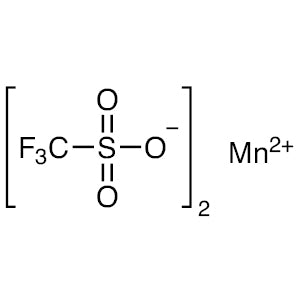
Manganese(II) Fluoride (MnF₂) is an inorganic compound widely used in chemical experiments, particularly in the fields of catalysis and inorganic chemistry. It plays a crucial role in laboratory settings where specific chemical reactions or synthesis processes require a stable and reactive material. Its ability to interact with various compounds makes it a valuable component in the development of complex chemical structures. MnF₂ is often employed as a catalyst or a reagent in reactions that demand precise control over reaction conditions. Its versatility and chemical stability make it a preferred choice for researchers and chemists working in diverse scientific applications.
The properties of Manganese(II) Fluoride that make it a preferred choice include its stable crystalline structure and high reactivity with other compounds. It exhibits unique chemical behavior, allowing it to participate in both oxidative and reductive reactions. This reactivity, combined with its ability to maintain chemical stability under certain conditions, makes it suitable for a wide range of experimental setups. Additionally, its hygroscopic nature requires careful handling and storage, which further highlights its importance in laboratory environments where precision and control are essential.
In Indonesian laboratories, Manganese(II) Fluoride is commonly used for chemical research and synthesis applications. It is a key material in experiments involving catalytic processes and inorganic compound development. Due to its reactivity and stability, it is frequently selected for studies that require specific chemical interactions or controlled reaction environments. Its role in both academic and industrial research underscores its significance in the chemical sciences within Indonesia.
TCI brochures (PDF)
- Metallic Salts 2025-11-06 · p. 2
- Transition Metal Catalysts 2026-04-10 · p. 6
Related TCI products
- Catalytic Reactions: Manganese(II) Fluoride is used in catalytic processes due to its ability to facilitate chemical reactions under specific conditions.
- Inorganic Synthesis: It serves as a valuable reagent in the synthesis of complex inorganic compounds, providing stability and reactivity.
- Material Research: Its unique chemical properties make it suitable for studies involving the development of new materials and compounds.
- Oxidative/Reductive Processes: MnF₂ is employed in reactions where both oxidative and reductive pathways are required, due to its chemical versatility.
- Analytical Chemistry: It is used in analytical procedures where precise chemical interactions and controlled environments are necessary.
| Brand | TCI |
|---|---|
| CAS number | 7782-64-1 |
| Molecular formula | — |
| Purity | — |
| Category | Chemistry > Catalysis and Inorganic Chemistry > Transition Elements |
| Pack sizes | Available in various quantities as per standard laboratory supply |
| Physical form | Powder |
| Storage | Should be stored in airtight containers to prevent moisture absorption |
Manganese(II) Fluoride should be stored in airtight containers to prevent exposure to moisture, as it is hygroscopic in nature. It is recommended to keep it in a cool, dry place away from direct sunlight and sources of heat. Due to its reactivity, it should be handled with care, using appropriate personal protective equipment such as gloves and safety goggles. In laboratory settings, it is important to ensure that storage areas are well-ventilated to minimize the risk of airborne exposure. Proper labeling of containers and adherence to standard safety protocols are essential for safe handling and storage of this compound.
—
Produk Terkait
-
Manganese(II)Carbonate TCI M3690
Regular price From Rp 742.350,00Regular priceRp 534.450,00Sale price From Rp 742.350,00 -
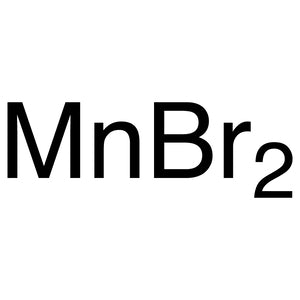
Manganese(II)Bromide TCI M3581
Regular price From Rp 2.782.500,00Regular priceRp 1.945.650,00Sale price From Rp 2.782.500,00 -
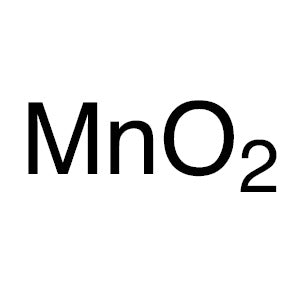
Manganese(IV)Oxide TCI M3448
Regular price From Rp 530.250,00Regular priceRp 370.650,00Sale price From Rp 530.250,00 -
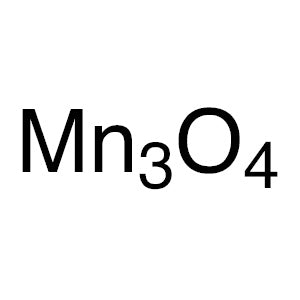
Manganese(II,III)Oxide TCI M3447
Regular price From Rp 1.087.800,00Regular priceRp 760.200,00Sale price From Rp 1.087.800,00 -
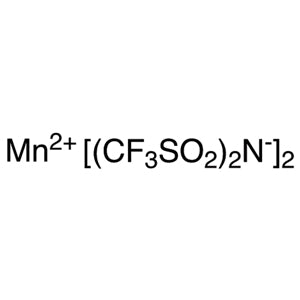
Manganese(II)Bis(trifluoromethanesulfonyl)imide TCI M2862
Regular price From Rp 2.332.050,00Regular priceRp 1.646.400,00Sale price From Rp 2.332.050,00 -
Manganese(II)ChlorideTetrahydrate TCI M2095
Regular price From Rp 505.050,00Regular priceRp 352.800,00Sale price From Rp 505.050,00 -
Tris(2,2,6,6-tetramethyl-3,5-heptanedionato)manganese(III) TCI T4217
Regular price Rp 2.068.500,00Regular priceRp 1.445.850,00Sale price Rp 2.068.500,00 -
Manganese(II)Trifluoromethanesulfonate TCI M3356
Regular price From Rp 2.466.450,00Regular priceRp 1.724.100,00Sale price From Rp 2.466.450,00