Manganese(II,III) Oxide, also known as Mn₃O₄, is a chemical compound widely used in laboratory settings for its catalytic and redox properties. This compound is a key component in various chemical reactions and catalytic processes, particularly in oxidation and reduction reactions. Its unique structure, composed of both Mn²⁺ and Mn³⁺ ions, allows it to act as a versatile redox agent. In the laboratory, it is commonly employed to facilitate reactions that require controlled oxidation or reduction conditions. Its ability to participate in multiple redox states makes it an essential material for researchers working in inorganic and organic chemistry.
The chemical properties of Manganese(II,III) Oxide make it a preferred choice for many applications. It exhibits high reactivity and stability under specific conditions, which is crucial for maintaining the integrity of chemical processes. Its dual oxidation states allow it to function as both an oxidizing and reducing agent, depending on the reaction environment. This versatility makes it ideal for use in catalytic systems where multiple redox reactions are involved. Additionally, its structural stability and resistance to decomposition under controlled conditions contribute to its reliability in laboratory experiments.
In Indonesian laboratories, Manganese(II,III) Oxide is frequently used in chemical research and development. It plays a significant role in the synthesis of complex compounds, particularly in catalytic applications. Its use is common in both academic and industrial research settings, where it is valued for its efficiency and effectiveness in promoting chemical reactions. Researchers in Indonesia rely on this compound for its consistent performance and adaptability in various experimental conditions.
TCI brochures (PDF)
- Metallic Salts 2025-11-06 · p. 6
- Transition Metal Catalysts 2026-04-10 · p. 6
- Catalytic Oxidation Reactions: Manganese(II,III) Oxide is ideal for oxidation reactions due to its ability to act as a redox catalyst, facilitating the conversion of substrates under controlled conditions.
- Reductive Processes in Organic Synthesis: The compound's dual redox properties make it suitable for reducing agents in organic synthesis, enabling the formation of complex molecules with high efficiency.
- Electrode Material Development: Its electrochemical properties make it a valuable component in the development of electrode materials for energy storage and electrochemical applications.
- Inorganic Compound Synthesis: Manganese(II,III) Oxide is used in the synthesis of various inorganic compounds, where its redox versatility supports the formation of stable and functional materials.
- Material Science Research: Its unique structure and reactivity are beneficial in material science studies, particularly in the development of advanced functional materials and nanomaterials.
| Brand | TCI |
|---|---|
| CAS number | 1317-35-7 |
| Molecular formula | — |
| Purity | — |
| Category | Chemistry > Catalysis and Inorganic Chemistry > Transition Elements [Catalysis and Inorganic Chemistry] |
| Pack sizes | Available in various quantities as per standard laboratory supply |
| Physical form | Solid powder |
| Storage | Store in a cool, dry place away from moisture and strong oxidizing agents |
Manganese(II,III) Oxide should be stored in a cool, dry environment to prevent moisture absorption and potential degradation. It is recommended to use airtight containers to maintain its chemical stability and prevent contamination. Due to its reactivity, it should be kept away from strong oxidizing agents and incompatible substances. In laboratory settings, proper personal protective equipment, such as gloves and safety goggles, should be worn when handling the compound. It is important to ensure good ventilation during use to minimize exposure to airborne particles. Regular inspection of storage conditions is advised to maintain the integrity and effectiveness of the material.
—
Produk Terkait
-
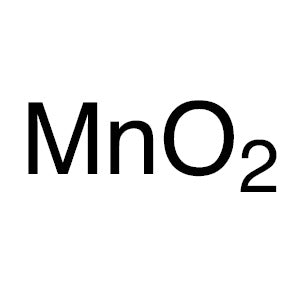
Manganese(IV)Oxide TCI M3448
Regular price From Rp 530.250,00Regular priceRp 370.650,00Sale price From Rp 530.250,00 -
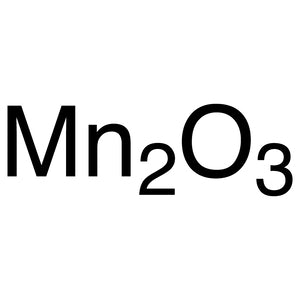
Manganese(III)Oxide TCI M3495
Regular price From Rp 2.068.500,00Regular priceRp 1.445.850,00Sale price From Rp 2.068.500,00 -
Manganese(II)Carbonate TCI M3690
Regular price From Rp 742.350,00Regular priceRp 534.450,00Sale price From Rp 742.350,00 -
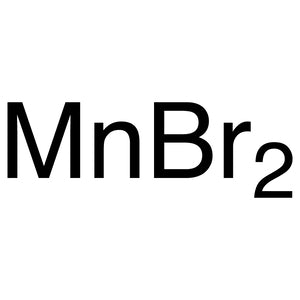
Manganese(II)Bromide TCI M3581
Regular price From Rp 2.782.500,00Regular priceRp 1.945.650,00Sale price From Rp 2.782.500,00 -
Manganese(II)Fluoride TCI M3429
Regular price From Rp 2.094.750,00Regular priceRp 1.464.750,00Sale price From Rp 2.094.750,00 -
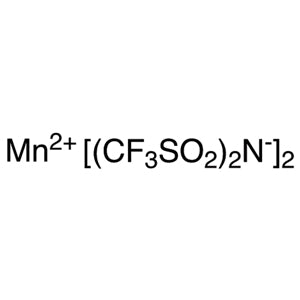
Manganese(II)Bis(trifluoromethanesulfonyl)imide TCI M2862
Regular price From Rp 2.332.050,00Regular priceRp 1.646.400,00Sale price From Rp 2.332.050,00 -
Manganese(II)ChlorideTetrahydrate TCI M2095
Regular price From Rp 505.050,00Regular priceRp 352.800,00Sale price From Rp 505.050,00 -
Tris(2,2,6,6-tetramethyl-3,5-heptanedionato)manganese(III) TCI T4217
Regular price Rp 2.068.500,00Regular priceRp 1.445.850,00Sale price Rp 2.068.500,00