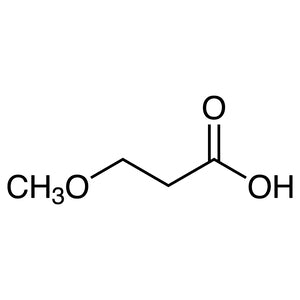
3-Methoxypropanoic Acid (3-MPA) is a chemical compound widely used as a foundational building block in organic synthesis. It plays a crucial role in laboratories by enabling the construction of complex molecular structures through various chemical reactions. This versatile compound is commonly employed in the formation of esters and amides, making it an essential tool for chemists working on synthetic pathways. Its presence in laboratory workflows supports the development of new compounds and the exploration of chemical reactivity in diverse experimental settings.
The chemical properties of 3-Methoxypropanoic Acid make it a preferred choice for researchers. Its reactive methoxy group (-OCH₃) allows it to participate in nucleophilic and electrophilic reactions, expanding its utility in synthetic chemistry. The compound's stability and reactivity balance make it suitable for use in a wide range of experimental conditions. Additionally, its simple molecular structure provides flexibility for functional group modifications, enhancing its adaptability in laboratory applications. These characteristics make it a valuable reagent in both academic and industrial research environments.
In Indonesian laboratories, 3-Methoxypropanoic Acid is extensively used in both pure and applied chemistry research. It is commonly utilized by researchers and students to synthesize new compounds, develop methodologies, and explore chemical transformations. Its availability and reliability make it a go-to material for experimental work in organic chemistry, pharmaceutical research, and material science. The compound supports a broad spectrum of laboratory activities, contributing to scientific advancement in various fields.
Related TCI products
- Organic Synthesis: 3-Methoxypropanoic Acid is ideal for synthesizing complex organic molecules due to its reactive methoxy group and structural versatility.
- Esterification Reactions: The compound is frequently used in esterification processes to form ester derivatives, which are essential in pharmaceutical and industrial applications.
- Amide Formation: It serves as a key reagent in amide synthesis, providing a reliable source for nitrogen-containing compounds in drug development.
- Functional Group Modification: Its ability to undergo nucleophilic and electrophilic reactions makes it suitable for modifying molecular structures in synthetic pathways.
- Research and Development: Widely used in R&D settings for creating new compounds and testing chemical reactivity in both academic and industrial laboratories.
| Brand | TCI |
|---|---|
| CAS number | 2544-06-1 |
| Molecular formula | — |
| Purity | — |
| Category | Chemistry > Building Blocks > Non-Heterocyclic Building Blocks |
| Pack sizes | Available in various quantities as per supplier specifications |
| Physical form | Solid or liquid, depending on the specific product variant |
| Storage | Store in a cool, dry place away from direct sunlight and moisture |
3-Methoxypropanoic Acid should be stored in a cool, dry environment to maintain its chemical integrity. It is recommended to keep the compound in a sealed container to prevent exposure to moisture and air. Suitable storage containers include glass or HDPE bottles with tight-fitting lids. Due to its reactivity, it should be handled in a well-ventilated area, and appropriate personal protective equipment should be worn when working with the compound. While it is generally stable under normal storage conditions, it should be kept away from incompatible substances such as strong oxidizing agents. Proper labeling and storage practices ensure the safety and effectiveness of the compound in laboratory settings.
—
Produk Terkait
-
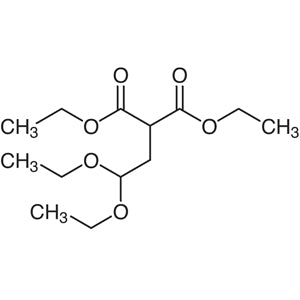
Diethyl3,3-Diethoxypropane-1,1-dicarboxylate TCI D2438
Regular price From Rp 1.803.900,00Regular price -
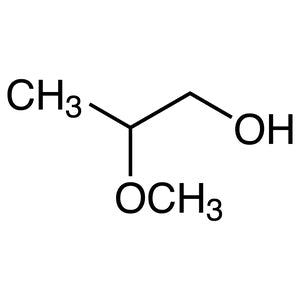
2-Methoxypropan-1-ol TCI M3614
Regular price From Rp 2.147.250,00Regular price -
Ethyl3-Methoxypropionate TCI M1001
Regular price From Rp 1.140.300,00Regular price -
Methyl3-Methoxypropionate TCI M0962
Regular price Rp 637.350,00Regular price -
Ethyl3-Ethoxypropionate TCI E0319
Regular price From Rp 584.850,00Regular price -
1,3-Dimethoxypropan-2-ol TCI D6094
Regular price From Rp 980.700,00Regular price -
Methyl2,2-Dimethoxypropionate TCI D2382
Regular price Rp 6.465.900,00Regular price -
Methyl3,3-Dimethoxypropionate TCI D1858
Regular price Rp 2.041.200,00Regular price