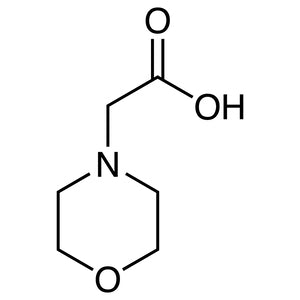
2-Morpholinoacetic Acid is a chemical compound widely used in laboratory settings for the synthesis of complex molecules. It serves as a crucial building block in organic chemistry, particularly in the development of heterocyclic compounds. Its unique molecular structure, combining a carboxylic acid group with a morpholine ring, makes it highly versatile for various chemical reactions. This compound is essential for researchers aiming to create new pharmaceuticals, industrial chemicals, or advanced materials. Its stability and controlled reactivity allow it to be a reliable component in both academic and industrial research environments.
The compound's chemical properties, including its solubility in polar solvents and its ability to participate in nucleophilic substitution and condensation reactions, make it a preferred choice for synthetic chemists. Its crystalline form ensures ease of handling and accurate measurement, which is vital in laboratory experiments. The availability of small pack sizes, such as 5 grams, supports both small-scale and intermediate-scale experiments, making it accessible for a wide range of applications. Its predictable behavior under standard laboratory conditions also enhances its reliability in chemical synthesis processes.
In Indonesian laboratories, 2-Morpholinoacetic Acid is commonly used in organic chemistry research, especially in academic institutions and pharmaceutical studies. It is a key reagent in the development of new drugs and specialty chemicals. Its application is particularly relevant in the synthesis of heterocyclic compounds, which are fundamental in medicinal chemistry. Researchers in Indonesia rely on this compound for its consistent performance and adaptability in various synthetic pathways, supporting both educational and industrial research goals.
Related TCI products
- TCI M2608 89531-58-8 Morpholinoacetic Acid Hydrochloride
- TCI T2050 1894677-16-7 Thiomorpholinoacetic Acid 1',1'-Dioxide Monohydrate
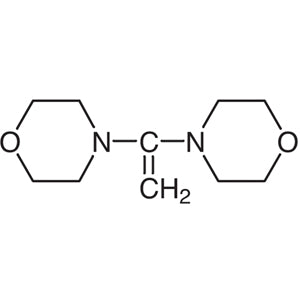
- TCI B1180 14212-87-4 1,1-Bis(morpholino)ethylene
- TCI E0784 20120-24-5 Ethyl 3-(Morpholino)propionate
- TCI B6410 1468-28-6 Morpholino(phenyl)methanone
- TCI M1095 5807-02-3 Morpholinoacetonitrile
- Synthesis of Heterocyclic Compounds: 2-Morpholinoacetic Acid is ideal for creating complex ring structures due to its morpholine group, which is essential in many pharmaceutical and industrial applications.
- Pharmaceutical Research: This compound is frequently used in drug development as a building block for synthesizing bioactive molecules with therapeutic potential.
- Organic Chemistry Education: It is a valuable teaching tool in chemistry labs, helping students understand the principles of nucleophilic substitution and condensation reactions.
- Industrial Chemical Production: Its controlled reactivity and stability make it suitable for large-scale chemical manufacturing processes.
- Polymer Science Applications: The compound can be incorporated into polymer synthesis to create materials with specific functional properties.
| Brand | TCI |
|---|---|
| CAS number | 3235-69-6 |
| Molecular formula | — |
| Purity | — |
| Category | Chemistry > Building Blocks > Heterocyclic Building Blocks |
| Pack sizes | 5 grams |
| Physical form | Crystalline solid |
| Storage | — |
2-Morpholinoacetic Acid should be stored in a cool, dry place away from direct sunlight and moisture. It is best kept in a sealed container to prevent contamination and maintain its chemical integrity. Due to its crystalline nature, it is recommended to store it in a glass or plastic container that is resistant to chemical reactions. In laboratory settings, it should be handled with care, using appropriate personal protective equipment such as gloves and safety goggles. The compound is generally stable under normal storage conditions, making it suitable for long-term use in research environments. Proper labeling and storage are essential to ensure safe handling and prevent accidental exposure.
—
Produk Terkait
-
MorpholinoaceticAcidHydrochloride TCI M2608
Regular price From Rp 1.035.300,00Regular price -
ThiomorpholinoaceticAcid1',1'-DioxideMonohydrate TCI T2050
Regular price From Rp 1.776.600,00Regular price -
1,1-Bis(morpholino)ethylene TCI B1180
Regular price Rp 4.399.500,00Regular price -
Ethyl3-(Morpholino)propionate TCI E0784
Regular price From Rp 980.700,00Regular price -
Morpholino(phenyl)methanone TCI B6410
Regular price From Rp 1.644.300,00Regular price -
Morpholinoacetonitrile TCI M1095
Regular price From Rp 2.704.800,00Regular price -
2,4-Dichloro-6-morpholino-1,3,5-triazine TCI D4814
Regular price From Rp 689.850,00Regular price -
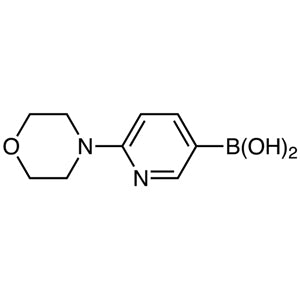
6-(Morpholino)pyridine-3-boronicAcid(containsvaryingamountsofAnhydride) TCI M2967
Regular price Rp 2.332.050,00Regular price