TCI M3904 Methyl Desoxycholate is the methyl ester of deoxycholic acid, a secondary bile acid belonging to the family of naturally occurring steroid compounds. The molecule is built on a tetracyclic steroid framework carrying two hydroxyl groups, with a side chain that has been esterified to form the methyl ester. In routine laboratory work this material serves as a biochemical reagent, as a comparison substance in bile acid analysis, and as a starting material for the synthesis of steroid derivatives. Esterification of the carboxylic acid group makes the molecule easier to handle across a range of organic chemistry procedures than the corresponding free acid form.
The principal characteristic that leads researchers to select this compound is the combination of the amphiphilic behaviour typical of bile acids with the reactivity retained by the still-free hydroxyl groups. The molecular surface is divided into a hydrophobic face and a hydrophilic face, which is why bile acid derivatives of this kind have been studied extensively as aggregate-forming agents, as organic gelators, and as basic scaffolds for supramolecular receptors. Converting the acid group into a methyl ester improves solubility in organic solvents and at the same time protects the carboxylate while other reaction steps are being carried out. The material presents as a solid at room temperature.
Within Indonesian laboratories, a reagent of this type is generally found in academic research groups, in university organic and biochemistry teaching laboratories, and in research units working on natural product and steroid chemistry. It is typically used at small scale for synthetic preparation work, for method development in bile acid analysis, and as a reference material when characterising related steroid structures. Because it is supplied as a packaged laboratory chemical, it fits ordinary bench-scale workflows rather than production-scale operations.
- Bile acid analysis — used as a comparison substance when identifying and characterising bile acid species, since its defined steroid structure gives analysts a known point of reference.
- Steroid derivative synthesis — serves as a starting material for building further steroid compounds, with the methyl ester protecting the carboxylate while the free hydroxyl groups are modified.
- Supramolecular chemistry research — the divided hydrophobic and hydrophilic molecular faces make it a useful scaffold when constructing receptors and host structures based on bile acid frameworks.
- Organic gelator studies — bile acid derivatives of this class are widely investigated for their ability to form gels and aggregates, making this ester a relevant candidate material.
- General biochemical reagent work — its amphiphilic character and improved organic solvent solubility suit it to bench procedures where the free acid form would be harder to handle.
| Brand | TCI |
|---|---|
| CAS number | 3245-38-3 |
| Molecular formula | — |
| Purity | — |
| Category | Life Science > Biochemicals and Reagents > Steroids |
| Pack sizes | supplied in standard TCI catalogue pack sizes; please confirm the available option when ordering |
| Physical form | solid at room temperature |
| Storage | store according to the conditions stated on the manufacturer's label and safety data sheet |
Keep this material in its original tightly closed container, stored in a cool, dry and well ventilated area away from direct sunlight, moisture and incompatible substances. Glass containers with secure closures are appropriate for storing and dispensing the solid, and transfers should be carried out with clean, dry spatulas to avoid contamination of the stock. Handle the compound inside a fume hood where dust may be generated, and wear a laboratory coat, safety glasses and suitable gloves. Always consult the manufacturer's safety data sheet before use, and follow your institution's procedures for labelling, waste collection and disposal.
—
Produk Terkait
-
TCI B5774 5,10-Bis(4,4,5,5-tetramethyl-1,3,2-dioxaborolan-2-yl)naphtho[1,2-c:5,6-c']bis([1,2,5]oxadiazole)
Regular price Rp 10.255.350,00Regular price -
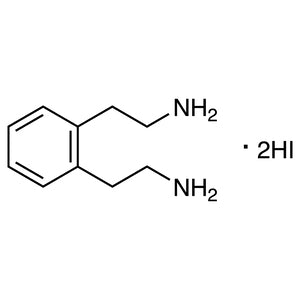
Dihydroiodide TCI B6569
Regular price From Rp 1.936.200,00Regular price -
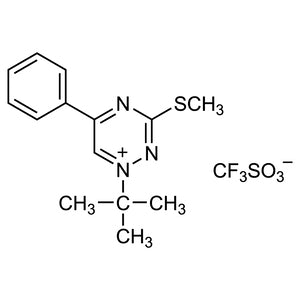
Trifluoromethanesulfonate TCI B7003
Regular price From Rp 1.936.200,00Regular price
![5,10-Bis(4,4,5,5-tetramethyl-1,3,2-dioxaborolan-2-yl)naphtho[1,2-c:5,6-c']bis([1,2,5]oxadiazole) - TCI B5774 - AMI Scientific](http://amiscientific.com/cdn/shop/files/TCI2510B5774.jpg?v=1769180228&width=533)