![Sodium Deoxycholate [for Electrophoresis] (CAS 302-95-4) - TCI D1820 - AMI Scientific](http://amiscientific.com/cdn/shop/files/TCI2510D1820.jpg?v=1767103755&width=1946)
![Sodium Deoxycholate [for Electrophoresis] (CAS 302-95-4) - TCI D1820 - AMI Scientific](http://amiscientific.com/cdn/shop/files/TCI2510D1820.jpg?v=1767103755&width=1445)
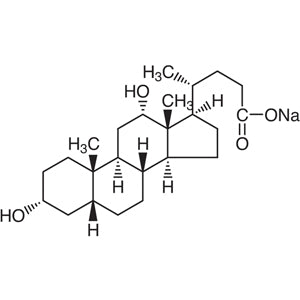
Sodium Deoxycholate TCI D1820, with CAS number 302-95-4, is a chemical compound widely used in laboratory procedures, particularly in electrophoresis. It functions as a detergent and emulsifying agent, aiding in the separation of proteins and nucleic acids. This compound is essential in biochemical research for its ability to dissolve cell membranes, facilitating the extraction and isolation of biological molecules. Its role in laboratory workflows is critical for accurate and efficient molecular analysis.
Sodium Deoxycholate is preferred due to its chemical stability and solubility in water, making it compatible with various electrolyte solutions. It is non-toxic and free from hazardous substances, ensuring a safe working environment. These properties make it an ideal choice for routine laboratory use, especially in applications requiring consistent and reliable performance. Its effectiveness in breaking down complex biological structures without compromising the integrity of the target molecules enhances its utility in biochemical studies.
In Indonesian laboratories, Sodium Deoxycholate is commonly used in biomedical, pharmaceutical, and biotechnology research. It plays a key role in DNA and protein analysis through electrophoresis. Its availability and cost-effectiveness make it a popular choice among researchers. The compound supports a wide range of experimental protocols, contributing to the advancement of scientific studies in the region.
- Electrophoresis is a key application where Sodium Deoxycholate helps in the separation of DNA and proteins by disrupting cell membranes and facilitating sample preparation.
- Biochemical analysis benefits from its ability to dissolve biological membranes, allowing for the efficient extraction of nucleic acids and proteins for further study.
- Molecular biology experiments often require the use of this compound to prepare samples for gel electrophoresis, ensuring accurate and reproducible results.
- In pharmaceutical research, it is used to study the behavior of biological molecules under different conditions, supporting drug development processes.
- Biotecnology applications rely on its properties to isolate and purify biomolecules, which is essential for genetic engineering and other advanced research techniques.
| Brand | TCI |
|---|---|
| CAS number | 302-95-4 |
| Molecular formula | — |
| Purity | — |
| Category | Life Science > Biochemicals and Reagents > Detergents (for Biochemistry) |
| Pack sizes | — |
| Physical form | — |
| Storage | Store in a cool, dry place away from direct sunlight |
Sodium Deoxycholate should be stored in a cool, dry place away from direct sunlight to maintain its chemical stability. It is recommended to use airtight containers to prevent moisture absorption, which could affect its performance. Since it is non-toxic and non-hazardous, general laboratory safety protocols should be followed, including proper labeling and handling procedures. It is important to ensure that the compound is kept out of reach of children and not exposed to incompatible substances. Regular inspection of storage conditions is advised to ensure long-term usability and safety in laboratory settings.
—
Produk Terkait
-
Butyl2-Hydroxyacetate TCI B6748
Regular price From Rp 1.220.100,00Regular price -
4-Chloro-DL-mandelicAcid TCI C0193
Regular price From Rp 1.035.300,00Regular price -
DeoxycholicAcid TCI C0315
Regular price From Rp 1.618.050,00Regular price -
SodiumDeoxycholate TCI C0316
Regular price From Rp 1.644.300,00Regular price -
CholicAcid TCI C0324
Regular price From Rp 1.353.450,00Regular price -
SodiumCholate TCI C0325
Regular price From Rp 1.724.100,00Regular price -
ChenodeoxycholicAcid TCI C0750
Regular price Rp 1.246.350,00Regular price -
Methyl(E)-4-Chloro-3-methoxy-2-butenoate TCI C1340
Regular price From Rp 1.908.900,00Regular price