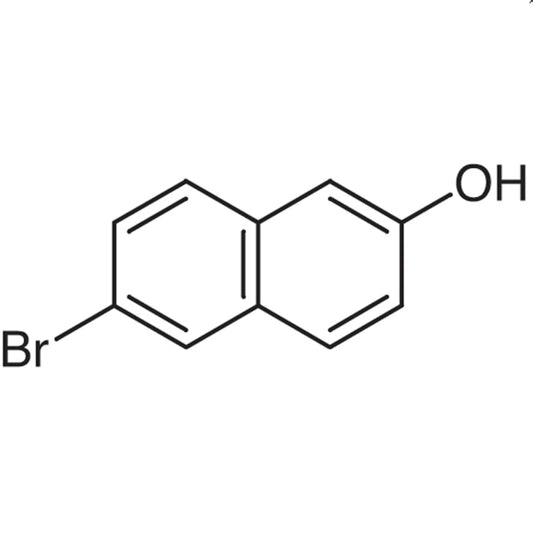
1-Naphthol, also known as alpha-naphthol, is an aromatic phenol in which a hydroxyl group is bound to the first position of the naphthalene skeleton. The compound is one of the most classical starting materials in organic chemistry and analytical chemistry, serving both as a synthetic building block and as a colour test reagent. In the laboratory, alpha-naphthol is widely recognised as the reagent used in the Molisch test for detecting the presence of carbohydrates, and in the Sakaguchi test for detecting the guanidine group in arginine — two procedures still routinely taught in biochemistry practical classes.
The property that makes it such a frequent choice is the reactivity of its aromatic ring toward electrophilic substitution, particularly coupling reactions with diazonium salts, which yield strongly coloured azo dyes. The phenolic hydroxyl group confers weak acidity, so the compound dissolves in basic solution and can be separated easily by extraction. The naphthalene core contributes ultraviolet absorption and fluorescence that are useful for analytical detection. As a solid, alpha-naphthol may gradually darken on exposure to light and air, which makes proper storage an essential part of maintaining its quality.
In Indonesian laboratories, 1-Naphthol is most often encountered in university teaching laboratories, where the Molisch and Sakaguchi tests form part of the standard biochemistry practical curriculum. It is equally at home in organic synthesis research groups that build non-heterocyclic intermediates, and in analytical work involving diazonium coupling and colorimetric detection. Because it is a classical reagent with well-documented behaviour, it remains a dependable item on the shelves of academic, government, and industrial laboratories alike.
- Molisch test for carbohydrates — alpha-naphthol is the defining reagent of this procedure, reacting with furfural derivatives to give the characteristic coloured ring that signals carbohydrate presence.
- Sakaguchi test for arginine — the compound detects the guanidine group in arginine, making it indispensable in amino acid identification exercises and protein-related qualitative analysis work.
- Azo dye synthesis via diazonium coupling — the activated aromatic ring couples readily with diazonium salts to produce strongly coloured azo dyes for preparative and demonstration purposes.
- Non-heterocyclic building block in organic synthesis — the naphthalene framework with its reactive phenolic position serves as a versatile starting point for constructing more elaborate aromatic target molecules.
- Colorimetric and spectroscopic detection work — the naphthalene core provides ultraviolet absorption and fluorescence, allowing the compound to support analytical detection methods that rely on optical response.
| Brand | TCI |
|---|---|
| CAS number | 90-15-3 |
| Molecular formula | — |
| Purity | — |
| Category | Chemistry > Building Blocks > Non-Heterocyclic Building Blocks |
| Pack sizes | — |
| Physical form | solid |
| Storage | keep protected from light and air, as the solid may gradually darken on exposure |
- Catalogue number: N0026
Store 1-Naphthol in a tightly closed container, protected from light and air, since the solid darkens gradually under prolonged exposure. Amber glass bottles or the original supplier packaging kept in a closed cabinet are suitable, and the container should be resealed promptly after each use. Keep the material in a cool, dry, well-ventilated chemical store away from strong oxidising agents. Handle it in a fume hood with a laboratory coat, safety glasses, and chemically resistant gloves, avoiding skin contact and inhalation of dust. Weigh the solid carefully to limit dust generation, and clean any spilled material immediately. Label working solutions clearly and dispose of residues through the laboratory's chemical waste stream rather than the sink.
—
Produk Terkait
-
Disodium1-Naphthol-3,6-disulfonateHydrate TCI V0037
Regular price Rp 584.850,00Regular price -
5,6,7,8-Tetrahydro-1-naphthol TCI T2816
Regular price From Rp 1.353.450,00Regular price -
7-Bromo-2-naphthol TCI B4580
Regular price From Rp 769.650,00Regular price -
3-Bromo-2-naphthol TCI B3127
Regular price From Rp 2.650.200,00Regular price -
6-Bromo-2-naphthol TCI B0621
Regular price From Rp 1.961.400,00Regular price -
1-Bromo-2-naphthol TCI B0620
Regular price Rp 2.782.500,00Regular price -
1,2,3,4-Tetrahydro-1-naphthol TCI T1111
Regular price From Rp 1.167.600,00Regular price -
5,6,7,8-Tetrahydro-2-naphthol TCI T0108
Regular price Rp 2.386.650,00Regular price