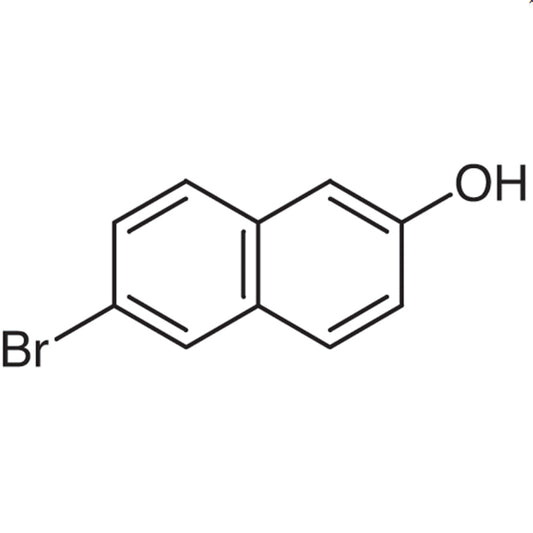
1,2,3,4-Tetrahydro-1-naphthol is a chemical compound widely used in organic synthesis reactions within laboratory settings. It serves as a fundamental building block in the creation of more complex chemical structures. This compound is derived from naphthalene through hydrogenation, making it a versatile reagent for various synthetic processes. Its role in the laboratory is critical for researchers aiming to develop new compounds with specific chemical properties. Due to its reactivity and structural characteristics, it is a key component in many synthetic pathways.
The properties of 1,2,3,4-Tetrahydro-1-naphthol make it a preferred choice for chemists. It exhibits high reactivity towards a range of chemical conditions, including strong bases and organic solvents. Its molecular structure allows it to participate in a variety of reactions such as reductions and carbon chain modifications. The compound's ability to form stable intermediates under controlled conditions enhances its utility in synthetic chemistry. Additionally, its availability and compatibility with common reagents make it a reliable option for laboratory use.
In Indonesian laboratories, 1,2,3,4-Tetrahydro-1-naphthol is commonly used in chemical research, particularly in the field of organic synthesis. It plays a vital role in the development of aromatic compounds and antioxidants. Its reactivity and structural versatility make it a valuable tool for researchers working on complex chemical reactions. The compound is frequently used in academic and industrial research settings to achieve desired chemical outcomes.
Related TCI products
- Organic synthesis reactions where the compound serves as a building block for creating complex molecules.
- Reduction processes that require a reagent capable of forming stable intermediates under controlled conditions.
- Carbon chain modification experiments that benefit from the compound’s reactivity and structural flexibility.
- Research in the development of aromatic compounds and antioxidants due to its chemical versatility.
- Synthesis of high-reactivity compounds that require precise control over reaction conditions and reagent behavior.
| Brand | TCI |
|---|---|
| CAS number | 529-33-9 |
| Molecular formula | — |
| Purity | — |
| Category | Chemistry > Building Blocks > Non-Heterocyclic Building Blocks |
| Pack sizes | Available in standard laboratory quantities |
| Physical form | Solid or liquid, depending on the specific product variant |
| Storage | Store in a cool, dry place away from strong oxidizing agents |
This compound should be stored in a cool, dry environment to maintain its chemical stability. It is recommended to use airtight containers to prevent exposure to moisture and air. Due to its reactivity, it should be kept away from strong bases and organic solvents to avoid unintended chemical interactions. Proper labeling of storage containers is essential for safety and identification. Laboratory personnel should wear appropriate personal protective equipment when handling this material. Regular monitoring of storage conditions ensures the compound remains suitable for use in chemical experiments.
—
Produk Terkait
-
5,6,7,8-Tetrahydro-1-naphthol TCI T2816
Regular price From Rp 1.405.950,00Regular priceRp 998.550,00Sale price From Rp 1.405.950,00 -
5,6,7,8-Tetrahydro-2-naphthol TCI T0108
Regular price Rp 2.439.150,00Regular priceRp 1.720.950,00Sale price Rp 2.439.150,00 -
Disodium1-Naphthol-3,6-disulfonateHydrate TCI V0037
Regular price Rp 584.850,00Regular priceRp 408.450,00Sale price Rp 584.850,00 -
7-Bromo-2-naphthol TCI B4580
Regular price From Rp 769.650,00Regular priceRp 537.600,00Sale price From Rp 769.650,00 -
3-Bromo-2-naphthol TCI B3127
Regular price From Rp 2.650.200,00Regular priceRp 1.853.250,00Sale price From Rp 2.650.200,00 -
6-Bromo-2-naphthol TCI B0621
Regular price From Rp 1.961.400,00Regular priceRp 1.371.300,00Sale price From Rp 1.961.400,00 -
1-Bromo-2-naphthol TCI B0620
Regular price Rp 2.782.500,00Regular priceRp 1.945.650,00Sale price Rp 2.782.500,00 -
4-Nitro-1-naphthol TCI N0672
Regular price From Rp 3.870.300,00Regular priceRp 2.705.850,00Sale price From Rp 3.870.300,00