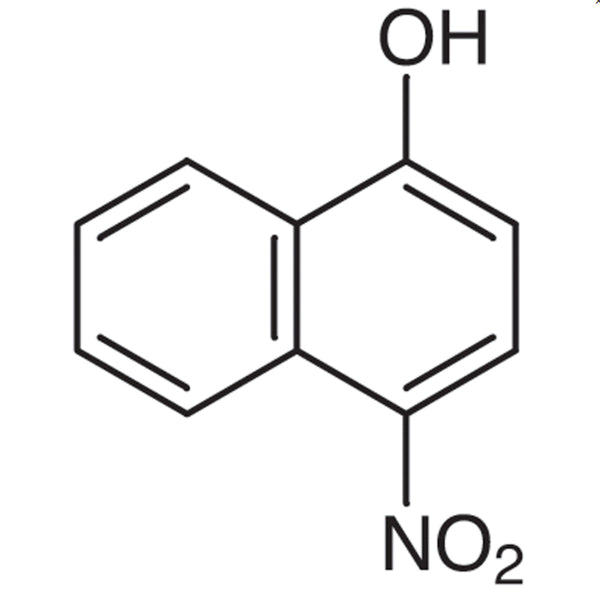
4-Nitro-1-naphthol is a chemical compound widely used in laboratory settings for various synthetic reactions aimed at producing complex compounds. It serves as a fundamental building block in organic chemistry, particularly in the synthesis of aromatic and heterocyclic structures. This compound plays a critical role in electrophilic substitution reactions, where its functional groups facilitate the formation of compounds with specific structural and functional properties. Due to its reactivity and versatility, it is a key reagent in many chemical processes, making it indispensable in both academic and industrial research environments.
One of the main reasons for its popularity is its unique chemical properties. The presence of the nitro group imparts electron-withdrawing characteristics, which significantly influence the reactivity of the molecule. This feature allows it to participate effectively in a wide range of chemical transformations. Additionally, its solubility in organic solvents enhances its usability in laboratory procedures, enabling efficient mixing and reaction processes. These properties make it a preferred choice for chemists seeking reliable and consistent results in their experiments.
In Indonesian laboratories, 4-Nitro-1-naphthol is commonly used in chemical research, especially in organic synthesis and analytical chemistry. Its availability and effectiveness in various reactions make it a go-to material for researchers. Its role in creating complex structures and its compatibility with different reaction conditions make it a staple in both educational and research settings across the country.
- Organic synthesis applications benefit from 4-Nitro-1-naphthol's ability to participate in electrophilic substitution reactions, enabling the creation of complex aromatic and heterocyclic compounds.
- Analytical chemistry uses this compound for its reactivity and solubility, allowing precise chemical analysis and detection in various experimental setups.
- It is ideal for research in pharmaceutical development due to its role in synthesizing compounds with specific functional groups and structural features.
- Educational institutions rely on it for teaching fundamental chemical reactions and synthetic techniques in organic chemistry courses.
- Environmental studies may utilize it in the analysis of organic pollutants and the development of methods for detecting harmful substances in environmental samples.
| Brand | TCI |
|---|---|
| CAS number | 605-62-9 |
| Molecular formula | — |
| Purity | — |
| Category | Chemistry > Building Blocks > Non-Heterocyclic Building Blocks |
| Pack sizes | Available in various quantities as per standard laboratory supply |
| Physical form | Solid |
| Storage | Store in a cool, dry place away from direct sunlight and moisture |
4-Nitro-1-naphthol should be stored in a cool, dry environment to maintain its chemical stability and prevent degradation. It is recommended to use airtight containers to protect it from moisture and air exposure. As a reactive compound, it should be handled with care, ideally in a well-ventilated area to minimize any potential hazards. While it does not require special containment beyond standard laboratory practices, it is important to ensure that it is kept away from incompatible substances. Proper labeling and storage conditions help ensure the safety and effectiveness of the compound in laboratory applications.
—
Produk Terkait
-
1-Nitro-2-naphthol TCI N0370
Regular price Rp 4.479.300,00Regular price -
Disodium1-Nitroso-2-naphthol-3,6-disulfonateMonohydrate TCI N0268
Regular price From Rp 1.035.300,00Regular price -
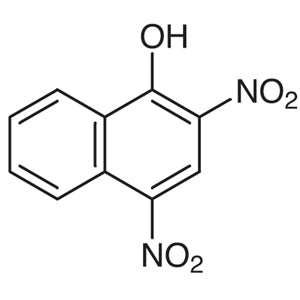
2,4-Dinitro-1-naphthol TCI D0839
Regular price Rp 4.188.450,00Regular price -
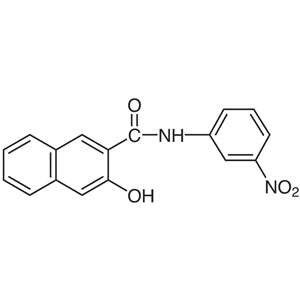
3-Hydroxy-3'-nitro-2-naphthanilide TCI H0314
Regular price Rp 477.750,00Regular price -
Disodium1-Naphthol-3,6-disulfonateHydrate TCI V0037
Regular price Rp 584.850,00Regular price -
5,6,7,8-Tetrahydro-1-naphthol TCI T2816
Regular price From Rp 1.353.450,00Regular price -
7-Bromo-2-naphthol TCI B4580
Regular price From Rp 769.650,00Regular price -
3-Bromo-2-naphthol TCI B3127
Regular price From Rp 2.650.200,00Regular price