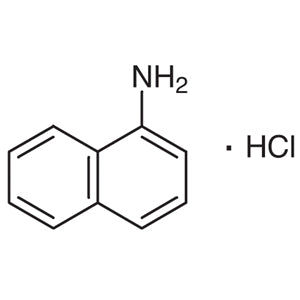
TCI N0056 1-Naphthylamine Hydrochloride (CAS 552-46-5) is the hydrochloride salt of 1-naphthylamine, that is, the protonated form of this aromatic amine paired with a chloride ion. Converting the free base into a salt delivers two significant advantages in the laboratory: markedly better solubility in water and improved storage stability. For this reason, the salt form is widely preferred for preparing aqueous reagents, particularly in the classical colorimetric methods that involve diazotization and coupling, and as an intermediate that is easier to handle than the free amine itself.
The principal property that makes this material practical is its ionic character. As a salt, the compound dissolves readily in water and in water-acid mixtures, so reagent solutions can be prepared directly without requiring additional organic solvents. The protonated amino group is also better protected against atmospheric oxidation than the free amine, so the solid tends not to darken quickly during correct storage. When dissolved under acidic conditions, the protonation equilibrium still allows the compound to act as a coupling component in the formation of azo dyes, which produces the characteristic colour that these methods depend on.
In Indonesian laboratories, this reagent is typically encountered wherever classical colorimetric determinations remain part of routine practice — in water and environmental testing units, in academic teaching and research laboratories, and in quality-control settings that rely on established wet-chemical procedures. The ready aqueous solubility of the salt suits laboratories that prefer to avoid stocking additional organic solvents, while its improved storage behaviour is helpful in warm and humid working conditions where free aromatic amines are more prone to degradation.
Related TCI products
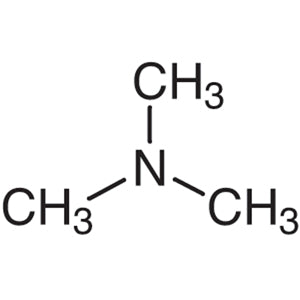
- TCI T3614 75-50-3 Trimethylamine (ca. 8% in Toluene, ca. 1mol/L)
- TCI T2893 75-50-3 Trimethylamine (ca. 25% in Isopropyl Alcohol, ca. 3mol/L)
- TCI T1992 2217-40-5 1,2,3,4-Tetrahydro-1-naphthylamine
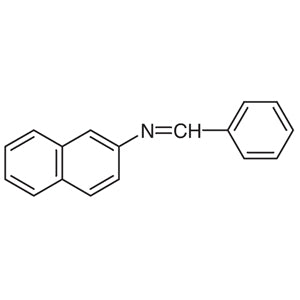
- TCI B0261 891-32-7 Benzylidene-2-naphthylamine
- TCI A0995 2217-41-6 5,6,7,8-Tetrahydro-1-naphthylamine
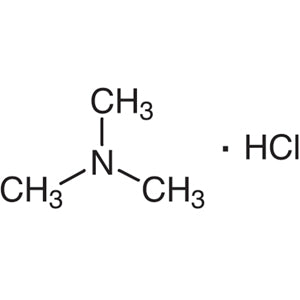
- TCI T0465 593-81-7 Trimethylamine Hydrochloride
- Diazotization and coupling colorimetric methods — the salt dissolves directly in acidic aqueous media and serves as the coupling component that develops the coloured azo product for measurement.
- Classical wet-chemical water and environmental analysis — its ready water solubility allows working reagent solutions to be prepared on the bench without any additional organic solvent step.
- Azo dye formation and colour chemistry studies — under acidic conditions the protonation equilibrium still permits coupling, giving the characteristic colour that such investigations are built around.
- Non-heterocyclic building block in organic synthesis — supplied as a salt, it is an intermediate that is easier and more predictable to handle than the corresponding free aromatic amine.
- Teaching and method-development work in academic laboratories — improved storage stability means the solid remains usable across a teaching term or a long method-validation programme.
| Brand | TCI (Tokyo Chemical Industry) |
|---|---|
| CAS number | 552-46-5 |
| Molecular formula | — |
| Purity | — |
| Category | Chemistry > Building Blocks > Non-Heterocyclic Building Blocks |
| Pack sizes | available in the standard TCI catalogue pack sizes; please confirm the packaging option when ordering |
| Physical form | solid, supplied as the hydrochloride salt |
| Storage | keep in a tightly closed container, protected from light and moisture |
- Product code: N0056
Store the container tightly closed in a cool, dry and well-ventilated area, away from light and moisture, since exposure to air and humidity encourages the darkening that correct storage is meant to prevent. Amber glass or the original supplier container with a secure closure is suitable; reseal immediately after each withdrawal and avoid leaving the solid open on the bench. Handle as an aromatic amine: weigh and transfer inside a fume hood, and wear a laboratory coat, chemical-resistant gloves and safety glasses. Avoid inhalation of dust and any contact with skin or eyes, use clean dry spatulas to prevent contamination, and consult the manufacturer's safety data sheet before use and for disposal guidance.
—
Produk Terkait
-
Trimethylamine(ca.8%inToluene,ca.1mol/L) TCI T3614
Regular price Rp 1.087.800,00Regular price -
Trimethylamine(ca.25%inIsopropylAlcohol,ca.3mol/L) TCI T2893
Regular price From Rp 717.150,00Regular price -
1,2,3,4-Tetrahydro-1-naphthylamine TCI T1992
Regular price From Rp 1.565.550,00Regular price -
Benzylidene-2-naphthylamine TCI B0261
Regular price Rp 3.100.650,00Regular price -
5,6,7,8-Tetrahydro-1-naphthylamine TCI A0995
Regular price From Rp 2.571.450,00Regular price -
TrimethylamineHydrochloride TCI T0465
Regular price From Rp 557.550,00Regular price -
Trimethylamine(ca.28%inWater,ca.4.3mol/L) TCI T0464
Regular price Rp 505.050,00Regular price -
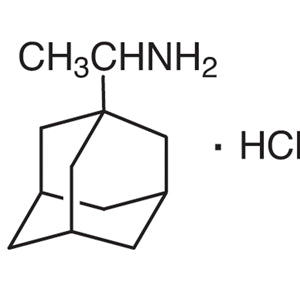
1-(1-Adamantyl)ethylamineHydrochloride TCI R0070
Regular price Rp 1.087.800,00Regular price