
![846-63-9 2-(1-Naphthyl)-5-phenyloxazole [for scintillation spectrometry] - AMI Scientific](http://amiscientific.com/cdn/shop/files/TCI2510N0068.jpg?v=1771058473&width=1946)
![846-63-9 2-(1-Naphthyl)-5-phenyloxazole [for scintillation spectrometry] - AMI Scientific](http://amiscientific.com/cdn/shop/files/TCI2510N0068.jpg?v=1771058473&width=1445)
TCI N0068, 2-(1-Naphthyl)-5-phenyloxazole — known among researchers more familiarly as α-NPO — is an aromatic oxazole compound formulated specifically for scintillation spectrometry. The material functions as a secondary scintillator, or wavelength shifter, within liquid scintillation cocktails: the component that captures energy from the primary scintillator and re-emits it at a wavelength better matched to the sensitivity of the photomultiplier tube. Its role is particularly important in low-level radioactivity measurements such as tritium and carbon-14 isotope counting, where every photon reaching the detector contributes to a usable count.
The properties that make this compound the preferred choice are its high energy transfer efficiency together with the shift of emission toward longer wavelengths compared with conventional primary scintillators. The oxazole structure conjugated with naphthyl and phenyl rings produces a delocalised electron system that supports strong fluorescence with good quantum yield. The dedicated grade for scintillation spectrometry means the material has been controlled against impurities capable of causing quenching, so that the counting response remains linear and stable across a measurement series rather than drifting as the cocktail ages.
In Indonesian laboratories, the compound is presented as a crystalline solid that dissolves readily in aromatic solvents, making it convenient to prepare into cocktail formulations in-house. It is typically found in radiochemistry and radiotracer facilities, nuclear research institutions, university analytical chemistry laboratories, and environmental and biomedical groups that rely on liquid scintillation counting for low-activity samples where commercial pre-mixed cocktails do not meet the specific requirements of the method.
Related TCI products
- TCI B0509 1806-34-4 1,4-Bis[2-(5-phenyloxazolyl)]benzene [for scintillation spectrometry]
- TCI D0902 92-71-7 2,5-Diphenyloxazole [for scintillation spectrometry]
- TCI B1024 13280-61-0 1,4-Bis(2-methylstyryl)benzene [Solute for Liquid Scintillation Counting]
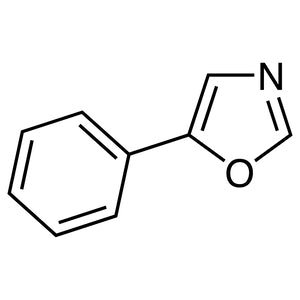
- TCI P2952 1006-68-4 5-Phenyloxazole
- TCI D2155 7127-19-7 4,5-Dihydro-2-phenyloxazole
- TCI P1061 Perfluorokerosene (Super-high boiling) (50% in PFK Low boiling) [for Mass Spectrometry]
- Liquid scintillation cocktail formulation — serves as the secondary scintillator that shifts primary emission into the spectral region where photomultiplier tubes respond most efficiently, raising overall counting yield.
- Tritium counting — supports low-level radioactivity measurement of the weak beta emitter, where improved wavelength matching materially increases the fraction of decay events that are actually registered.
- Carbon-14 measurement — assists radiocarbon-labelled sample counting by maximising light output per decay event, which is decisive when sample activity is close to the instrument background.
- Radiotracer studies in biochemistry — enables detection of labelled metabolites and reaction products in research work where isotope quantities are deliberately kept small to limit radiological exposure.
- Environmental radioactivity monitoring — suits analysis of water and environmental samples with low isotope content, since the scintillation-grade control against quenching impurities keeps the counting response linear and reproducible.
| Brand | TCI (Tokyo Chemical Industry) |
|---|---|
| CAS number | 846-63-9 |
| Molecular formula | — |
| Purity | — |
| Category | Analytical Chemistry > Analytical Reagents > Scintillators |
| Pack sizes | available in standard TCI catalogue pack sizes; please confirm the pack size when ordering |
| Physical form | crystalline solid, readily soluble in aromatic solvents |
| Storage | keep in a tightly closed original container, protected from light |
- Grade: special grade for scintillation spectrometry, controlled against quenching impurities
Store the material in its tightly closed original container in a cool, dry place, protected from light and away from oxidising agents, since prolonged light exposure may affect the fluorescence performance of the compound. Amber glass or the supplied original packaging is suitable; avoid transferring into containers that may introduce impurities capable of causing quenching. Handle the solid in a well-ventilated area or fume hood, using gloves, safety glasses, and a laboratory coat, and avoid generating or inhaling dust. When preparing cocktail solutions, work with aromatic solvents only under adequate ventilation and observe the relevant solvent precautions. Consult the manufacturer's safety data sheet before first use, and dispose of residues in accordance with applicable laboratory waste procedures.
—
Product Categories
Produk Terkait
-
1,4-Bis[2-(5-phenyloxazolyl)]benzene[forscintillationspectrometry] TCI B0509
Regular price From Rp 823.200,00Regular price -
2,5-Diphenyloxazole[forscintillationspectrometry] TCI D0902
Regular price From Rp 3.180.450,00Regular price -
1,4-Bis(2-methylstyryl)benzene[SoluteforLiquidScintillationCounting] TCI B1024
Regular price From Rp 1.908.900,00Regular price -
5-Phenyloxazole TCI P2952
Regular price From Rp 1.246.350,00Regular price -
4,5-Dihydro-2-phenyloxazole TCI D2155
Regular price From Rp 1.881.600,00Regular price -
Perfluorokerosene(Super-highboiling)(50%inPFKLowboiling)[forMassSpectrometry] TCI P1061
Regular price Rp 6.333.600,00Regular price -
Perfluorokerosene(Super-highboiling)[forMassspectrometry] TCI P1034
Regular price Rp 3.392.550,00Regular price -
Perfluorokerosene(Lowboiling)[forMassspectrometry] TCI P0690
Regular price Rp 3.870.300,00Regular price
![1806-34-4 1,4-Bis[2-(5-phenyloxazolyl)]benzene [for scintillation spectrometry] - AMI Scientific](http://amiscientific.com/cdn/shop/files/TCI2510B0509.jpg?v=1768815101&width=533)
![2,5-Diphenyloxazole [for scintillation spectrometry] (CAS 92-71-7) - TCI D0902 - AMI Scientific](http://amiscientific.com/cdn/shop/files/TCI2510D0902.jpg?v=1767102199&width=533)
![13280-61-0 1,4-Bis(2-methylstyryl)benzene [Solute for Liquid Scintillation Counting] - AMI Scientific](http://amiscientific.com/cdn/shop/files/TCI2510B1024.jpg?v=1768815131&width=533)

![Perfluorokerosene (Super-high boiling) (50% in PFK Low boiling) [for Mass Spectrometry] - AMI Scientific](http://amiscientific.com/cdn/shop/files/TCI2510P1061.jpg?v=1769057365&width=533)
![Perfluorokerosene (Super-high boiling) [for Mass spectrometry] - AMI Scientific](http://amiscientific.com/cdn/shop/files/TCI2510P1034.jpg?v=1768362512&width=533)
![Perfluorokerosene (Low boiling) [for Mass spectrometry] - AMI Scientific](http://amiscientific.com/cdn/shop/files/TCI2510P0690.jpg?v=1769143251&width=533)