Perfluorokerosene (Low boiling) from TCI, product code P0690, is a calibration reagent for mass spectrometry. It is usually called PFK. PFK is a mixture of perfluorinated alkanes, which are carbon chains in which every hydrogen atom has been replaced by fluorine. When it is ionized, PFK produces a series of fragment ions with well-established masses. Laboratories use this series as a reference to calibrate the mass scale and tune instruments, especially GC-MS systems that use electron ionization. This low-boiling grade is meant for calibration across the lower mass range.
PFK is a preferred calibrant for several reasons. First, perfluorinated compounds are very stable both chemically and thermally, so the fragmentation pattern stays consistent over time and from one run to the next. Second, fluorine gives these ions a characteristic mass defect compared with ordinary hydrocarbon compounds. Calibrant peaks are therefore easy to tell apart from background peaks, which makes PFK a good reference for accurate mass work. Third, PFK is volatile enough to enter the ion source through a reference inlet system without any chromatographic separation. The low-boiling grade vaporizes more easily and supplies reference ions suited to the lower end of the mass range.
In Indonesian laboratories, PFK is mainly used where mass spectrometers need regular calibration and tuning. These include university research laboratories, government testing and quality-control facilities, environmental analysis laboratories, and industrial laboratories that use GC-MS for routine analysis. Analysts typically run the calibrant before a series of measurements, after instrument maintenance, or whenever mass accuracy needs to be checked. This helps the laboratory produce reliable, traceable results for research, product testing, and compliance work.
Related TCI products
- TCI P1061 Perfluorokerosene (Super-high boiling) (50% in PFK Low boiling) [for Mass Spectrometry]
- TCI P1034 Perfluorokerosene (Super-high boiling) [for Mass spectrometry]
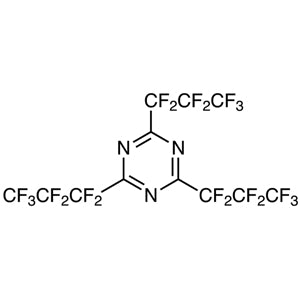
- TCI T0859 915-76-4 2,4,6-Tris(heptafluoropropyl)-1,3,5-triazine
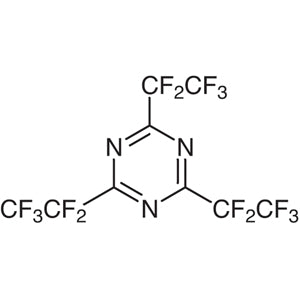
- TCI T0858 858-46-8 2,4,6-Tris(pentafluoroethyl)-1,3,5-triazine
- TCI B0509 1806-34-4 1,4-Bis[2-(5-phenyloxazolyl)]benzene [for scintillation spectrometry]
- TCI N0068 846-63-9 2-(1-Naphthyl)-5-phenyloxazole [for scintillation spectrometry]
- Mass scale calibration: PFK gives a series of fragment ions with well-known masses, so it provides dependable reference points for calibrating the mass axis of a spectrometer.
- GC-MS instrument tuning: Its stable, reproducible fragmentation under electron ionization lets analysts adjust and optimize GC-MS settings against a consistent, recognizable spectrum.
- Lower mass range calibration: This low-boiling grade vaporizes easily and supplies reference ions suited to the lower mass range, which is useful for methods that focus on smaller ions.
- Accurate mass reference: The characteristic mass defect of fluorinated ions keeps calibrant peaks clearly separate from hydrocarbon background peaks, which supports precise mass assignment in demanding analyses.
- Reference inlet introduction: PFK is volatile enough to reach the ion source directly through a reference inlet system, so calibration does not require a chromatographic separation step.
| Brand | TCI (product code P0690) |
|---|---|
| CAS number | — |
| Molecular formula | — |
| Purity | — |
| Category | Analytical Chemistry > Analytical Reagents > Mass Spectrometry (MS) Reagents |
| Pack sizes | Please refer to the product listing for available pack sizes |
| Physical form | — |
| Storage | Keep tightly closed in a cool, dry, well-ventilated place |
- Product name: Perfluorokerosene (Low boiling) [for Mass spectrometry]
- Composition: Mixture of perfluorinated alkanes (PFK)
Store Perfluorokerosene in its original, tightly sealed container in a cool, dry, well-ventilated area, away from heat sources and direct sunlight. Because the material is volatile, close the container promptly after each use to limit evaporation and prevent contamination of the calibrant. Do not transfer it into unsuitable containers, and label any secondary containers clearly. Handle it according to standard laboratory practice: wear safety glasses, gloves, and a lab coat, and work in a well-ventilated area or fume hood. Avoid breathing in vapors and avoid contact with skin and eyes. Before use, read the Safety Data Sheet supplied by the manufacturer for detailed hazard, handling, and disposal information, and dispose of waste according to local regulations.
—
Produk Terkait
-
Perfluorokerosene(Super-highboiling)(50%inPFKLowboiling)[forMassSpectrometry] TCI P1061
Regular price Rp 6.333.600,00Regular priceRp 4.428.900,00Sale price Rp 6.333.600,00 -
Perfluorokerosene(Super-highboiling)[forMassspectrometry] TCI P1034
Regular price Rp 3.392.550,00Regular priceRp 2.371.950,00Sale price Rp 3.392.550,00 -
2,4,6-Tris(heptafluoropropyl)-1,3,5-triazine TCI T0859
Regular price Rp 1.749.300,00Regular priceRp 1.239.000,00Sale price Rp 1.749.300,00 -
2,4,6-Tris(pentafluoroethyl)-1,3,5-triazine TCI T0858
Regular price Rp 2.702.700,00Regular priceRp 1.905.750,00Sale price Rp 2.702.700,00 -
1,4-Bis[2-(5-phenyloxazolyl)]benzene[forscintillationspectrometry] TCI B0509
Regular price From Rp 875.700,00Regular priceRp 627.900,00Sale price From Rp 875.700,00 -
2-(1-Naphthyl)-5-phenyloxazole[forscintillationspectrometry] TCI N0068
Regular price Rp 1.961.400,00Regular priceRp 1.387.050,00Sale price Rp 1.961.400,00 -
2,5-Diphenyloxazole[forscintillationspectrometry] TCI D0902
Regular price From Rp 3.232.950,00Regular priceRp 2.276.400,00Sale price From Rp 3.232.950,00 -
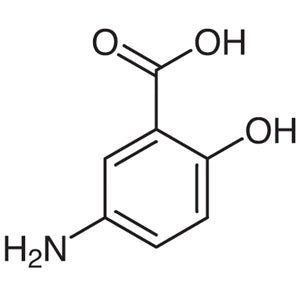
5-AminosalicylicAcid TCI A0317
Regular price From Rp 1.008.000,00Regular priceRp 720.300,00Sale price From Rp 1.008.000,00