
![2,5-Diphenyloxazole [for scintillation spectrometry] (CAS 92-71-7) - TCI D0902 - AMI Scientific](http://amiscientific.com/cdn/shop/files/TCI2510D0902.jpg?v=1767102199&width=1946)
![2,5-Diphenyloxazole [for scintillation spectrometry] (CAS 92-71-7) - TCI D0902 - AMI Scientific](http://amiscientific.com/cdn/shop/files/TCI2510D0902.jpg?v=1767102199&width=1445)
2,5-Diphenyloxazole is a chemical compound used in scintillation spectrometry to enhance the detection efficiency of radiation. This material serves as an effective fluorescent emitter, enabling precise measurement of radiation levels in laboratory settings. In scintillation spectrometry, it plays a crucial role in converting radiation into detectable light signals, which are then analyzed by specialized equipment. Its presence in the laboratory ensures accurate and reliable data collection, making it an essential component for various analytical processes.
The compound's heterocyclic structure provides stability and allows it to absorb and emit light in response to radiation. These properties make it a preferred choice for applications requiring high sensitivity and reliability. Its non-reactive nature further contributes to its effectiveness, as it maintains consistent performance under different experimental conditions. This stability ensures that the compound remains a reliable tool in both research and industrial settings.
In Indonesian laboratories, 2,5-Diphenyloxazole is widely used in chemical, physical, and medical research. It is commonly found in institutions conducting radiation studies and spectral analysis. Its availability in the local market makes it accessible to researchers and technicians, supporting a wide range of scientific investigations. The compound's role in enhancing detection accuracy is vital for maintaining the quality of experimental results in these laboratories.
Related TCI products
- TCI M1299 14224-99-8 2-Methyl-4,5-diphenyloxazole
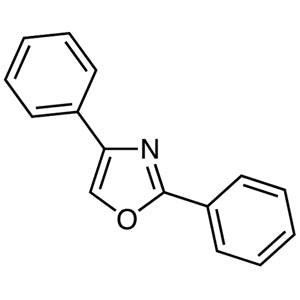
- TCI D0901 838-41-5 2,4-Diphenyloxazole
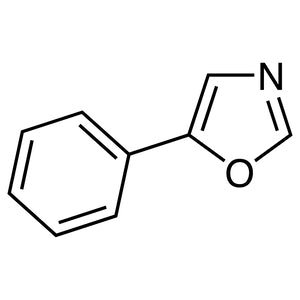
- TCI P2952 1006-68-4 5-Phenyloxazole
- TCI D2155 7127-19-7 4,5-Dihydro-2-phenyloxazole
- TCI B0509 1806-34-4 1,4-Bis[2-(5-phenyloxazolyl)]benzene [for scintillation spectrometry]
- TCI N0068 846-63-9 2-(1-Naphthyl)-5-phenyloxazole [for scintillation spectrometry]
- Scintillation Spectrometry: This item is ideal for detecting and measuring radiation due to its fluorescent properties, which convert radiation into light signals for accurate analysis.
- Radiation Detection: It is used in laboratories to enhance the sensitivity of radiation detection systems, ensuring precise and reliable measurements in various experimental setups.
- Spectral Analysis: The compound's ability to emit light in response to radiation makes it suitable for spectral analysis, aiding in the identification and quantification of radiation sources.
- Crystal Imaging: It is a key component in the production of scintillation crystals, which are used to convert radiation into detectable signals for imaging applications.
- Research and Development: Its stability and effectiveness make it a preferred choice for research institutions and universities conducting studies on radiation and its effects.
| Brand | TCI |
|---|---|
| CAS number | 92-71-7 |
| Molecular formula | — |
| Purity | — |
| Category | Chemistry > Building Blocks > Heterocyclic Building Blocks |
| Pack sizes | Available in standard laboratory quantities |
| Physical form | Solid |
| Storage | Store in a cool, dry place away from direct light |
This compound should be stored in a cool, dry environment, away from direct sunlight to maintain its stability and effectiveness. It is recommended to use airtight containers to prevent moisture absorption, which could affect its performance. Due to its non-reactive nature, it is generally safe to handle with standard laboratory precautions. However, it is advisable to wear appropriate personal protective equipment when handling to ensure safety. The compound does not require special handling beyond standard chemical storage practices, making it easy to manage in routine laboratory operations. Proper storage ensures that the material remains effective for its intended applications over time.
—
Produk Terkait
-
2-Methyl-4,5-diphenyloxazole TCI M1299
Regular price From Rp 2.254.350,00Regular price -
2,4-Diphenyloxazole TCI D0901
Regular price From Rp 2.041.200,00Regular price -
5-Phenyloxazole TCI P2952
Regular price From Rp 1.246.350,00Regular price -
4,5-Dihydro-2-phenyloxazole TCI D2155
Regular price From Rp 1.881.600,00Regular price -
1,4-Bis[2-(5-phenyloxazolyl)]benzene[forscintillationspectrometry] TCI B0509
Regular price From Rp 823.200,00Regular price -
2-(1-Naphthyl)-5-phenyloxazole[forscintillationspectrometry] TCI N0068
Regular price Rp 1.908.900,00Regular price -
1,4-Bis(2-methylstyryl)benzene[SoluteforLiquidScintillationCounting] TCI B1024
Regular price From Rp 1.908.900,00Regular price -
Perfluorokerosene(Super-highboiling)(50%inPFKLowboiling)[forMassSpectrometry] TCI P1061
Regular price Rp 6.333.600,00Regular price


![1806-34-4 1,4-Bis[2-(5-phenyloxazolyl)]benzene [for scintillation spectrometry] - AMI Scientific](http://amiscientific.com/cdn/shop/files/TCI2510B0509.jpg?v=1768815101&width=533)
![846-63-9 2-(1-Naphthyl)-5-phenyloxazole [for scintillation spectrometry] - AMI Scientific](http://amiscientific.com/cdn/shop/files/TCI2510N0068.jpg?v=1771058473&width=533)
![13280-61-0 1,4-Bis(2-methylstyryl)benzene [Solute for Liquid Scintillation Counting] - AMI Scientific](http://amiscientific.com/cdn/shop/files/TCI2510B1024.jpg?v=1768815131&width=533)
![Perfluorokerosene (Super-high boiling) (50% in PFK Low boiling) [for Mass Spectrometry] - AMI Scientific](http://amiscientific.com/cdn/shop/files/TCI2510P1061.jpg?v=1769057365&width=533)