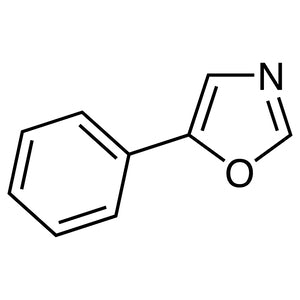
1,4-Bis[2-(5-phenyloxazolyl)]benzene is a specialized chemical compound used in analytical chemistry for scintillation spectrometry applications. This material plays a crucial role in laboratories where the detection of radiation or high-energy particles is required. As a scintillator, it converts incoming radiation into measurable light, enabling precise analysis in various scientific fields. Its unique optical properties make it an essential component in advanced detection systems.
The compound is preferred due to its exceptional optical characteristics, including the ability to emit fluorescent light when exposed to radiation. This property ensures high sensitivity and accuracy in measurement, making it ideal for applications that demand precision. Additionally, it exhibits chemical stability and resistance to environmental conditions commonly found in laboratory settings, ensuring reliable performance over time.
In Indonesian laboratories, this compound is widely used in scientific research, particularly in nuclear physics, analytical chemistry, and material science. It supports studies involving isotopic analysis, radiation detection, and material testing. Its reliability and performance make it a key reagent in both academic and industrial research environments.
Related TCI products
- TCI B1024 13280-61-0 1,4-Bis(2-methylstyryl)benzene [Solute for Liquid Scintillation Counting]
- TCI N0068 846-63-9 2-(1-Naphthyl)-5-phenyloxazole [for scintillation spectrometry]
- TCI D0902 92-71-7 2,5-Diphenyloxazole [for scintillation spectrometry]
- TCI P1061 Perfluorokerosene (Super-high boiling) (50% in PFK Low boiling) [for Mass Spectrometry]
- TCI P1034 Perfluorokerosene (Super-high boiling) [for Mass spectrometry]
- TCI P0690 Perfluorokerosene (Low boiling) [for Mass spectrometry]
- Radiation detection in nuclear physics research due to its ability to convert radiation into measurable light.
- Isotopic analysis in analytical chemistry for precise measurement of radioactive elements.
- Material testing in industrial and academic settings for evaluating radiation response properties.
- High-energy particle detection in physics experiments requiring sensitive and accurate light emission.
- Scientific research in material science for studying optical and radiative properties of compounds.
| Brand | TCI |
|---|---|
| CAS number | 1806-34-4 |
| Molecular formula | — |
| Purity | — |
| Category | Analytical Chemistry > Analytical Reagents > Scintillators |
| Pack sizes | Available in various quantities as per standard laboratory reagent packaging |
| Physical form | Solid crystalline compound |
| Storage | Store in a cool, dry place away from direct light and moisture |
This compound should be stored in a cool, dry environment, away from direct sunlight and moisture to maintain its stability and effectiveness. It is recommended to use airtight containers made of materials that do not react with the compound, such as glass or high-density polyethylene. In laboratory settings, it should be handled with appropriate personal protective equipment to ensure safety. Due to its chemical stability, it does not require special refrigeration but should be protected from environmental contaminants. Regular monitoring of storage conditions is advised to ensure optimal performance and longevity of the material.
—
Product Categories
Produk Terkait
-
1,4-Bis(2-methylstyryl)benzene[SoluteforLiquidScintillationCounting] TCI B1024
Regular price From Rp 1.908.900,00Regular priceRp 1.334.550,00Sale price From Rp 1.908.900,00 -
2-(1-Naphthyl)-5-phenyloxazole[forscintillationspectrometry] TCI N0068
Regular price Rp 1.961.400,00Regular priceRp 1.387.050,00Sale price Rp 1.961.400,00 -
2,5-Diphenyloxazole[forscintillationspectrometry] TCI D0902
Regular price From Rp 3.232.950,00Regular priceRp 2.276.400,00Sale price From Rp 3.232.950,00 -
Perfluorokerosene(Super-highboiling)(50%inPFKLowboiling)[forMassSpectrometry] TCI P1061
Regular price Rp 6.333.600,00Regular priceRp 4.428.900,00Sale price Rp 6.333.600,00 -
Perfluorokerosene(Super-highboiling)[forMassspectrometry] TCI P1034
Regular price Rp 3.392.550,00Regular priceRp 2.371.950,00Sale price Rp 3.392.550,00 -
Perfluorokerosene(Lowboiling)[forMassspectrometry] TCI P0690
Regular price Rp 3.870.300,00Regular priceRp 2.705.850,00Sale price Rp 3.870.300,00 -
5-Phenyloxazole TCI P2952
Regular price From Rp 1.298.850,00Regular priceRp 924.000,00Sale price From Rp 1.298.850,00 -
4,5-Dihydro-2-phenyloxazole TCI D2155
Regular price From Rp 1.934.100,00Regular priceRp 1.368.150,00Sale price From Rp 1.934.100,00