Perfluorokerosene (Super-high boiling) [for Mass spectrometry] from TCI (P1034) is a mixture of hydrocarbons in which every hydrogen atom has been replaced by fluorine. Analysts commonly call it PFK. In the laboratory it is not used as a reactant. Its role is to serve as a mass calibration standard for mass spectrometers. PFK is used mainly with electron ionization (EI), including on high-resolution instruments. The "super-high boiling" grade is designed to give fragment ions at a higher mass range than standard PFK, which extends the calibrated range of the instrument.
Analysts choose PFK because, when ionized, it gives a large number of fragment ions spread across a wide mass range. These ions contain only carbon and fluorine, so their exact masses are well known. Fluorine has a negative mass defect, which makes PFK ions easy to tell apart from the ions of common hydrogen-rich organic compounds. This makes PFK well suited as an internal reference for accurate mass measurement. Perfluorinated materials are also very chemically stable and do not react readily in the ion source, so the reference signals stay reliable from run to run.
In Indonesia, this product is used by instrument laboratories at universities, research institutions and analytical testing facilities that run mass spectrometers with electron ionization. Typical users are teams that need to tune and calibrate the mass axis, check instrument performance, or measure accurate masses for structure elucidation. It is particularly relevant for laboratories that work at higher mass ranges, where standard PFK gives too few reference ions. It supports consistent, traceable results in both research and routine analytical work.
Related TCI products
- TCI P1061 Perfluorokerosene (Super-high boiling) (50% in PFK Low boiling) [for Mass Spectrometry]
- TCI P0690 Perfluorokerosene (Low boiling) [for Mass spectrometry]
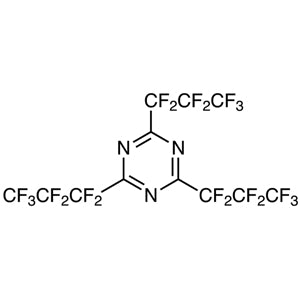
- TCI T0859 915-76-4 2,4,6-Tris(heptafluoropropyl)-1,3,5-triazine
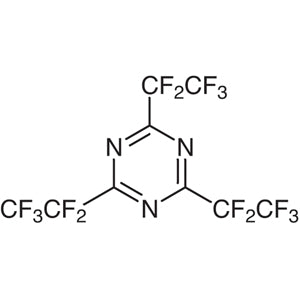
- TCI T0858 858-46-8 2,4,6-Tris(pentafluoroethyl)-1,3,5-triazine
- TCI B0509 1806-34-4 1,4-Bis[2-(5-phenyloxazolyl)]benzene [for scintillation spectrometry]
- TCI N0068 846-63-9 2-(1-Naphthyl)-5-phenyloxazole [for scintillation spectrometry]
- Mass axis calibration: PFK gives many fragment ions with well-known exact masses, which provide dense reference points for calibrating the mass scale of EI mass spectrometers.
- High-resolution accurate mass measurement: Fluorine's negative mass defect separates PFK reference ions from hydrogen-rich analyte ions, so it works well as an internal lock-mass reference.
- Extended high-mass calibration: The super-high boiling grade gives fragment ions at higher masses than standard PFK, which helps when the calibrated range must cover heavier analytes.
- Instrument tuning and performance checks: Its stable and reproducible fragmentation pattern lets analysts confirm resolution, sensitivity and mass accuracy as part of routine instrument maintenance.
- Structure elucidation support: Accurate mass data calibrated against PFK helps analysts assign elemental compositions to unknown ions in research and analytical testing laboratories.
| Brand | TCI (product code P1034) |
|---|---|
| CAS number | not provided in the product data |
| Molecular formula | — |
| Purity | — |
| Category | Analytical Chemistry > Analytical Reagents > Mass Spectrometry (MS) Reagents |
| Pack sizes | see the available options on the product listing |
| Physical form | — |
| Storage | follow the conditions stated on the TCI label and Safety Data Sheet |
- Product name: Perfluorokerosene (Super-high boiling) [for Mass spectrometry]
Keep the product in its original, tightly closed container in a cool, dry, well-ventilated place, away from direct sunlight and heat sources. Follow the storage conditions on the TCI label and Safety Data Sheet. Do not transfer the product to unsuitable containers, and keep it away from contamination so it stays clean as a calibration reference. Handle it with standard laboratory precautions, including protective gloves, safety glasses and a lab coat. Avoid inhaling vapours and avoid contact with skin and eyes. Introduce the product into the instrument only through the reference inlet system and in line with the instrument manufacturer's instructions. Dispose of waste and empty containers according to local regulations.
—
Produk Terkait
-
Perfluorokerosene(Super-highboiling)(50%inPFKLowboiling)[forMassSpectrometry] TCI P1061
Regular price Rp 6.333.600,00Regular priceRp 4.428.900,00Sale price Rp 6.333.600,00 -
Perfluorokerosene(Lowboiling)[forMassspectrometry] TCI P0690
Regular price Rp 3.870.300,00Regular priceRp 2.705.850,00Sale price Rp 3.870.300,00 -
2,4,6-Tris(heptafluoropropyl)-1,3,5-triazine TCI T0859
Regular price Rp 1.749.300,00Regular priceRp 1.239.000,00Sale price Rp 1.749.300,00 -
2,4,6-Tris(pentafluoroethyl)-1,3,5-triazine TCI T0858
Regular price Rp 2.702.700,00Regular priceRp 1.905.750,00Sale price Rp 2.702.700,00 -
1,4-Bis[2-(5-phenyloxazolyl)]benzene[forscintillationspectrometry] TCI B0509
Regular price From Rp 875.700,00Regular priceRp 627.900,00Sale price From Rp 875.700,00 -
2-(1-Naphthyl)-5-phenyloxazole[forscintillationspectrometry] TCI N0068
Regular price Rp 1.961.400,00Regular priceRp 1.387.050,00Sale price Rp 1.961.400,00 -
2,5-Diphenyloxazole[forscintillationspectrometry] TCI D0902
Regular price From Rp 3.232.950,00Regular priceRp 2.276.400,00Sale price From Rp 3.232.950,00 -
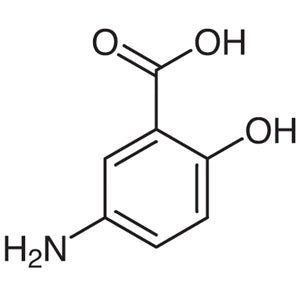
5-AminosalicylicAcid TCI A0317
Regular price From Rp 1.008.000,00Regular priceRp 720.300,00Sale price From Rp 1.008.000,00