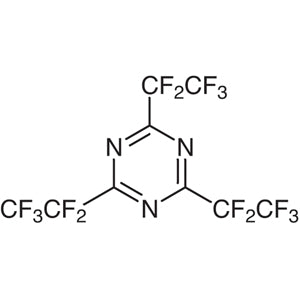
2,4,6-Tris(heptafluoropropyl)-1,3,5-triazine is a fluorinated chemical compound widely used in laboratory settings for the synthesis of complex molecules. As a fluorinated building block, it plays a crucial role in organic chemistry by enabling the creation of compounds with specific functional groups and unique chemical properties. This compound is particularly valued for its ability to participate in various chemical reactions, making it an essential tool for researchers aiming to develop new materials or pharmaceuticals. Its presence in the chemical supply chain ensures that it is readily available for use in both academic and industrial research environments.
The compound's high fluorination level contributes to its exceptional chemical stability and reactivity. The presence of multiple fluorine atoms in its structure enhances its resistance to degradation under harsh chemical conditions, making it suitable for use in demanding laboratory environments. Additionally, its ability to form stable bonds with a variety of functional groups allows it to be a versatile component in synthetic pathways. These properties make it a preferred choice for chemists working on advanced organic synthesis projects, especially those requiring high-performance materials or specialized chemical intermediates.
In Indonesian laboratories, this compound is commonly used in organic chemistry research, particularly in the fields of materials science, pharmaceutical development, and environmental chemistry. Its stability and reactivity make it a reliable building block for creating complex molecules, supporting a wide range of scientific investigations. Researchers in Indonesia frequently rely on this compound for its consistent performance and compatibility with various synthetic methods, ensuring reliable results in their experiments.
TCI brochures (PDF)
- Fluorous Chemistry 2025-01-21 · p. 10
Related TCI products
- TCI T0858 858-46-8 2,4,6-Tris(pentafluoroethyl)-1,3,5-triazine
- TCI P1061 Perfluorokerosene (Super-high boiling) (50% in PFK Low boiling) [for Mass Spectrometry]
- TCI P1034 Perfluorokerosene (Super-high boiling) [for Mass spectrometry]
- TCI P0690 Perfluorokerosene (Low boiling) [for Mass spectrometry]
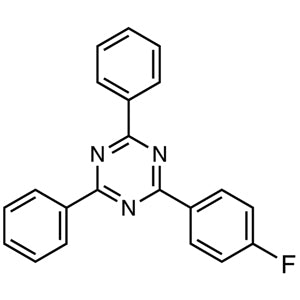
- TCI F1045 203450-08-2 2-(4-Fluorophenyl)-4,6-diphenyl-1,3,5-triazine
- TCI H0689 422-85-5 Heptafluoropropyl Bromide
- Organic Synthesis: This compound is ideal for creating complex organic molecules due to its reactivity and stability, allowing for precise functional group modifications.
- Material Science Research: Its fluorinated structure makes it suitable for developing advanced materials with enhanced chemical resistance and thermal stability.
- Pharmaceutical Development: It is used in the synthesis of drug compounds, where its unique chemical properties contribute to the creation of bioactive molecules.
- Environmental Chemistry Studies: The compound's stability and reactivity are valuable in studying chemical interactions in environmental systems and pollutant degradation.
- Functional Group Modification: Its ability to form stable bonds with various functional groups makes it a key component in modifying molecular structures for specific applications.
| Brand | TCI |
|---|---|
| CAS number | 915-76-4 |
| Molecular formula | — |
| Purity | — |
| Category | Chemistry > Building Blocks > Fluorinated Building Blocks |
| Pack sizes | Available in standard laboratory quantities as specified by the supplier |
| Physical form | Pure liquid |
| Storage | Store in a cool, dry place away from direct sunlight and incompatible materials |
This compound should be stored in a cool, dry environment, away from direct sunlight and sources of heat. It is recommended to use sealed containers made of materials compatible with fluorinated compounds, such as glass or high-density polyethylene. Due to its chemical stability, it does not require refrigeration but should be protected from moisture and air exposure. In laboratory settings, it is important to handle the compound with appropriate personal protective equipment, including gloves and safety goggles, to ensure safe handling. Proper ventilation should be maintained when working with this material to minimize any potential exposure risks.
—
Product Categories
Produk Terkait
-
2,4,6-Tris(pentafluoroethyl)-1,3,5-triazine TCI T0858
Regular price Rp 2.702.700,00Regular priceRp 1.905.750,00Sale price Rp 2.702.700,00 -
Perfluorokerosene(Super-highboiling)(50%inPFKLowboiling)[forMassSpectrometry] TCI P1061
Regular price Rp 6.333.600,00Regular priceRp 4.428.900,00Sale price Rp 6.333.600,00 -
Perfluorokerosene(Super-highboiling)[forMassspectrometry] TCI P1034
Regular price Rp 3.392.550,00Regular priceRp 2.371.950,00Sale price Rp 3.392.550,00 -
Perfluorokerosene(Lowboiling)[forMassspectrometry] TCI P0690
Regular price Rp 3.870.300,00Regular priceRp 2.705.850,00Sale price Rp 3.870.300,00 -
2-(4-Fluorophenyl)-4,6-diphenyl-1,3,5-triazine TCI F1045
Regular price From Rp 637.350,00Regular priceRp 460.950,00Sale price From Rp 637.350,00 -
HeptafluoropropylBromide TCI H0689
Regular price Rp 8.401.050,00Regular priceRp 5.874.750,00Sale price Rp 8.401.050,00 -
HeptafluoropropylIodide(stabilizedwithCopperchip) TCI H0596
Regular price From Rp 2.597.700,00Regular priceRp 1.816.500,00Sale price From Rp 2.597.700,00 -
2,2,3,3-TetrafluoropropylMethacrylate(stabilizedwithMEHQ) TCI T3728
Regular price From Rp 557.550,00Regular priceRp 389.550,00Sale price From Rp 557.550,00