Perfluorokerosene (Super-high boiling) TCI P1061 is a specialized chemical compound used in analytical chemistry for various laboratory applications, particularly in mass spectrometry. This material serves as a key reagent in the analysis of complex chemical components, providing a stable and reliable medium for sample preparation and testing. Its unique formulation, consisting of 50% perfluorokerosene (PFK) in a low-boiling PFK base, ensures it remains effective under high-temperature conditions commonly encountered in mass spectrometry instruments. This makes it an essential tool for achieving accurate and reproducible results in analytical processes.
The properties of TCI P1061 make it a preferred choice for laboratory use. It exhibits exceptional thermal stability, chemical inertness, and non-volatility, which are crucial for maintaining the integrity of samples during analysis. These characteristics ensure that the material does not react with or interfere with the compounds being tested, preserving the accuracy of the results. Additionally, its high boiling point allows it to function effectively in high-temperature environments without evaporating or degrading, making it ideal for use in mass spectrometry applications.
In Indonesian laboratories, TCI P1061 is widely utilized in research and chemical testing, especially within academic institutions and research organizations. Its stability and reliability make it a go-to reagent for analytical chemists seeking precise and consistent outcomes. The material supports a wide range of analytical procedures, contributing to the advancement of scientific research and quality control in various industries.
Related TCI products
- TCI P1034 Perfluorokerosene (Super-high boiling) [for Mass spectrometry]
- TCI P0690 Perfluorokerosene (Low boiling) [for Mass spectrometry]
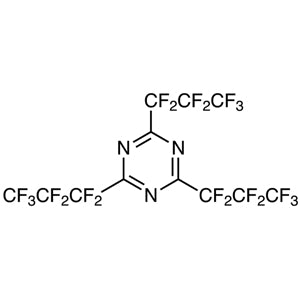
- TCI T0859 915-76-4 2,4,6-Tris(heptafluoropropyl)-1,3,5-triazine
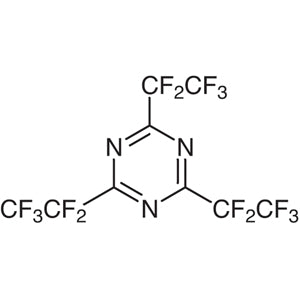
- TCI T0858 858-46-8 2,4,6-Tris(pentafluoroethyl)-1,3,5-triazine
- TCI B0509 1806-34-4 1,4-Bis[2-(5-phenyloxazolyl)]benzene [for scintillation spectrometry]
- TCI N0068 846-63-9 2-(1-Naphthyl)-5-phenyloxazole [for scintillation spectrometry]
- Mass Spectrometry Analysis: This reagent is ideal for mass spectrometry due to its high boiling point and chemical stability, ensuring accurate ionization and detection of complex samples.
- Sample Preparation: Its non-volatile nature makes it suitable for use as a diluent or standard in sample preparation, maintaining sample integrity during analysis.
- Calibration and Standardization: The consistent properties of TCI P1061 make it an excellent reference material for calibrating analytical instruments and ensuring measurement accuracy.
- High-Temperature Testing: Its thermal stability allows it to be used in high-temperature environments where other reagents might degrade or evaporate.
- Environmental and Industrial Analysis: The material is used in environmental and industrial testing to analyze volatile and semi-volatile compounds with high precision.
| Brand | TCI |
|---|---|
| CAS number | — |
| Molecular formula | — |
| Purity | — |
| Category | Analytical Chemistry > Analytical Reagents > Mass Spectrometry (MS) Reagents |
| Pack sizes | — |
| Physical form | Liquid |
| Storage | Store in a cool, dark place away from heat and direct sunlight |
TCI P1061 should be stored in a cool, dark environment to maintain its chemical stability and prevent degradation. It is recommended to use airtight containers to minimize exposure to moisture and contaminants. Due to its non-volatile nature, it does not require refrigeration but should be kept away from heat sources. In laboratory settings, it is important to handle the material with care, ensuring that it is not exposed to incompatible substances. Proper labeling and storage conditions are essential to maintain its effectiveness and ensure safe usage in analytical procedures. Always follow standard laboratory safety protocols when working with chemical reagents to prevent any potential hazards.
—
Produk Terkait
-
Perfluorokerosene(Super-highboiling)[forMassspectrometry] TCI P1034
Regular price Rp 3.392.550,00Regular priceRp 2.371.950,00Sale price Rp 3.392.550,00 -
Perfluorokerosene(Lowboiling)[forMassspectrometry] TCI P0690
Regular price Rp 3.870.300,00Regular priceRp 2.705.850,00Sale price Rp 3.870.300,00 -
2,4,6-Tris(heptafluoropropyl)-1,3,5-triazine TCI T0859
Regular price Rp 1.749.300,00Regular priceRp 1.239.000,00Sale price Rp 1.749.300,00 -
2,4,6-Tris(pentafluoroethyl)-1,3,5-triazine TCI T0858
Regular price Rp 2.702.700,00Regular priceRp 1.905.750,00Sale price Rp 2.702.700,00 -
1,4-Bis[2-(5-phenyloxazolyl)]benzene[forscintillationspectrometry] TCI B0509
Regular price From Rp 875.700,00Regular priceRp 627.900,00Sale price From Rp 875.700,00 -
2-(1-Naphthyl)-5-phenyloxazole[forscintillationspectrometry] TCI N0068
Regular price Rp 1.961.400,00Regular priceRp 1.387.050,00Sale price Rp 1.961.400,00 -
2,5-Diphenyloxazole[forscintillationspectrometry] TCI D0902
Regular price From Rp 3.232.950,00Regular priceRp 2.276.400,00Sale price From Rp 3.232.950,00 -
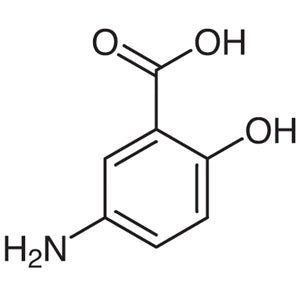
5-AminosalicylicAcid TCI A0317
Regular price From Rp 1.008.000,00Regular priceRp 720.300,00Sale price From Rp 1.008.000,00