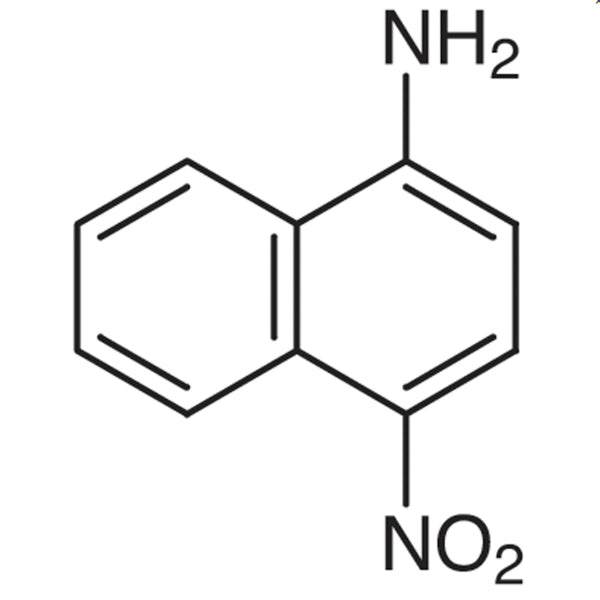
4-Nitro-1-naphthylamine is a chemical compound widely used in laboratory settings for its versatility in chemical reactions. As a building block in organic synthesis, it plays a crucial role in the development of complex molecules. Its aromatic structure enables it to participate in various substitution and condensation reactions, making it a valuable reagent in synthetic chemistry. This compound is particularly useful for creating derivatives with diverse functional groups, which are essential in pharmaceutical and material science research.
The compound's stability and controlled reactivity make it a preferred choice for researchers seeking reliable results. Its ability to form stable intermediates and interact with multiple functional groups enhances its utility across different chemical processes. The consistent chemical and physical properties of 4-Nitro-1-naphthylamine ensure reproducibility in experiments, which is vital for scientific accuracy. These characteristics make it a trusted material for both academic and industrial applications.
In Indonesian laboratories, 4-Nitro-1-naphthylamine is commonly used in research projects related to drug development, polymer synthesis, and analytical chemistry. Its availability supports the work of educational institutions and research organizations in Indonesia, facilitating the creation of new compounds and the testing of chemical properties. The compound's role in advancing scientific knowledge is significant, especially in the context of local research initiatives.
Related TCI products
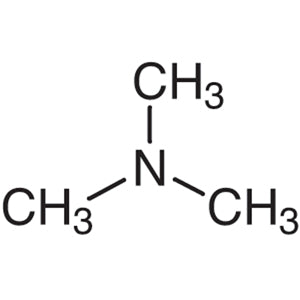
- TCI T3614 75-50-3 Trimethylamine (ca. 8% in Toluene, ca. 1mol/L)
- TCI T2893 75-50-3 Trimethylamine (ca. 25% in Isopropyl Alcohol, ca. 3mol/L)
- TCI T1992 2217-40-5 1,2,3,4-Tetrahydro-1-naphthylamine
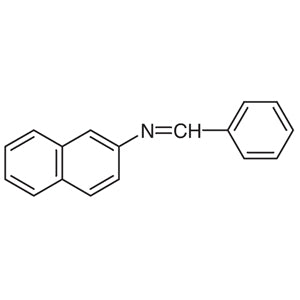
- TCI B0261 891-32-7 Benzylidene-2-naphthylamine
- TCI A0995 2217-41-6 5,6,7,8-Tetrahydro-1-naphthylamine
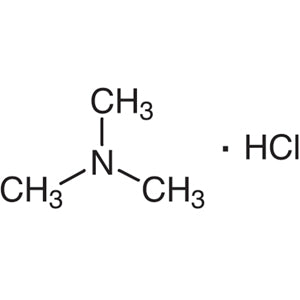
- TCI T0465 593-81-7 Trimethylamine Hydrochloride
- Used in pharmaceutical research for synthesizing active pharmaceutical ingredients due to its reactivity and structural versatility.
- Applied in material science for creating functional polymers and dyes because of its ability to form stable chemical bonds.
- Employed in analytical chemistry for developing chromatographic standards and reagents due to its consistent chemical properties.
- Utilized in organic synthesis for producing complex molecules through substitution and condensation reactions.
- Integrated into academic research projects to support the development of new chemical compounds and experimental methodologies.
| Brand | TCI |
|---|---|
| CAS number | 776-34-1 |
| Molecular formula | — |
| Purity | — |
| Category | Chemistry > Building Blocks > Non-Heterocyclic Building Blocks |
| Pack sizes | Available in various quantities as per standard laboratory requirements |
| Physical form | Solid |
| Storage | Store in a cool, dry place away from direct sunlight and moisture |
4-Nitro-1-naphthylamine should be stored in a cool, dry environment to maintain its chemical stability. It is recommended to keep the compound in airtight containers to prevent exposure to moisture and air, which could affect its reactivity. Proper labeling of storage containers is essential for safety and identification purposes. While it is generally stable under normal laboratory conditions, it should be handled with care to avoid any potential chemical interactions. Laboratory personnel should ensure that storage areas are well-ventilated and free from incompatible substances. Adhering to standard safety protocols ensures the safe use and preservation of this compound in research settings.
—
Produk Terkait
-
Trimethylamine(ca.8%inToluene,ca.1mol/L) TCI T3614
Regular price Rp 1.087.800,00Regular price -
Trimethylamine(ca.25%inIsopropylAlcohol,ca.3mol/L) TCI T2893
Regular price From Rp 717.150,00Regular price -
1,2,3,4-Tetrahydro-1-naphthylamine TCI T1992
Regular price From Rp 1.565.550,00Regular price -
Benzylidene-2-naphthylamine TCI B0261
Regular price Rp 3.100.650,00Regular price -
5,6,7,8-Tetrahydro-1-naphthylamine TCI A0995
Regular price From Rp 2.571.450,00Regular price -
TrimethylamineHydrochloride TCI T0465
Regular price From Rp 557.550,00Regular price -
Trimethylamine(ca.28%inWater,ca.4.3mol/L) TCI T0464
Regular price Rp 505.050,00Regular price -
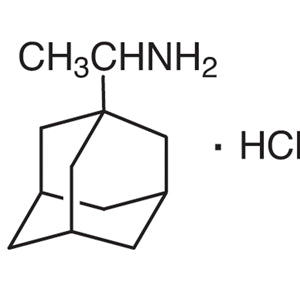
1-(1-Adamantyl)ethylamineHydrochloride TCI R0070
Regular price Rp 1.087.800,00Regular price