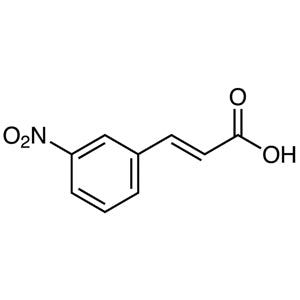
(E)-3-Nitrocinnamic Acid is a chemical compound widely used in laboratory settings for the synthesis of complex molecules. It serves as a key building block in organic chemistry, particularly in reactions involving aromatic structures and nitro groups. This compound is commonly found in chemical laboratories as a raw material for the production of various compounds with specific functional groups. Its versatility makes it an essential component in the development of new chemical entities, especially in research focused on synthetic pathways and molecular design.
The compound’s molecular structure is stable, and its chemical properties are predictable, which simplifies the synthesis and reaction processes. The presence of a reactive nitro group allows it to participate in electron-activating reactions, making it ideal for substitution and condensation reactions. Its chemical reactivity and stability contribute to its popularity among researchers aiming to create new compounds with specific properties. The compound’s predictable behavior under various reaction conditions enhances its reliability in laboratory applications.
In Indonesian laboratories, (E)-3-Nitrocinnamic Acid is utilized in a variety of organic chemistry research projects. It is commonly used in the development of pharmaceuticals, industrial chemicals, and complex synthetic compounds. Its availability in the local market ensures that researchers can access this material without relying on imports. This accessibility supports ongoing scientific research and innovation in the chemical industry within Indonesia.
- Synthesis of aromatic compounds with nitro groups for pharmaceutical development due to its reactivity and structural versatility.
- Organic reaction substitution processes where electron-activating groups are required for enhanced reaction efficiency.
- Condensation reactions in the creation of complex molecular structures, leveraging its stable molecular framework.
- Development of industrial chemicals through controlled chemical transformations and functional group modifications.
- Research into new chemical entities with specific functional properties, supported by its predictable chemical behavior.
| Brand | TCI |
|---|---|
| CAS number | 1772-76-5 |
| Molecular formula | — |
| Purity | — |
| Category | Chemistry > Building Blocks > Non-Heterocyclic Building Blocks |
| Pack sizes | Available in standard laboratory quantities as per supplier specifications |
| Physical form | Solid |
| Storage | Store in a cool, dry place away from direct sunlight and moisture |
(E)-3-Nitrocinnamic Acid should be stored in a cool, dry environment to maintain its chemical stability. It is recommended to keep it in a sealed container to prevent exposure to moisture and air. The compound is best stored in a well-ventilated area to minimize the risk of any potential chemical interactions. Avoid storing it near incompatible substances such as strong acids or bases. Proper labeling of storage containers is essential for safe handling and easy identification. Always follow standard laboratory safety protocols when handling this compound to ensure a safe working environment.
—
Produk Terkait
-
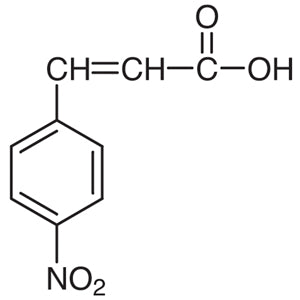
4-NitrocinnamicAcid TCI N0355
Regular price From Rp 1.670.550,00Regular price -
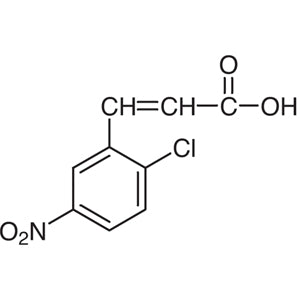
2-Chloro-5-nitrocinnamicAcid TCI C1206
Regular price From Rp 1.035.300,00Regular price -
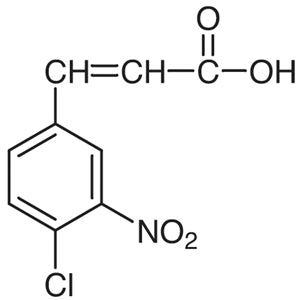
4-Chloro-3-nitrocinnamicAcid TCI C1205
Regular price From Rp 1.670.550,00Regular price -
2-Nitrocinnamaldehyde TCI N0611
Regular price Rp 1.246.350,00Regular price -
(E)-Ethyl4-Nitrocinnamate TCI N0598
Regular price From Rp 1.273.650,00Regular price -
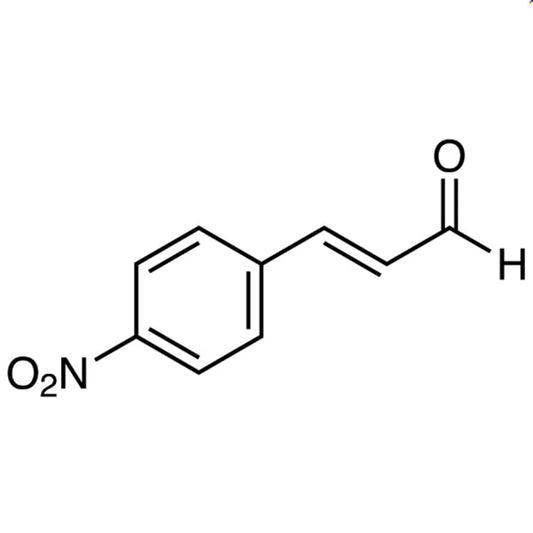
(E)-4-Nitrocinnamaldehyde TCI N0541
Regular price Rp 3.498.600,00Regular price -
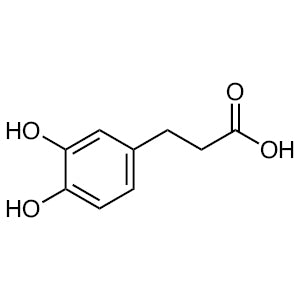
3,4-DihydroxyhydrocinnamicAcid TCI D5901
Regular price From Rp 1.538.250,00Regular price -
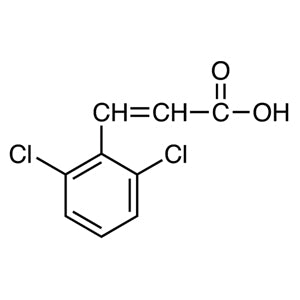
2,6-DichlorocinnamicAcid TCI D4048
Regular price From Rp 1.193.850,00Regular price