4-Nitrophthalonitrile is a chemical compound widely utilized in research applications within materials science and organic chemistry. It serves as a key building block for the synthesis of complex compounds, including pigments, electronic materials, and innovative material components. This compound plays a crucial role in laboratory settings where precise chemical reactions are required, especially in the development of advanced materials and functional chemicals. Its unique molecular structure and reactivity make it a valuable asset for researchers aiming to explore new chemical pathways and material properties.
The compound's high reactivity and stable molecular structure make it a preferred choice for various chemical reactions. It is particularly suitable for substitution reactions and other synthetic processes that demand controlled molecular interactions. Its solubility in organic solvents further enhances its usability, allowing for efficient processing and application in diverse laboratory conditions. These properties enable scientists to manipulate its behavior in a controlled manner, facilitating the creation of new materials with tailored characteristics.
In Indonesian laboratories, 4-Nitrophthalonitrile is extensively used in material and organic chemistry research. It is commonly found in academic and research institutions where scientists are working on developing new pigments, electronic materials, and advanced composites. Its versatility and reliability make it an essential component in the toolkit of researchers focused on innovation and discovery in the field of chemistry and materials science.
- Synthesis of advanced pigments and dyes due to its reactivity and structural versatility.
- Development of electronic materials as it supports the formation of complex molecular structures.
- Research in composite materials where precise chemical interactions are essential for performance.
- Organic chemistry experiments requiring controlled substitution reactions and molecular modifications.
- Creation of innovative material components for applications in nanotechnology and polymer science.
| Brand | TCI |
|---|---|
| CAS number | 31643-49-9 |
| Molecular formula | — |
| Purity | — |
| Category | Materials Science > Material Building Blocks > Phthalocyanine Building Blocks |
| Pack sizes | Available in standard laboratory quantities as per supplier specifications |
| Physical form | Solid, typically in crystalline or powder form |
| Storage | Store in a cool, dry place away from moisture and direct sunlight |
4-Nitrophthalonitrile should be stored in a cool, dry environment to maintain its stability and prevent degradation. It is recommended to use airtight containers to minimize exposure to moisture and air, which can affect its reactivity. Due to its high reactivity, it should be handled in a well-ventilated laboratory setting, ideally with appropriate personal protective equipment. Avoid direct contact with skin and eyes, and ensure proper disposal following standard chemical safety protocols. Regular monitoring of storage conditions is essential to ensure the compound remains suitable for use in research applications.
—
Produk Terkait
-
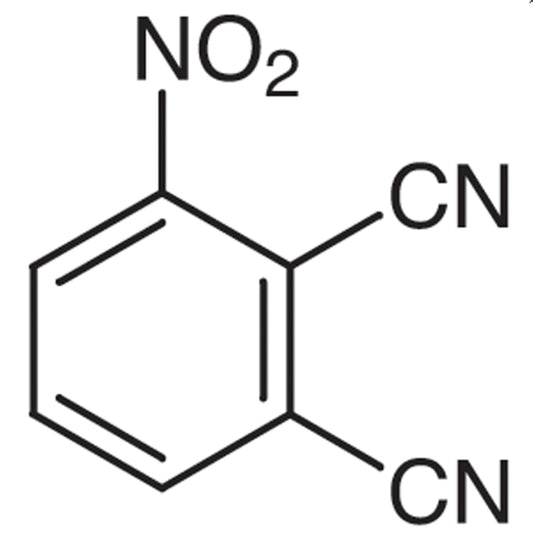
3-Nitrophthalonitrile TCI N0566
Regular price From Rp 1.776.600,00Regular priceRp 1.257.900,00Sale price From Rp 1.776.600,00 -
Phthalonitrile TCI P0404
Regular price From Rp 557.550,00Regular priceRp 405.300,00Sale price From Rp 557.550,00 -
Tetrachlorophthalonitrile TCI T3067
Regular price From Rp 1.378.650,00Regular priceRp 979.650,00Sale price From Rp 1.378.650,00 -
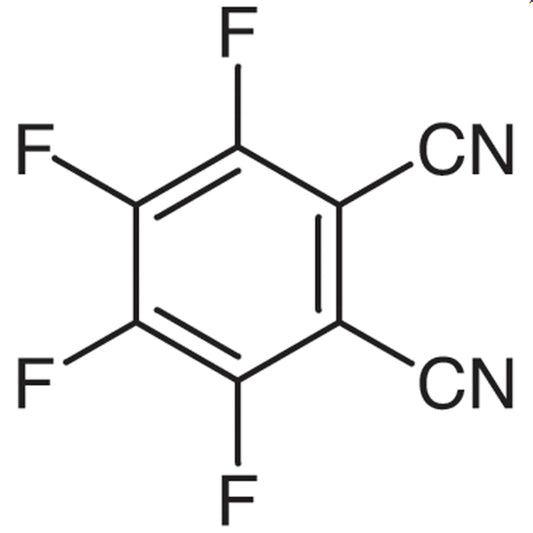
Tetrafluorophthalonitrile TCI T1402
Regular price From Rp 1.298.850,00Regular priceRp 924.000,00Sale price From Rp 1.298.850,00 -
4-Fluorophthalonitrile TCI F1169
Regular price From Rp 2.518.950,00Regular priceRp 1.776.600,00Sale price From Rp 2.518.950,00 -
4,5-Difluorophthalonitrile TCI D3963
Regular price From Rp 2.677.500,00Regular priceRp 1.887.900,00Sale price From Rp 2.677.500,00 -
4,5-Dichlorophthalonitrile TCI D2189
Regular price Rp 3.340.050,00Regular priceRp 2.350.950,00Sale price Rp 3.340.050,00 -
4-Iodophthalonitrile TCI I1050
Regular price Rp 4.876.200,00Regular priceRp 3.425.100,00Sale price Rp 4.876.200,00