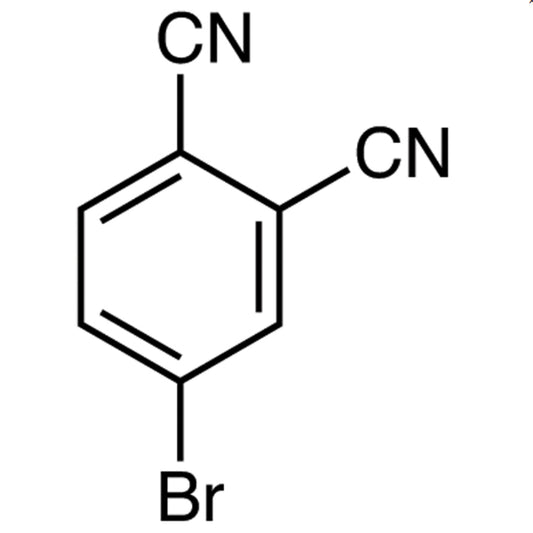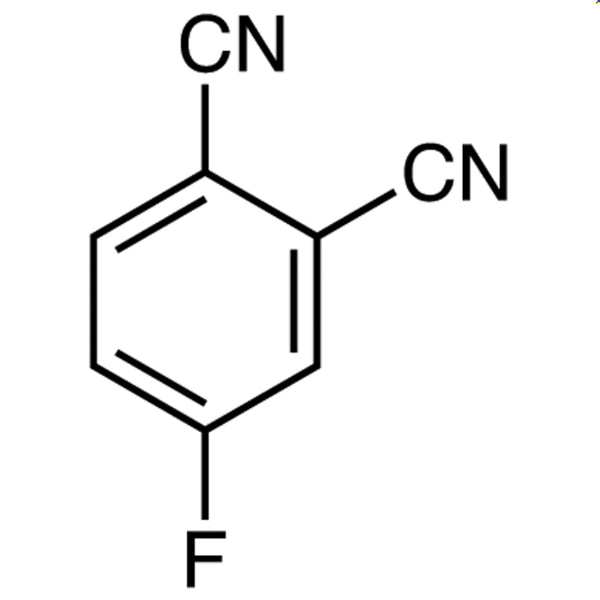
4-Fluorophthalonitrile is a chemical compound widely used as a building block in the synthesis of complex organic molecules. Its reactive nitrile group makes it a valuable component in various chemical reactions, including nucleophilic and substitution reactions. In laboratory settings, this compound plays a crucial role in constructing molecules with specific structures, particularly in organic synthesis and material research. Its unique chemical structure allows it to participate in a wide range of synthetic pathways, making it an essential tool for chemists working on advanced projects.
The compound's high reactivity and ability to form bonds with various ligands make it a preferred choice for precise and controlled chemical reactions. The presence of both a nitrile group and a fluorine atom contributes to its versatility and functional utility. The fluorine atom, attached at the 4-position, provides stability while influencing the compound's reactivity. These characteristics enable it to be used in applications requiring high precision and specificity, such as the development of new pharmaceuticals and advanced materials.
In Indonesian laboratories, 4-Fluorophthalonitrile is commonly used in both pure and applied chemical research. It is a key reagent in the development of new compounds, including drugs, industrial chemicals, and innovative materials. Its availability in the local market supports ongoing research efforts by providing researchers with the necessary materials for their projects. This compound is an essential resource for academic and industrial laboratories in Indonesia.
- Organic synthesis is a primary application where 4-Fluorophthalonitrile is used to construct complex molecular structures due to its reactive nitrile group and fluorine substitution.
- Material research benefits from this compound's ability to participate in various chemical reactions, enabling the development of advanced polymers and functional materials.
- Pharmaceutical development utilizes its reactivity and structural versatility for the synthesis of new drug candidates and therapeutic agents.
- Analytical chemistry applications rely on its stability and reactivity for the creation of reference standards and reaction intermediates.
- Industrial chemical production uses this compound as a building block for the synthesis of specialty chemicals and commercial products.
| Brand | TCI |
|---|---|
| CAS number | 65610-14-2 |
| Molecular formula | — |
| Purity | — |
| Category | Chemistry > Building Blocks > Non-Heterocyclic Building Blocks |
| Pack sizes | Available in various quantities as per supplier specifications |
| Physical form | Solid, typically in crystalline form |
| Storage | Store in a cool, dry place away from light and moisture |
4-Fluorophthalonitrile should be stored in a cool, dry environment, away from direct sunlight and moisture. It is recommended to use airtight containers made of glass or high-density polyethylene to prevent contamination and degradation. Due to its reactivity, it should be handled in a well-ventilated area, ideally under a fume hood, to minimize exposure. Laboratory personnel should wear appropriate personal protective equipment, including gloves and safety goggles, when handling this compound. It is important to avoid contact with skin and eyes, and to ensure proper disposal according to local regulations. The compound should not be stored near incompatible materials such as strong bases or oxidizing agents.
—
Produk Terkait
-
Phthalonitrile TCI P0404
Regular price From Rp 557.550,00Regular priceRp 405.300,00Sale price From Rp 557.550,00 -
4,5-Dichlorophthalonitrile TCI D2189
Regular price Rp 3.340.050,00Regular priceRp 2.350.950,00Sale price Rp 3.340.050,00 -
4-Iodophthalonitrile TCI I1050
Regular price Rp 4.876.200,00Regular priceRp 3.425.100,00Sale price Rp 4.876.200,00 -
4-(2',6'-Dimethylphenoxy)phthalonitrile TCI D1983
Regular price From Rp 2.677.500,00Regular priceRp 1.887.900,00Sale price From Rp 2.677.500,00 -
4-Bromophthalonitrile TCI B5509
Regular price From Rp 2.147.250,00Regular priceRp 1.517.250,00Sale price From Rp 2.147.250,00 -
4-Butoxyphthalonitrile TCI B1353
Regular price Rp 1.618.050,00Regular priceRp 1.146.600,00Sale price Rp 1.618.050,00 -
4-Pentyloxyphthalonitrile TCI P1071
Regular price From Rp 1.378.650,00Regular priceRp 979.650,00Sale price From Rp 1.378.650,00 -
4-Propoxyphthalonitrile TCI P1070
Regular price From Rp 1.749.300,00Regular priceRp 1.239.000,00Sale price From Rp 1.749.300,00