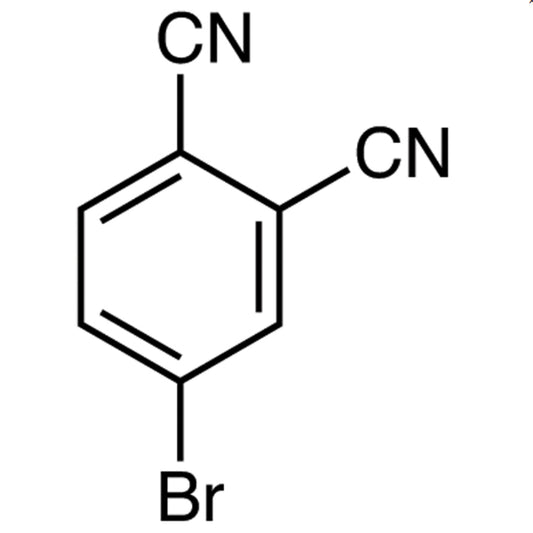
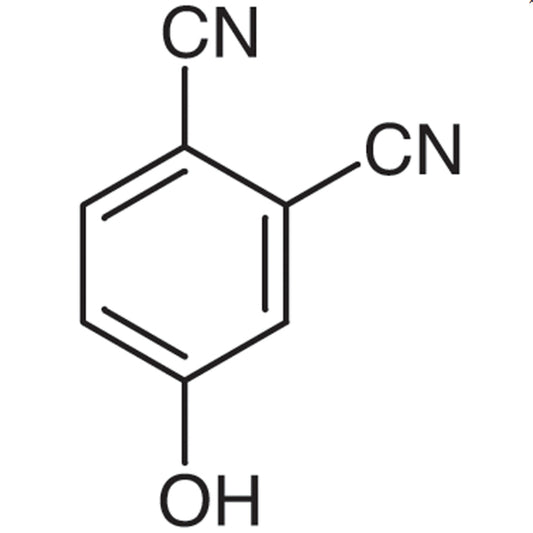
Phthalonitrile (TCI P0404 91-15-6) is a chemical compound widely used as a foundational building block in organic synthesis. It serves as a key reagent in laboratory settings, where it plays a critical role in the development of complex organic molecules. Its simple yet essential structure allows it to participate in various chemical reactions, making it a versatile tool for chemists. Phthalonitrile is particularly valued for its ability to undergo multiple chemical transformations, which makes it indispensable in synthetic pathways. Its stability and reactivity ensure that it remains a reliable component in experimental procedures.
Phthalonitrile is preferred due to its chemical stability and reactivity, which enable it to interact with a wide range of functional groups. This characteristic allows it to be used in diverse chemical applications, from the synthesis of aromatic compounds to the creation of heterocyclic structures. Its ability to form stable intermediates during reactions enhances its utility in organic chemistry. Additionally, its predictable behavior under different reaction conditions makes it a reliable choice for both research and educational purposes. The compound’s versatility and reliability have made it a staple in chemical laboratories worldwide.
In Indonesian laboratories, phthalonitrile is commonly used in both academic and research settings. It is frequently incorporated into experiments that require the synthesis of organic compounds, particularly those involving aromatic and heterocyclic structures. Its availability through reliable suppliers like AMI Scientific ensures that researchers have consistent access to this essential building block. The compound’s role in educational experiments also supports the training of future chemists in Indonesia.
- Organic synthesis of aromatic and heterocyclic compounds due to its reactivity and structural versatility.
- Development of complex chemical structures in research settings requiring stable intermediates.
- Educational experiments in Indonesian universities to teach fundamental chemical reactions.
- Preparation of functionalized derivatives for pharmaceutical and industrial applications.
- Support in analytical chemistry for the characterization of organic compounds through various reaction pathways.
| Brand | TCI |
|---|---|
| CAS number | 91-15-6 |
| Molecular formula | — |
| Purity | — |
| Category | Chemistry > Building Blocks > Non-Heterocyclic Building Blocks |
| Pack sizes | Available in standard laboratory quantities as per supplier specifications |
| Physical form | Solid (exact form may vary based on supplier packaging) |
| Storage | Store in a cool, dry place away from moisture and direct sunlight |
Phthalonitrile should be stored in a cool, dry environment to maintain its chemical stability. It is recommended to keep it in airtight containers to prevent exposure to moisture and air, which could affect its reactivity. Laboratory personnel should handle the compound with appropriate personal protective equipment, including gloves and safety goggles, to ensure safety during use. Due to its chemical nature, it should be stored separately from incompatible substances to avoid potential reactions. Regular monitoring of storage conditions is advised to ensure the compound remains in optimal condition for use in experiments. Proper labeling of storage containers is also essential for safe handling and identification.
—
Produk Terkait
-
4-(2',6'-Dimethylphenoxy)phthalonitrile TCI D1983
Regular price From Rp 2.625.000,00Regular price -
4-Bromophthalonitrile TCI B5509
Regular price From Rp 2.094.750,00Regular price -
4-Butoxyphthalonitrile TCI B1353
Regular price Rp 1.565.550,00Regular price -
4-Pentyloxyphthalonitrile TCI P1071
Regular price From Rp 1.326.150,00Regular price -
4-Propoxyphthalonitrile TCI P1070
Regular price From Rp 1.696.800,00Regular price -
4-Iodophthalonitrile TCI I1050
Regular price Rp 4.823.700,00Regular price -
4-Hydroxyphthalonitrile TCI H0813
Regular price From Rp 2.094.750,00Regular price -
4-Hexyloxyphthalonitrile TCI H0691
Regular price Rp 1.326.150,00Regular price